Knee Replacement Surgery for Mauritius Patients: Procedure to Recovery at Manipal Hospitals Global
Reviewed by: Orthopedic Department
Posted on Jul 13, 2026
10 Min Read
Synopsis
Understanding Knee Arthritis: Why Knee Replacement Becomes Necessary
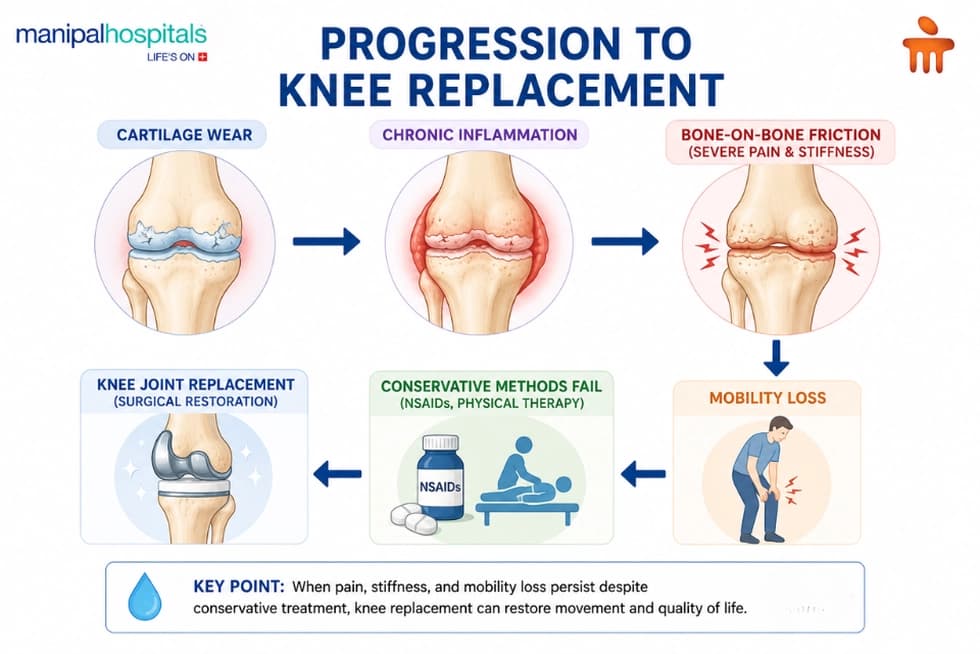
The human knee is a complex, weight-bearing hinge joint reliant on a smooth, protective layer of articular cartilage to prevent bone-on-bone friction. Over time, or as a result of trauma, this protective cartilage can degrade, causing chronic inflammation and structural changes within the joint.
Common Causes of Joint Degradation
- Osteoarthritis: The most common form of degenerative joint disease, characterised by the progressive "wear-and-tear" breakdown of cartilage, typically seen in ageing adults.
- Rheumatoid Arthritis: An autoimmune condition where the body’s immune system mistakenly attacks the synovial membrane lining the joints, causing chronic swelling and joint deformities.
- Sports Injuries and Post-Traumatic Arthritis: Previous ligament tears, meniscus damage, or intra-articular fractures that alter joint mechanics and accelerate localised joint wear.
Recognizing the Symptoms
Patients requiring a knee joint replacement frequently experience a combination of debilitating symptoms, including persistent pain that worsens with activity; localised swelling; chronic stiffness; visible joint deformities (such as bow legs or knock-knees); and a distinct "grating" sensation (crepitus). Over time, the condition leads to knee instability and a severe reduction in basic movement.
When Conservative Treatment No Longer Works
In its early stages, knee arthritis is managed using non-surgical options, including pain-relieving medicines, structured physiotherapy, lifestyle-guided weight loss, and intra-articular injections (such as hyaluronic acid or corticosteroids). However, when these conservative methods no longer manage the pain, and structural bone-on-bone damage is confirmed, a surgical knee replacement becomes the definitive option to relieve long-term suffering and prevent muscle wasting.
Understanding Your Knee Replacement Options
Not every patient requires the same type of surgery. The choice depends on the extent of joint damage, age, activity level, bone quality, and overall health.
Total Knee Replacement
Total knee replacement (TKR) is the most commonly performed procedure for advanced arthritis. During surgery, the damaged cartilage and a thin layer of bone from the femur (thigh bone), tibia (shin bone), and, when necessary, the kneecap are carefully removed. These surfaces are then replaced with specially designed metal and high-grade polyethylene components that recreate smooth joint movement.
Most patients experience substantial pain relief and improved mobility following total knee replacement.
Partial Knee Replacement
Some patients have arthritis confined to only one compartment of the knee. In these cases, partial knee replacement, also known as unicompartmental knee replacement, may be recommended.
Because only the damaged portion of the joint is replaced, this procedure preserves healthy bone, cartilage, and ligaments. Patients often experience a smaller incision, reduced blood loss, shorter hospital stays, and faster recovery.
However, this option is suitable only after careful evaluation by an orthopedic surgeon.
Robotic-Assisted Knee Replacement
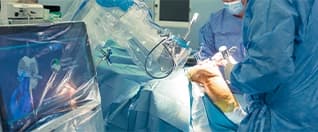
At Manipal Hospitals Global, selected patients benefit from robotic-assisted knee replacement surgery, an advanced approach that combines the surgeon's expertise with computer-guided precision.
Robotic technology enables surgeons to:
- Plan the procedure using detailed three-dimensional imaging
- Achieve highly accurate implant positioning
- Preserve healthy bone and surrounding soft tissues
- Improve joint alignment
- Enhance implant longevity
- Promote quicker functional recovery
While robotic assistance enhances surgical precision, the procedure is always performed under the expertise and control of an experienced orthopedic surgeon.
Preparing for Knee Replacement Surgery
A successful surgical outcome begins with a comprehensive, meticulous pre-operative preparation phase.
Comprehensive Clinical Evaluation
Before any surgical intervention, patients undergo a thorough medical workup to confirm surgical fitness and minimize risks. This evaluation includes:
- Advanced weight-bearing X-rays and MRI scans (if required) to map joint degradation.
- A comprehensive panel of blood tests, urinalysis, and an electrocardiogram (ECG).
- Detailed cardiovascular and medical fitness clearances from senior physicians.
The International Patient Journey at Manipal Hospitals Global
Manipal Hospitals Global has designed a seamless, supportive pathway specifically tailored for international patients traveling from Mauritius:
- Digital Pre-Travel Consultations: Patients can share their recent X-rays, medical records, and reports digitally to receive a comprehensive medical second opinion and treatment plan before booking their travel.
- Comprehensive Logistics Support: The International Patient Centre assists with medical visa invitations, airport transfers, local accommodation bookings for accompanying family members, and dedicated care coordinators who accompany the patient through every step of their hospital stay.
What Happens During Knee Replacement Surgery?
Understanding the step-by-step progression of the surgery can help alleviate pre-operative anxiety. A standard total knee replacement procedure generally takes between 1 to 2 hours to complete, depending on the complexity of the joint deformity.
Step | Surgical Stage | What Happens |
1 | Anaesthesia | Spinal anaesthesia combined with a regional nerve block ensures optimal pain control during surgery. |
2 | Precise Incision | A carefully planned incision is made over the knee to access the damaged joint. |
3 | Damaged Cartilage Resurfacing | Worn-out cartilage and a minimal amount of damaged bone are removed while preserving healthy tissue. |
4 | Precision Bone Shaping | The femur and tibia are precisely prepared to accommodate the prosthetic components. |
5 | High-Performance Implant Fixation | Medical-grade metal implants are securely positioned using bone cement or cementless fixation, depending on the patient's needs. |
6 | Polyethylene Spacer Placement | A durable polyethylene insert is placed between the implants to provide smooth, natural joint movement. |
7 | Kinematic Alignment & Track Check | The surgeon verifies knee alignment, stability, range of motion, and patellar tracking before completing the procedure. |
8 | Layered Sterile Closure | The incision is closed in layers using sterile techniques to promote optimal healing and reduce the risk of infection. |
Risks and How Manipal Hospitals Minimizes Them
As with any major surgical intervention, knee replacement surgeries carry a small percentage of potential risks, including localised infections, deep vein blood clots, implant loosening, and post-operative joint stiffness.
To safeguard patient health, Manipal Hospitals strictly adheres to internationally recognised safety protocols:
- Laminar Airflow Operating Theatres: Surgeries are performed in ultra-clean, positive-pressure environments with advanced HEPA filtration to eliminate infection risks.
- Rigorous Infection Control: Strict perioperative antibiotic protocols are maintained for every patient.
- Thromboembolism Prevention: Advanced deep vein thrombosis (DVT) preventive measures are utilised, including sequential compression devices and tailored blood-thinning medications.
- Enhanced Recovery After Surgery (ERAS) Protocols: Integrating early mobilisation, balanced fluid management, and advanced regional pain blocks allows for a faster, safer recovery and minimises general medical complications.
Modern knee implants are exceptionally durable. Clinical studies demonstrate that with proper care, healthy weight management, and avoiding high-impact activities, a modern knee implant can last for 15 to 20 years or more, providing long-term joint function and a reliable return to your favourite pastimes.
Why International Patients from Mauritius Choose Manipal Hospitals Global
Manipal Hospitals Global is internationally recognised for clinical excellence in joint restoration, making it a preferred choice for patients from Mauritius seeking a reliable therapy for knee stones or joint replacement care:
- World-Class Orthopedic Expertise: Led by senior urologists and orthopedic surgeons who have performed thousands of successful surgeries.
- Advanced Robotic Joint Replacement Technology: Utilising modern precision tools to optimise implant longevity and improve patient comfort.
- Comprehensive Rehabilitation Support: A large team of specialised physiotherapists guides patients step-by-step from day one of recovery.
- Dedicated International Patient Centre: Providing comprehensive support for accommodation, medical visas, language assistance, and personalised care.
- Transparent Treatment Planning: Offering clear, upfront cost structures and comprehensive medical documentation before you travel.
- Digital Follow-Up Infrastructure: Providing continuity of care through structured virtual reviews once you return home.
Beyond specialised knee procedures, Manipal Hospitals’ multi-disciplinary centres provide a complete range of musculoskeletal care, including advanced hip joint replacement, complex revision surgeries, sports medicine, and specialised therapies tailored to each patient's needs.
Conclusion
Living with chronic, debilitating joint pain is not an inevitability. Knee replacement surgery is a safe, time-tested, and highly effective medical intervention that reliably restores independence, eliminates chronic pain, and helps individuals return to an active lifestyle. Early clinical evaluation by a specialist is key to preventing long-term muscle weakness and achieving the best possible outcome.
Manipal Hospitals Global provides comprehensive orthopedic expertise, advanced surgical technology, and dedicated international patient support for individuals seeking high-quality joint replacement care. If you or a loved one are ready to take the first step toward a more active, mobile life, please reach out to the International Patient Services team at Manipal Hospitals Global for a personalised second opinion and a customised treatment plan.
Share this Article


Not sure what you’re looking for?
Not sure what you’re looking for?
Get in touch with our representatives for
help!
Get in touch with our
representatives for help!