Myocardial Infarction Treatment for Cameroon Patients: Urgent Care, Procedures, and Recovery
Reviewed by: Cardiology Department
Posted on Aug 24, 2026
8 Min Read
Synopsis
What Is a Myocardial Infarction?
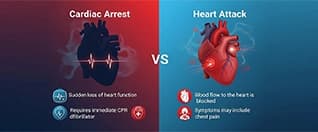
A myocardial infarction, commonly called a heart attack, occurs when blood flow through one of the coronary arteries is suddenly blocked. These arteries supply oxygen-rich blood to the heart muscle itself. When a blockage persists, the section of heart muscle fed by that artery begins to die. This is the "infarction", permanent tissue damage caused by a lack of oxygen.
Myocardial infarction is part of a broader group of conditions known as acute coronary syndrome. This term describes any sudden reduction of blood flow to the heart, ranging from unstable angina (chest pain without permanent muscle damage) to a full acute myocardial infarction with tissue death. Understanding this spectrum helps doctors decide how urgently to intervene and what kind of treatment to use. The table below summarises the main types of acute coronary syndrome:
Condition | Blood Flow | Heart Muscle Damage | Typical ECG Finding |
| NSTEMI (Non-ST elevation myocardial infarction) | Reduced coronary blood flow, often due to partial or intermittent blockage | Partial-thickness damage | ST depression or T-wave inversion; positive cardiac enzymes |
| STEMI (ST-elevation myocardial infarction) | Usually associated with complete or near-complete coronary artery blockage | Full-thickness dam | ST-segment elevation; positive cardiac enzymes |
A STEMI is the most severe form and requires emergency opening of the artery, usually with angioplasty. NSTEMI and unstable angina are also urgent but may be managed with intensive medication and early intervention.
Recognising the Symptoms of Myocardial Infarction
The classic description of a heart attack is a crushing central chest pain that spreads to the left arm or jaw. However, symptoms can vary widely, and some people, particularly women, older adults, and individuals with diabetes, may experience less typical signs. Common symptoms of acute myocardial infarction include:
- Persistent central chest discomfort that feels like pressure, tightness, or squeezing
- Pain that radiates to the shoulders, arms, neck, jaw, or back
- Shortness of breath, sometimes occurring before any chest pain
- Cold sweat, nausea, or lightheadedness
- A sense of extreme fatigue or unexplained anxiety
Angina, which is chest pain caused by temporary lack of blood flow, can feel similar but usually resolves with rest. When the pain becomes unpredictable, occurs at rest, or increases in intensity, it may signal unstable angina or the onset of a heart attack. Any chest discomfort that lasts more than a few minutes or feels different from usual should prompt an immediate call for emergency help. Do not delay emergency treatment.
Causes and Risk Factors
The overwhelming majority of myocardial infarction cases are caused by coronary artery disease. Over many years, fatty deposits called plaque build up along the inner walls of the coronary arteries. When a plaque ruptures, a blood clot forms over it, suddenly blocking the artery. This process is the final common pathway of a condition that often develops silently.
Risk factors that accelerate coronary artery disease include:
- High blood pressure
- Abnormal cholesterol levels
- Smoking and tobacco use
- Diabetes and insulin resistance
- Excess body weight and physical inactivity
- A family history of early heart disease
- Chronic stress and poor dietary habits
Cardiovascular disease in Cameroon is an escalating public health concern. Urbanisation, dietary changes, and rising rates of hypertension and diabetes have contributed to an increasing burden of heart attacks and strokes. Yet access to catheterisation laboratories, advanced imaging, and specialised cardiac surgeons remains limited in many regions of the country. This gap in infrastructure is one reason why patients often search for cardiac treatment alternatives abroad.
How Is Myocardial Infarction Diagnosed?
When a patient arrives with chest pain, doctors work quickly to determine whether a heart attack is occurring and how severe it is. The diagnostic process includes:
- Electrocardiogram (ECG): Performed within minutes of arrival, an ECG can reveal the tell-tale ST-segment elevation of a STEMI or other patterns that suggest reduced blood flow.
- Blood tests for cardiac enzymes: When heart muscle cells die, they release proteins such as troponin into the bloodstream. Elevated troponin levels confirm the diagnosis of acute myocardial infarction.
- Echocardiogram: An ultrasound of the heart shows how well the heart muscle is pumping and can identify areas damaged by the infarction.
- Coronary angiography: A catheter is threaded through an artery in the wrist or groin to the heart, and dye is injected to visualise blockages. This is the definitive test and often leads directly to treatment.
Rapid diagnosis is critical. In STEMI, the goal is to open the blocked artery within 90 minutes of first medical contact to limit the size of the infarction and preserve heart function. Treatment timelines depend on how quickly the patient can access a hospital capable of performing emergency PCI.
Treatment Options for Myocardial Infarction
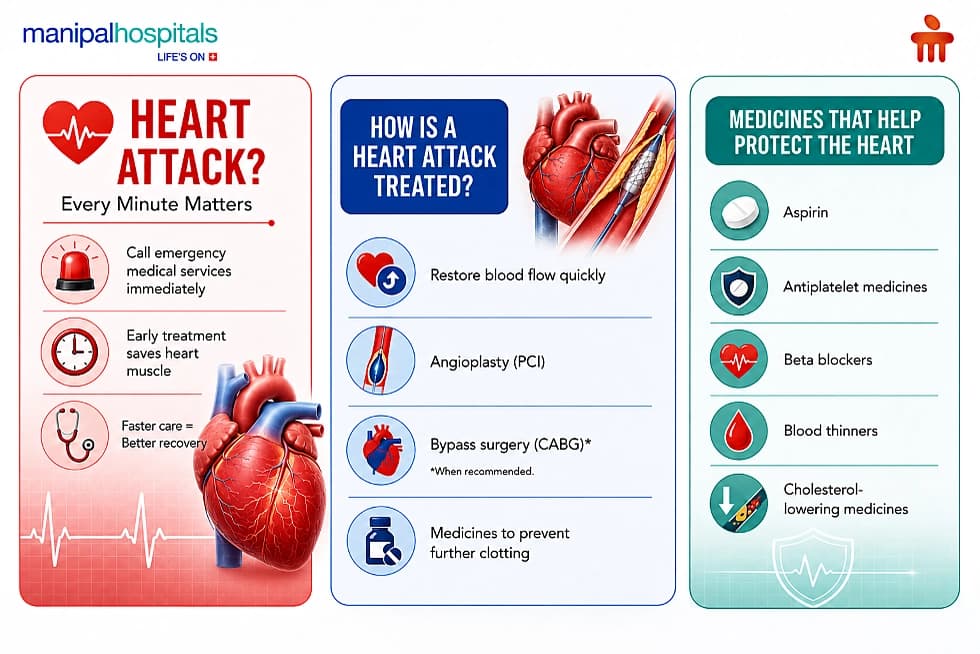
The immediate goal of treatment is to restore blood flow as quickly as possible. After the acute phase, the focus shifts to preventing a second event and managing any resulting heart failure or other complications.
Emergency revascularisation
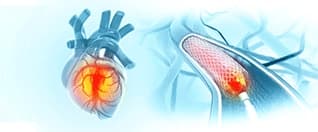
Primary angioplasty (percutaneous coronary intervention): A balloon-tipped catheter is used to open the blocked artery, and a stent, a small mesh tube, is placed to keep it open. This is the preferred treatment for STEMI when it can be performed rapidly.
Thrombolytic therapy: In settings where angioplasty is not immediately available, clot-dissolving medications may be given intravenously to break down the blockage. This is less precise than angioplasty but can be life-saving when transfer to a catheterisation laboratory will take too long.
Medications
A combination of drugs is started early and continued long-term:
- Antiplatelet agents such as aspirin and clopidogrel prevent further clot formation.
- Beta-blockers slow the heart rate and reduce oxygen demand.
- ACE inhibitors or ARBs lower blood pressure and protect the heart muscle.
- Statins control cholesterol and stabilise plaque.
In some cases, anticoagulants are used for a period after the event.
Surgical intervention
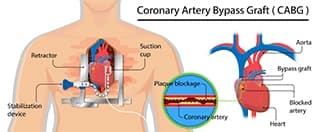
For patients with multiple severe blockages that cannot be adequately treated with stents, coronary artery bypass grafting (CABG) may be recommended. This open-heart surgery uses healthy blood vessels from the chest, arm, or leg to bypass the blocked arteries and restore normal blood flow.
Managing heart failure after a heart attack
If a significant portion of heart muscle is damaged, the pumping capacity of the heart may be reduced, leading to heart failure. Symptoms such as breathlessness, leg swelling, and fatigue can be managed with diuretics, specialised medications, and lifestyle adjustments. Cardiac rehabilitation programmes that combine supervised exercise with education help patients regain strength and confidence.
Conclusion
A myocardial infarction is a serious event, but it does not have to define the rest of your life. With prompt treatment, modern cardiology can restore blood flow, preserve heart muscle, and return most people to active, fulfilling routines. The critical factor is time: recognising the symptoms, getting to a medical facility quickly, and accessing the right intervention. For patients in Cameroon, understanding that options exist, both at home and abroad, can make the difference between a delayed response and a life saved.
At Manipal Hospitals Global, we provide a seamless, end-to-end pathway for Cameroonian patients requiring urgent or planned cardiac treatment. From the first enquiry, our dedicated international patient care team assists you with medical visa letters, travel arrangements, airport transfers, and comfortable accommodation.
Take control of your heart health today. If you or a loved one requires expert cardiac evaluation or treatment, do not wait. Contact our International Patient Care team via WhatsApp or email us to schedule a priority teleconsultation. Let our world-class cardiologists guide you on your journey to recovery.
Share this Article


Not sure what you’re looking for?
Not sure what you’re looking for?
Get in touch with our representatives for
help!
Get in touch with our
representatives for help!