Stress Test for Heart: Types, Procedure, Preparation and What It Detects
Reviewed by: Cardiology Department
Posted on Sep 29, 2026
8 Min Read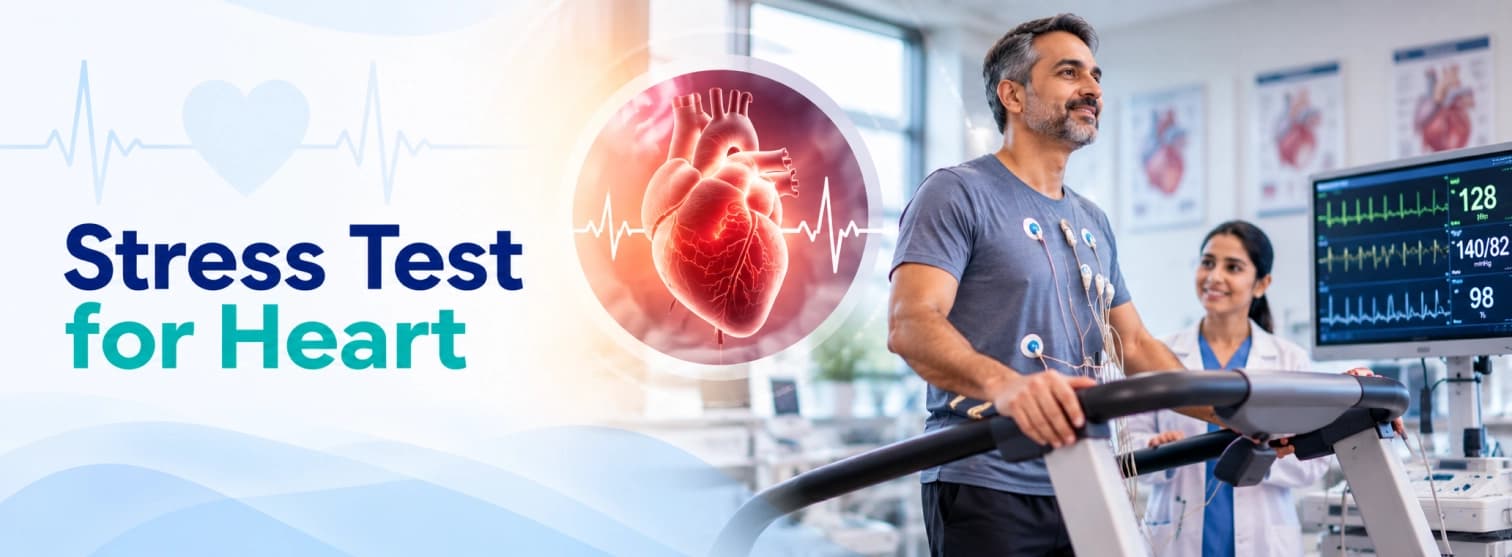
Synopsis
How Does a Stress Test Work?
A stress test, often called an exercise stress test or treadmill test, evaluates your cardiovascular response during induced exertion. When your body exercises, muscles demand more oxygen, prompting the heart to pump faster and harder. If the coronary arteries supplying the heart muscle are narrowed or damaged, they cannot deliver the required blood flow during periods of heightened activity.
For individuals who cannot safely walk on a treadmill or pedal a stationary bicycle due to arthritis, mobility limits, or other medical issues, doctors use medication to simulate physical exertion. This is known as a pharmacological stress evaluation.
The exercise may be stopped once you reach a target heart rate. It may also be stopped sooner if you develop symptoms, if there are changes in your heart activity, or if the healthcare team has another reason to stop. Once you finish exercising, you are not simply sent away. Your heart rate and other measurements continue to be monitored during recovery.
The exact way a TMT is carried out can vary depending on the person and the type of stress test being performed.
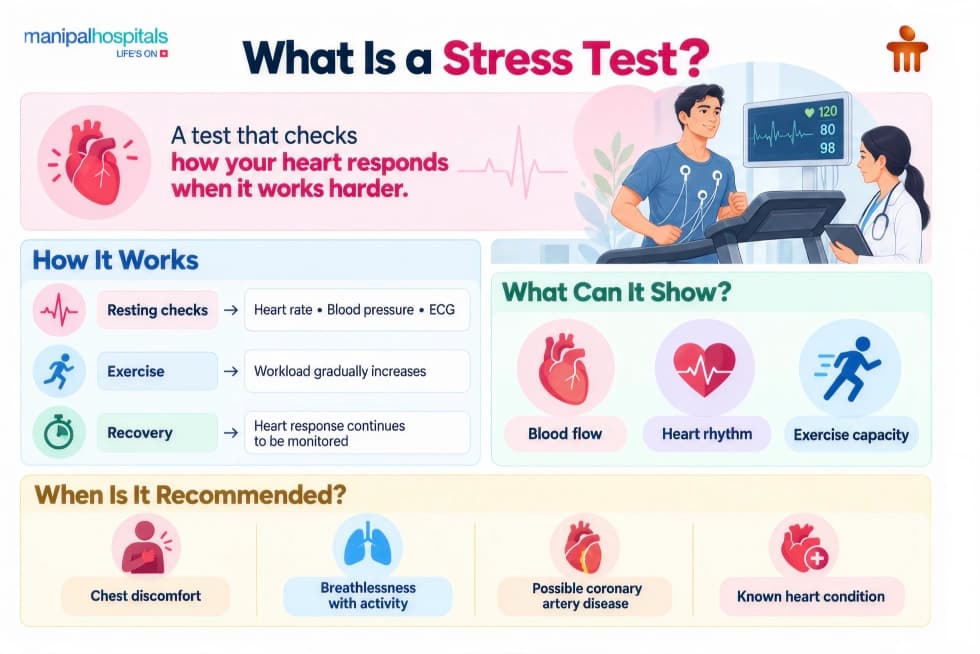
Stage | What happens |
| Before exercise | Heart rate, blood pressure and ECG are checked |
| During exercise | Activity gradually increases while your heart is monitored |
| Peak exercise | Your heart’s response and any symptoms or ECG changes are assessed |
| Recovery | Monitoring continues after you stop exercising |
Types of Stress Tests
Depending on your symptoms, medical history, and mobility, several modalities may be used:
- Standard Exercise Stress Test (Treadmill Test / TMT): The most common form, where you walk on a treadmill while connected to an ECG monitor and blood pressure cuff as incline and speed gradually increase.
- Stress Echocardiogram: Combines standard exercise testing with an ultrasound (echocardiogram) of the heart taken immediately before and after exertion to assess heart muscle contraction and valve function.
- Nuclear Stress Test: Involves injecting a tiny, safe amount of radioactive tracer into the bloodstream. Advanced imaging cameras scan the heart at rest and during peak exercise to highlight specific areas of poor blood flow or permanent muscle scarring.
- Pharmacological Stress Test: Administers medications such as adenosine, dipyridamole, or dobutamine intravenously to mimic exercise effects for patients unable to perform treadmill exertion.
What Does a Stress Test Detect?
Understanding what a stress test detects helps clarify why doctors rely heavily on this test for cardiovascular screening and symptom diagnosis. Key findings include:
- Coronary artery disease: Identifies reduced blood flow through narrowed or blocked coronary vessels before a heart attack occurs.
- Cardiac arrhythmias: Detects abnormal heart rhythms that occur only during intense exertion.
- Heart valve disorders: Evaluates whether diseased or narrowed valves can support increased circulatory demands.
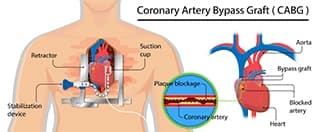
- Treatment efficacy: Assesses how well interventions like coronary stents, bypass surgery, or blood pressure medications are performing.
- Safe exercise thresholds: Determines safe target heart rate zones for cardiac rehabilitation or athletic training after a cardiovascular event.
When Is a Stress Test Recommended?
A physician may schedule a stress test in response to concerning symptoms or as part of a targeted clinical assessment:
- Unexplained chest pain, tightness, or pressure (angina)
- Breathlessness, dizziness, or lightheadedness occurring specifically during physical activity
- Palpitations or a sensation of racing or skipping heartbeats during exercise
- Monitoring patients with established coronary artery disease or previous heart attacks
- Pre-operative risk assessment prior to major non-cardiac surgeries
- Cardiovascular screening for individuals with multiple risk factors (such as diabetes, smoking history, or severe hypertension) starting a rigorous fitness program
How to Prepare for a Stress Test
Proper preparation ensures accurate test results and prevents unnecessary cancellations:
- Fasting: Avoid heavy meals, milk, and sugary drinks for at least 3 to 4 hours before the test.
- Caffeine restriction: Avoid tea, coffee, energy drinks, soda, and decaffeinated beverages for 24 hours prior, as caffeine interferes with test medications and heart rate response.
- Clothing: Wear loose, comfortable athletic wear and supportive walking or running shoes.
- Medication check: Certain prescription drugs, particularly beta-blockers and inhalers, may need to be adjusted or withheld temporarily. Always check with your doctor beforehand rather than stopping medications on your own.
- Diabetic precautions: Discuss insulin and oral diabetic medication adjustments with your clinical team to prevent hypoglycemia during fasting.
The Stress Test Procedure: What to Expect
The stress test procedure follows a standardised, carefully monitored protocol:
- Electrode placement: Small sticky patches (electrodes) are placed on your chest, arms, and shoulders to transmit continuous electrical signals to an ECG recording machine.
- Baseline readings: Technicians record resting heart rate, blood pressure, and resting ECG waveforms while you are seated or lying down.
- Gradual progression: Walking begins at a comfortable, slow pace on the treadmill. Every 2 to 3 minutes, the speed and incline increase incrementally (commonly following the Bruce Protocol).
- Continuous tracking: The clinical team tracks your cardiac rhythm, oxygen levels, and blood pressure at every stage.
- Test completion: Exercise continues until you reach your target predicted heart rate, or sooner if you experience chest pain, severe breathlessness, dizziness, significant hypertension, or ECG changes.
- Recovery phase: You are monitored for several minutes after stopping while your heart rate and blood pressure normalise.
When Should You Seek a Specialist?
Never ignore recurrent cardiovascular warning signs. Book a cardiologist consultation if you notice:
- Discomfort, aching, or burning sensations across the chest during exertion
- Disproportionate exhaustion or breathlessness after light walking
- Sudden fluttering or irregular heartbeats
- A strong family history of early heart disease coupled with lifestyle risk factors
Early diagnostic evaluation through targeted testing prevents irreversible cardiac events.
Manipal Hospitals Global: Comprehensive Care for International Patients & Travellers
Experiencing sudden chest discomfort or a heart-related concern while away from home can feel incredibly overwhelming. Through Manipal Hospitals Global, international travellers, expatriates, and overseas patients receive prompt, internationally accredited cardiovascular care alongside complete logistical coordination.
A stress test can answer questions that a resting heart check cannot, particularly about how your heart behaves when it is put under strain. But the result is only one part of the picture. If you have been asked to get a stress test, or have symptoms that need a closer look, you can visit Manipal Hospitals Global for the test and consult the Cardiology Department to understand what the findings mean and what to do next. Our cardiology team can also help evaluate your symptoms and recommend further investigations or treatment when required.
Whether you require an immediate emergency evaluation for acute cardiac symptoms while travelling, or a remote second opinion to interpret your stress test (TMT) results and angiograms, our dedicated International Patient Services team ensures seamless support at every stage.
Share this Article


Not sure what you’re looking for?
Not sure what you’re looking for?
Get in touch with our representatives for
help!
Get in touch with our
representatives for help!