Heart Failure Treatment: Travel to Recovery guide for International Patients
Reviewed by: Cardiology Department
Posted on Mar 02, 2026
8 Min Read
Have you just been told you may need to travel abroad for heart treatment and felt completely unsure about what comes next? Hearing the words "heart failure" is unsettling enough. When you then have to think about international travel, unfamiliar hospitals, and major medical decisions, it can feel like far too much to process at once.
There is reassurance, though. Modern heart failure treatment has progressed in remarkable ways. Today, patients travelling from overseas can access highly specialised therapies, advanced procedures, and carefully coordinated multidisciplinary care at leading cardiac centres worldwide. In this blog, we’ll break down the available heart failure treatment options, explain what advanced cardiac care truly involves, and guide you through what to expect before you travel, during your treatment, and once you begin recovery.
Synopsis
What Heart Failure Really Means
Heart failure does not mean the heart has stopped. It means the heart cannot pump blood efficiently enough to meet the body’s needs. This reduced function can develop gradually or worsen suddenly.
Just as symptoms vary from person to person, heart failure itself is not a single uniform condition. It presents in different forms depending on how the heart’s pumping or relaxation function is affected. The main types of heart failure include:
● Heart Failure with Reduced Ejection Fraction (HFrEF): The heart muscle is weak and cannot contract effectively.
● Heart Failure with Preserved Ejection Fraction (HFpEF): The heart muscle is stiff and does not relax properly.
● Right-sided heart failure: The right ventricle does not pump blood efficiently to the lungs, which leads to "systemic venous congestion."
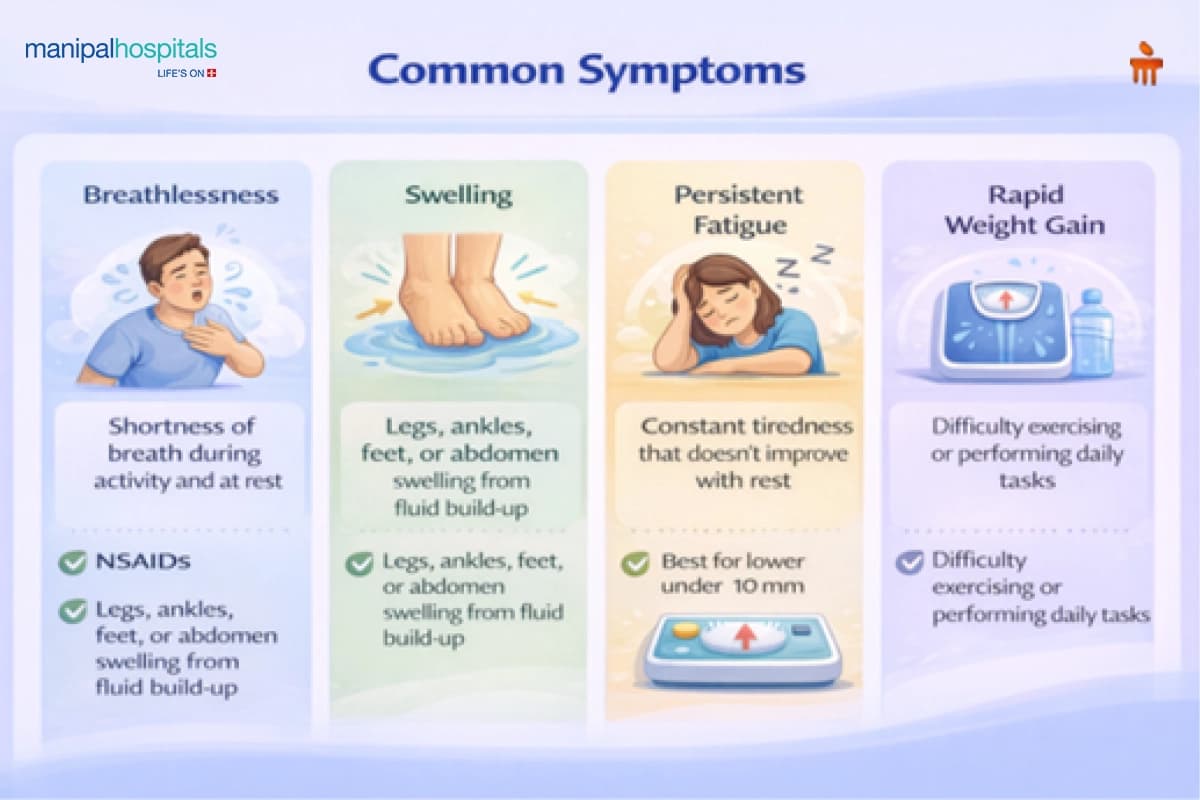
● Acute decompensated heart failure: The sudden or rapid worsening of heart failure symptoms, primarily severe fluid overload causing dyspnea, fatigue, and edema, requiring urgent medical care.
Understanding the Type and Severity
Understanding the type and severity of heart failure is the first step towards choosing the right heart failure treatment. Some patients have reduced pumping strength, while others have a stiff heart muscle that doesn’t relax properly. Depending on the type and the signs the patient exhibits, the treatment approach also needs to change accordingly.
How Doctors Examine Patients and Assess Severity
Evaluation for heart failure is thorough but highly structured. Doctors aim to understand not just the heart, but the whole person.
To make this clearer: here’s a simple comparison of the main treatment pathways available in specialised cardiac centers:
Treatment Approach
Who It’s For
What It Does
Typical Recovery
Optimised Medical Therapy
Mild to moderate heart failure
Improves heart efficiency, controls fluid buildup, and reduces hospital admissions
Ongoing outpatient management
Implantable Devices (ICD/CRT)
Patients at risk of dangerous rhythms or poor chamber coordination
Prevents sudden cardiac death and improves pumping synchrony
Short hospital stay, gradual adjustment
Coronary or Valve Procedures
Structural heart disease is contributing to total failure
Restores blood flow or corrects faulty valves
Days to weeks, depending on the procedure
Ventricular Assist Devices (VADs)
Advanced heart failure unresponsive to medication
Mechanically supports heart pumping
Longer recovery and monitoring
Heart Transplant
End-stage heart failure
Replaces a failing heart with a donor organ
Extended recovery, lifelong follow-up
Each option represents a different level of heart failure treatment, and not every patient requires invasive intervention. The goal is always to match the intensity of treatment with the severity of the disease.
Medical Management: The Cornerstone
For many patients, treatment begins with what is called guideline-directed medical therapy. Modern drug therapy has changed the outlook of heart failure dramatically. Such therapies may include:
● ACE inhibitors or ARNI (sacubitril/valsartan)
● Beta blockers
● Mineralocorticoid receptor antagonists
● SGLT2 inhibitors
● Diuretics for fluid control
If suitable for the concern, these medications can effectively:
● Reduce strain on the heart
● Remove excess fluid
● Improve long-term survival
● Decrease hospital admissions
Specialised centres abroad closely monitor dosage adjustments, especially in the early weeks. This close supervision is particularly helpful for overseas patients who may need stabilisation before travelling back home.
Device-Based Therapies
When medication is not enough, device therapy may be considered. Accordingly, some patients remain at risk of dangerous arrhythmias or persistent heart weakness despite medication.
In these cases:
● Implantable Cardioverter-Defibrillators (ICDs) reduce the risk of sudden cardiac death.
● Cardiac Resynchronisation Therapy (CRT) improves coordination between heart chambers in patients with electrical conduction delays.
Eligibility for these devices depends on ejection fraction, QRS duration on ECG, and symptom severity. These forms of heart failure treatment do not cure the condition, but they significantly reduce complications in selected patients. Most procedures involve a short hospital stay and careful programming before discharge.
Advanced Interventions and Surgery
In some patients, heart failure is a result of blocked arteries or severe valve disease. In such cases, correcting the root issue is the ideal treatment to improve heart function.
Options may include:
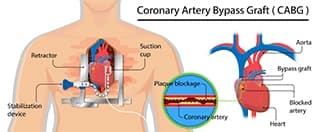
● Angioplasty or bypass surgery to restore the blood supply
● Minimally invasive valve repair or replacement
● Hybrid procedures combining interventional cardiology and surgery
For individuals with severe disease, mechanical circulatory support such as a ventricular assist device may be recommended. These are complex decisions made within experienced advanced cardiac care teams.
Advanced Heart Failure: VAD and Transplant
Despite extensive treatment and medication, the patient may reach a point when oral medication or other treatments are deemed insufficient.
Ventricular Assist Devices (VAD)
A VAD is a mechanical pump that helps circulate blood. It may serve as:
● A bridge to transplant, or
● Long-term therapy in selected patients
Risks include infection, bleeding, stroke, and device malfunction. Recovery requires close monitoring.
Heart Transplantation
A transplant is reserved for those patients who have reached the end-stage of the disease, and no treatments or even VAD will be effective for them.
It requires:
● Extensive evaluation
● Psychological assessment
● Long-term commitment to follow-up
● Lifelong immunosuppressive medication
While transplantation can dramatically improve quality of life, it also carries risks such as rejection and infection.
Planning Treatment as an International Patient
Travelling for heart failure treatment involves more than medical preparation.
Sustainable improvement depends on a partnership between the patient and the medical team. Procedures can stabilise or improve heart function, but daily habits remain central to long-term success.
Conclusion
Heart failure is a serious condition, but it is no longer a hopeless one. With modern heart failure treatment, patients have access to a wide spectrum of therapies ranging from medication optimisation to sophisticated surgical interventions. For international patients, seeking advanced cardiac care abroad can open doors to specialised expertise and comprehensive management.
If you are considering heart failure treatment options outside your home country, begin with a detailed medical consultation at the Manipal Hospitals network. A personalised assessment will help determine which pathway offers the safest and most effective route towards stabilisation and improved quality of life.