Chemotherapy Treatment for Kenya Patients: Cancer Care, Types, Procedure, Side Effects, and Recovery
Reviewed by: Cancer Care Department
Posted on Aug 21, 2026
10 Min Read
Synopsis
What Is Chemotherapy Treatment?
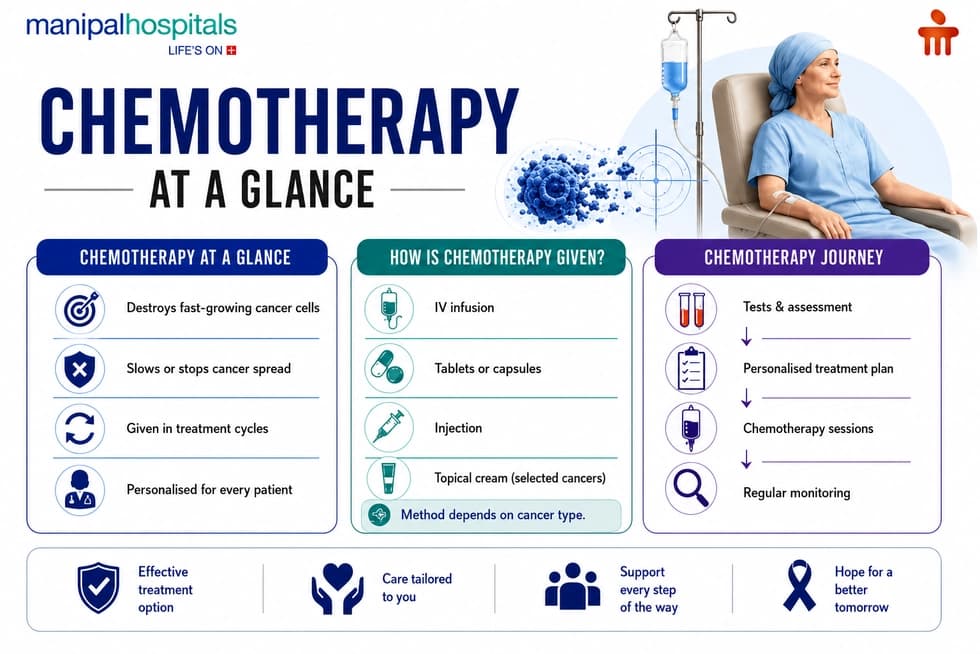
Chemotherapy treatment is the use of drugs to destroy cancer cells. Unlike surgery or radiation that targets a specific area, chemotherapy works throughout the body. It reaches cancer cells that may have broken away from the original tumour and travelled through the blood or lymph system. For many people, this makes it a vital part of cancer treatment, especially when the disease has spread or carries a high risk of returning.
The drugs used in chemo are designed to disrupt the life cycle of rapidly dividing cells. Cancer cells divide much faster than most normal cells, which makes them especially vulnerable. However, some healthy cells, like those in the bone marrow, hair follicles, and the lining of the mouth and gut, also divide quickly. This is why chemotherapy can affect these parts of the body and cause temporary side effects.
Depending on the diagnosis, chemotherapy may be given with the aim of curing the cancer, controlling its growth, or easing symptoms when a cure is not possible. It can be the main treatment or used alongside surgery, radiation, or targeted therapy.
Types of Chemotherapy
There is no single chemotherapy drug that works for all cancers. The type of chemotherapy medicine chosen depends on the cancer's location, its cell type, and how aggressive it is. The table below explains the main categories of chemotherapy and how they fit into a broader care plan:
Chemotherapy Type | When It Is Used | Primary Goal |
Neoadjuvant chemotherapy | Before surgery or radiation | Shrink the tumour to make it easier to remove or treat with local therapy |
Adjuvant chemotherapy | After surgery or radiation | Destroy any remaining cancer cells and reduce the risk of recurrence |
Primary (curative) chemotherapy | As the main treatment for cancers that are highly sensitive to drugs, such as leukaemia or lymphoma | Eliminate the cancer or bring it into long-term remission |
Palliative chemotherapy | When a cure is not possible | Shrink tumours, relieve symptoms like pain or pressure, and improve quality of life |
Neoadjuvant chemotherapy is often used for breast, bladder, and some lung cancers. It can turn an inoperable tumour into one that a surgeon can safely remove. Adjuvant therapy, on the other hand, targets cells that imaging cannot see, helping to lower the chance that the cancer comes back months or years later.
The Chemotherapy Procedure: What to Expect
The way chemotherapy is given depends on the drugs prescribed. The most common routes include the following:
- Intravenous (IV) infusion: Medicine is delivered directly into a vein through a thin tube. An IV line may be placed in the arm or hand for each session, or a semi-permanent port may be inserted under the skin of the chest for patients who need many treatments.
- Oral chemotherapy: Some drugs come as pills or capsules that you take at home. Even though the medicine is taken by mouth, it is just as powerful as IV drugs and requires the same careful monitoring.
- Injection: A drug is given as a shot into a muscle or under the skin.
- Intrathecal chemotherapy: The medicine is injected into the fluid around the spinal cord, used when cancer has reached the brain or spinal fluid.
A treatment session can last anywhere from a few minutes to several hours, depending on the regimen. Most patients receive treatment in an outpatient infusion centre. You sit in a comfortable chair, and a nurse connects the IV line and monitors you throughout. You can read, listen to music, or simply rest. After the infusion, you go home the same day. Some intensive regimens require a short hospital stay, but this is less common.
Before the first cycle begins, the oncology team will run blood tests to check your blood counts, kidney function, and liver health. These tests are repeated regularly because chemotherapy doses may need adjustment based on how your body is handling the medicine.
Chemotherapy Side Effects and Their Management
The question almost everyone asks is about chemotherapy side effects. It is true that chemotherapy affects the whole body, but the experience varies widely from person to person. The specific drugs, dose, and your general health all influence what you feel. Below are the most common effects of chemotherapy and the strategies used to manage them:
Side Effect | Why It Happens | What Helps |
Fatigue | The body works hard to repair normal tissue affected by chemo, and anaemia may reduce oxygen delivery. | Short rest periods, gentle walking, staying hydrated, and prioritising important tasks while delegating others. |
Nausea and vomiting | Chemo triggers signals in the brain and gut that stimulate the vomiting centre. | Anti-sickness medicines given before treatment and at home; eating small, bland meals; avoiding strong smells. |
Hair loss | Drugs affect hair follicle cells, which divide rapidly. Hair thins or falls out, usually starting 2–3 weeks after the first cycle. | Scalp cooling caps may reduce hair loss with some drugs; wigs, scarves, and head coverings help with comfort and confidence. Hair grows back after treatment ends. |
Mouth sores | The lining of the mouth is made of fast-dividing cells that become damaged. | Rinsing with salt water or baking soda solutions, using a soft toothbrush, and avoiding spicy or acidic foods. |
Low blood counts | Bone marrow cells, which produce red cells, white cells, and platelets, are temporarily suppressed. | Growth factor injections to boost white cells; avoiding crowds and sick contacts; iron or blood transfusions if anaemia is severe. |
Nerve changes (neuropathy) | Some drugs damage the nerves in the hands and feet. | Reporting tingling, numbness, or pain early so doses can be adjusted; medication for nerve pain; physiotherapy. |
Appetite changes | Taste changes and nausea can reduce the desire to eat. | Eating calorie-dense, soft foods; nutritional supplements; working with a dietitian. |
Most chemotherapy side effects | Temporary and reverse after treatment finishes. | Your oncology team will give you a detailed plan for managing symptoms at home, and you will have a number to call if something feels wrong between sessions. |
Many chemotherapy side effects are temporary and improve after treatment ends. However, some side effects can last longer, depending on the medicines used and the individual patient. Your oncology team will give you a detailed plan for managing symptoms at home, and you will have a number to call if something feels wrong between sessions.
Understanding Cancer Care & Barriers in Kenya
In recent years, access to advanced chemotherapy treatment in Kenya has made noticeable progress. Medical facilities and local specialists continue working hard to expand diagnostic and therapeutic capabilities across East Africa. However, patients and families still encounter significant challenges when seeking immediate care.
Key Barriers to Cancer Care in Kenya
Navigating a complex medical system during a health crisis can be exhausting. Some of the primary Barriers to cancer care in Kenya include:
- Long Waiting Lists: Public health facilities often face high patient volumes, which can lead to delays in starting time-sensitive cancer treatment.
- Concentration of Care: Specialised oncology centres are primarily located in major urban hubs like Nairobi, forcing rural patients to travel long distances for every session.
- Drug Availability: Periodic supply chain interruptions can lead to shortages of specific chemotherapy medicines in Kenya, creating unexpected disruptions in planned schedules.
- High Out-of-Pocket Costs: Specialised biological therapies and comprehensive support services can place a heavy financial burden on families.
For patients exploring treatment options abroad, India may be considered for access to specialised oncology services and coordinated international patient support. India offers world-class oncology centres with the latest chemotherapy medicine, advanced radiation equipment, and experienced multidisciplinary teams. The cost is often lower than comparable treatment in other medical travel destinations, and the care model is designed to support international patients.
Conclusion
Chemotherapy is a powerful tool against cancer, and the fear it carries often eases once you know what to expect. Manipal Hospitals Global offers exactly this, expert cancer care that meets international standards, delivered with genuine compassion for patients who are far from home. If you or a loved one needs guidance on chemotherapy treatment, reach out and speak to one of our oncology coordinators. A clear conversation can replace uncertainty with hope and a way forward.
A Partner in Your Fight: Seamless Care for Kenyan Families
A cancer diagnosis is a heavy burden, but you do not have to carry it alone. At Manipal Hospitals Global, we combine world-class medical oncology, cutting-edge safety technologies, and a deeply compassionate international care team to guide you toward remission.
From the moment you contact us, our Dedicated International Patient Support Team manages all the logistics of your medical travel so you can focus entirely on healing:
- Fast-Track Medical Visas: Official invitation letters to expedite your travel from Kenya to India.
- Pre-Travel Video Consultations: Speak directly with your oncologist from home to discuss your treatment plan before booking a flight.
- End-to-End Logistics: Complimentary airport transfers, local accommodation sourcing, on-site African cuisine options, and dedicated patient coordinators.
Take the first step toward recovery today. Do not let clinical delays stand in the way of your health.
Share this Article

Not sure what you’re looking for?
Not sure what you’re looking for?
Get in touch with our representatives for
help!
Get in touch with our
representatives for help!