Pap Smear vs HPV Test: Key Differences, Benefits and When You Need Each
Reviewed by: Cancer Care Department
Posted on Sep 25, 2026
8 Min Read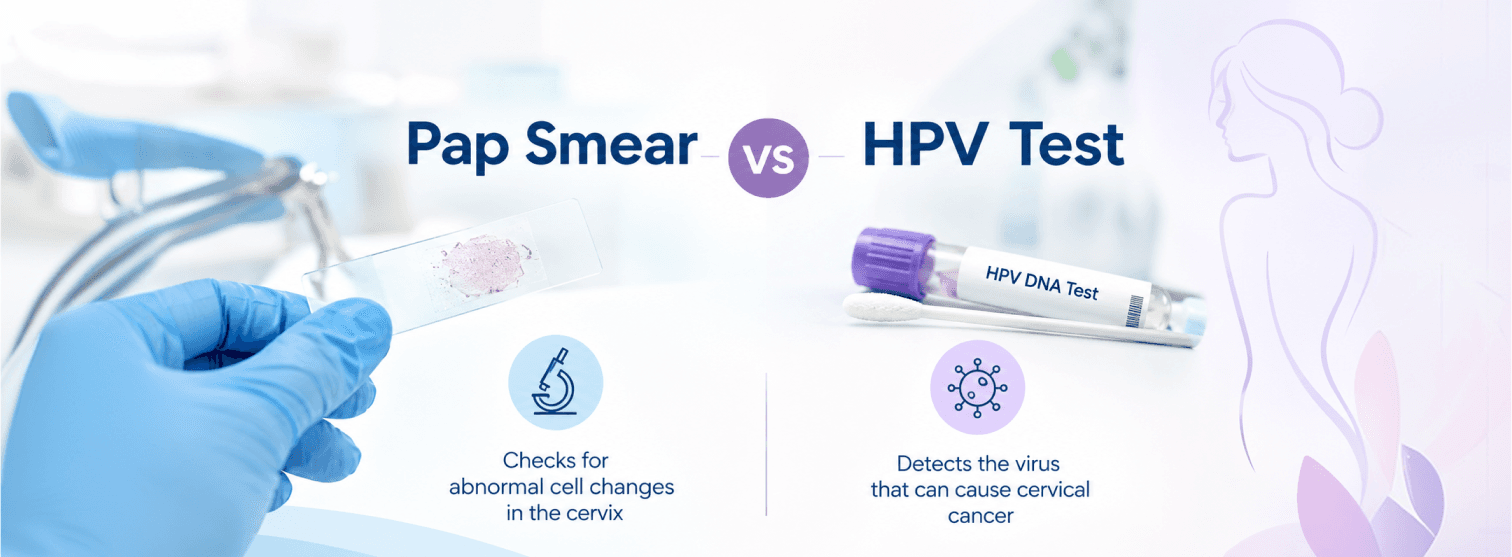
What Does a Pap Smear Test Check For?
A Pap smear test (Papanicolaou test) evaluates cervical cytology, meaning it examines the actual cellular structure of the cervix under a microscope:
How it works: During the test, you will lie on the examination table while a speculum is gently placed inside the vagina so the cervix can be seen. Your doctor then uses a small brush or spatula to collect the sample.
What it looks for: A pathologist reviews the cells to check for abnormalities, precancerous changes (cervical dysplasia), inflammation, or atypical squamous cells.
Primary goal: To detect cellular damage before it turns into invasive cancer, allowing doctors to remove or monitor abnormal tissue early.
What Does an HPV Test Detect?
The HPV test uses advanced molecular diagnostics to detect the presence of the human papillomavirus itself:
How it works: Using HPV DNA testing, the laboratory analyses cervical cell samples for genetic material belonging to high-risk HPV strains.
What it looks for: It specifically targets viral types known to cause cervical malignancies, particularly HPV types 16 and 18, which account for roughly 70% of all cervical cancer cases worldwide.
Primary goal: To identify a persistent high-risk viral infection before it has caused visible cellular damage on the cervix.
Pap Smear vs HPV Test: How Are They Different?
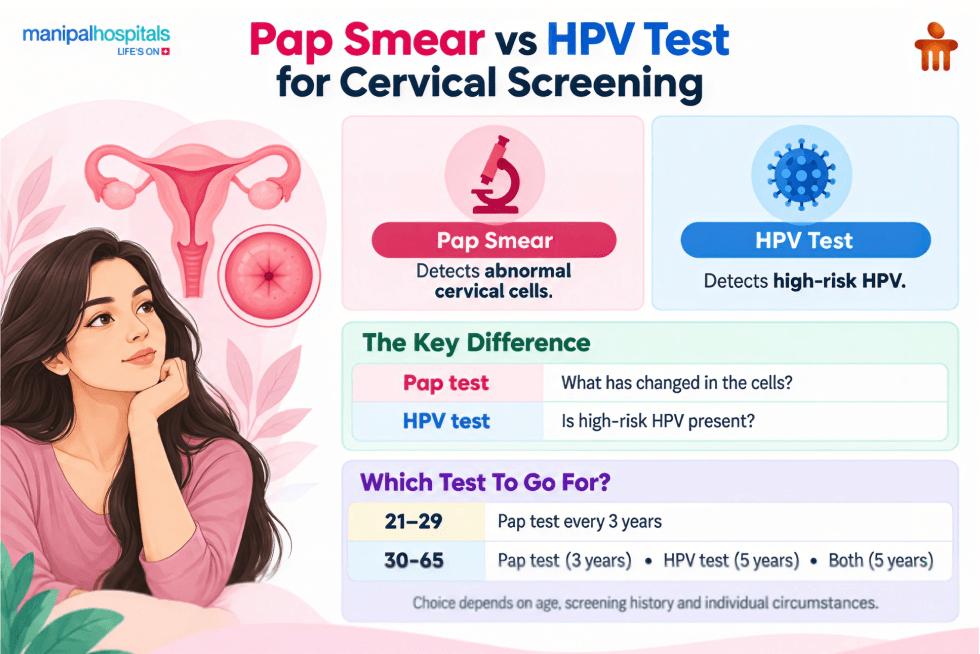
If you are trying to understand the Pap smear vs HPV test, the easiest way is to look at what each test is actually searching for. They use a sample of cells from the cervix, but the laboratory looks for different things.
What Is Co-Testing?
Co-testing refers to running both a Pap smear test and an HPV test simultaneously from the same sample collection:
Offers comprehensive insight by assessing both the causative agent (high-risk HPV) and physical cellular health at the same time.
If both tests return negative, the risk of developing cervical precancer over the following several years is very low, safely extending the recommended screening interval to 5 years for eligible women.
Personalized Cervical Cancer Screening Guidelines
Good call addressing this early. Reframing these guidelines is essential for an international audience, as medical standards differ significantly across borders based on local healthcare infrastructure, regional risk factors, and national guidelines.
To ensure clinical accuracy and patient safety, we have restructured the information below. We have attributed the specific guidelines to the U.S. Preventive Services Task Force (USPSTF) while explicitly highlighting why these intervals are not a "one-size-fits-all" rule.
Standard clinical recommendations from major gynaecological societies depend primarily on age and individual medical history:
HPV infections are common in women in their twenties, and the immune system clears the majority of these infections naturally within 1 to 2 years without causing cellular harm. Routine HPV test screening in this age bracket can lead to unnecessary procedures.
Why Screening Is Not "One-Size-Fits-All"
Screening recommendations are highly individualized. The guidelines presented above may not apply to you due to several critical variables:
Country and Region: Different countries utilize different screening models. For example, some national healthcare systems (like the NHS in the UK or programs in Australia) have transitioned fully to primary HPV screening with different age brackets and intervals than the US.
Health History: If you have a history of abnormal Pap or HPV results, cervical precancer, or cervical cancer, you will require a more frequent, specialized screening schedule.
Risk Factors: Individuals with compromised immune systems (such as those living with HIV), those who were exposed to DES (diethylstilbestrol) in utero, or those with other specific health conditions follow entirely separate clinical pathways.
Age Limits: Screening is generally not recommended for individuals under 21. For those over 65, screening may be discontinued only if they have had adequate prior screening with normal results and are not otherwise at high risk.
Note: Always consult with a primary care physician or gynaecologist through tele consultation or at Manipal Hospitals Global to determine the safest, most effective screening method and schedule tailored to your personal medical history and regional guidelines. If you are unsure whether you need a Pap smear or HPV test, speak to our gynaecologist today.
What Happens If Your Pap or HPV Test Is Abnormal?
Getting an abnormal Pap smear or a positive HPV test can understandably make you worry. But neither result, by itself, means that you have cervical cancer. It simply tells your doctor that the result needs a closer look.
What happens next depends on what your screening result shows and your individual case. Your doctor may recommend:
Repeating the test after a certain period
Colposcopy, which allows the cervix to be examined more closely
Biopsy, where a small sample of tissue is taken for further examination
You may not need all of these tests. Your doctor will look at your screening result and decide whether any further assessment is needed.
This is one reason it is worth keeping track of your cervical cancer screening results. An abnormal result is a reason to follow up, not a reason to assume the worst.
Advanced Cervical Care at Manipal Hospitals Global
When it comes to preventive gynecology, accessing top-tier clinical expertise is paramount. Manipal Hospitals Global stands at the forefront of women's healthcare and cancer care offering state-of-the-art diagnostic facilities for both Pap smears and advanced HPV testing. By combining highly sensitive screening technology with international medical protocols, our multidisciplinary team ensures that women from all over the world receive accurate, timely, and compassionate care.
It is easy to feel confused when you hear about both tests, but you do not have to work it out on your own. The right cervical screening test depends on your age, past results and individual circumstances. If you are still unsure about the Pap smear vs HPV test, or if you are seeking specialised consultation for an abnormal screening result, Manipal Hospitals Global provides patient-centred care tailored to your individual health needs.
International patients can also access video consultations and second opinions online, while our international patient services provide guidance on consultations, treatment planning, travel assistance and other aspects of receiving care in India.
Share this Article


Not sure what you’re looking for?
Not sure what you’re looking for?
Get in touch with our representatives for
help!
Get in touch with our
representatives for help!