Understanding Cervical Cancer: Symptoms, Screening, and Advanced Treatment for Bangladeshi Patients
Reviewed by: Cancer Care Department
Posted on Aug 26, 2026
10 Min Read
Synopsis
What is Cervical Cancer?
It is easier to define cervical cancer in lay terms by examining the anatomy of the female reproductive system. The cervix is the narrow, lower end of the uterus (womb) that joins directly to the upper end of the vagina (birth canal). The surface of the cervix is covered by two main kinds of cells: flat, thin squamous cells on the exterior and column-shaped glandular cells lining the inner canal. When the genetic instructions inside these cells are damaged, they start to divide abnormally and form a mass of tissue or a tumour.
In South Asia, understanding local health terminology helps bridge communication between families and healthcare teams. The cervical cancer meaning in Bengali is translated as Jorayumukher Cancer, referring specifically to abnormal cell growths originating at the neck of the womb.
Pathologists broadly classify the disease into two primary cellular forms:
- Squamous Cell Carcinomas: Accounting for roughly 80% to 90% of all diagnosed cases, this variant begins in the outer epithelial lining of the cervix, where it meets the vagina.
- Adenocarcinomas: Developing in roughly 10% to 20% of cases, this form starts within the mucus-producing glandular cells that line the endocervical canal, sometimes making it slightly harder to detect on visual inspection alone.
Recognising Early Symptoms and Warning Signs
One of the most important aspects of cervical health is that precancerous changes and very early-stage tumours rarely produce noticeable pain. This silent progression makes routine testing essential.
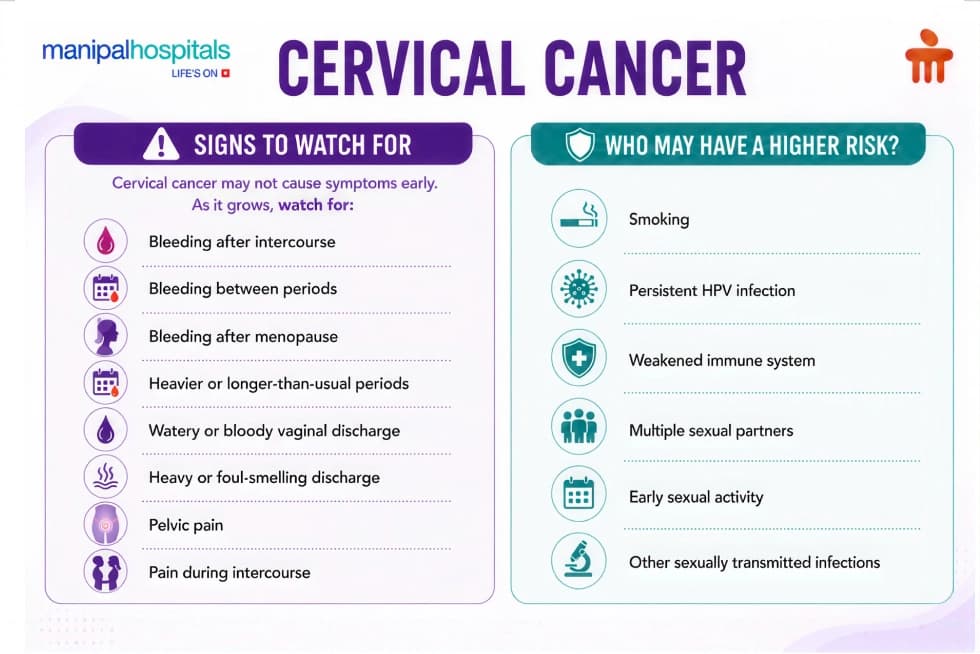
As abnormal tissue expands, distinct cervical cancer symptoms begin to appear:
- Abnormal Vaginal Bleeding: Experiencing unexpected bleeding between regular menstrual periods, unusually heavy or prolonged periods, bleeding after sexual intercourse (post-coital bleeding), or bleeding that begins years after menopause.
- Unusual Vaginal Discharge: Noticing a watery, pale, or bloody discharge from the vagina that may be heavy, continuous, or have an unpleasant, foul odour.
- Pelvic and Lower Back Discomfort: A persistent, dull ache in the lower abdomen or across the pelvic floor that does not correlate with your menstrual cycle.
- Pain During Intimate Contact: Discomfort or sharp pain experienced during sexual intercourse.
- Advanced Warning Indicators: If the condition begins to involve nearby structures, patients may experience difficulty or pain during urination, blood in the urine or stool, unexplained swelling in the legs, and persistent fatigue accompanied by unintended weight loss.
Investigating Causes and Key Risk Factors
When oncologists assess cervical cancer causes, the primary biological trigger is clear: persistent infection with high-risk types of the Human Papillomavirus (HPV). HPV is an extremely common, sexually transmitted virus that most sexually active adults encounter at some point in their lives. In the majority of people, a healthy immune system clears the viral particles naturally within two years without causing harm. However, in a small percentage of women, the virus survives inside the cervical cells for over a decade, slowly disrupting cell DNA and driving precancerous dysplasia.
In addition to viral exposure, several environmental and lifestyle cervical cancer risk factors increase the chance of abnormal cell progression:
- Early Marriage and Early Childbearing: Having a first pregnancy at a young age or birthing multiple children places repetitive physical strain and hormonal changes on the cervix, increasing cellular vulnerability.
- Weakened Immune Function: Individuals living with chronic conditions like HIV, or those taking immunosuppressive medications, have a significantly reduced capacity to clear natural HPV infections.
- Tobacco Use and Secondhand Smoke: The harmful chemical byproducts of tobacco are absorbed into the bloodstream and concentrate in cervical fluids, where they damage cell DNA and weaken local tissue immunity.
- Poor Genital Hygiene and Untreated STIs: Co-infections with other sexually transmitted organisms, such as Chlamydia or Herpes Simplex Virus, create chronic tissue inflammation that makes it easier for HPV to persist.
- Lack of Preventative Screening: Missing regular gynaecological checks means that easily treatable precancerous cell abnormalities go unnoticed until they transform into invasive tumours.
Diagnostic Pathways and Screening Matrix
Catching cellular abnormalities years before they turn into invasive disease is the gold standard of modern gynaecological care. The table below outlines the primary methods used for routine screening and formal diagnosis:
Diagnostic Method | Primary Clinical Objective | Recommended Clinical Frequency |
Visual Inspection with Acetic Acid (VIA) | A low-cost, immediate screening tool ideal for wide-scale community health outreach. | Every 3 to 5 years for women aged 30 to 49. |
Pap Smear (Cervical Cytology) | Identifies subtle cellular changes (dysplasia) long before they become cancerous. | Every 3 years starting from age 21 to 29, or combined with HPV tests. |
High-Risk HPV DNA Test | Provides the most accurate assessment of long-term cancer risk. | Every 5 years for women aged 30 to 65. |
Colposcopy and Guided Biopsy | Delivers a definitive histopathological confirmation and grades tissue changes. | Performed immediately following an abnormal VIA, Pap, or HPV screening result. |
Routine cervical cancer screening in Bangladesh increasingly uses VIA testing in government hospitals and community health clinics, making it an accessible option for women across the country.
Advanced Treatment Options
Choosing an effective treatment plan depends on the precise stage of the disease, the size of the tumour, the patient's age, and their future desire for biological children. While early precancerous lesions can be removed with simple minor procedures like a loop Electrosurgical Excision Procedure (LEEP) or cryotherapy: invasive tumours require comprehensive, multidisciplinary cancer care.
1. Surgical Oncology
For Stage I and select early Stage II cases, surgical intervention is the primary curative modality:
- Radical Trachelectomy: A fertility-sparing surgery that removes the cervix and surrounding pelvic lymph nodes while preserving the upper uterus, allowing young women to carry future pregnancies.
- Radical Hysterectomy: Complete surgical removal of the uterus, cervix, surrounding supporting ligaments (parametrium), and upper vagina, along with pelvic lymph node dissection.
2. Definitive Chemoradiation
For locally advanced stages (Stage IIB to IVA), surgery is typically replaced with a powerful combination of external beam radiation therapy (EBRT) and weekly low-dose chemotherapy (usually cisplatin). The chemotherapy acts as a radiosensitizer, making cancer cells far more vulnerable to the radiation beams.
3. Image-Guided Brachytherapy (Internal Radiation)
Following external radiation, patients receive targeted brachytherapy. A radioactive source is temporarily placed inside specialised applicators directly next to the cervix, delivering a high, curative dose of radiation to the tumour bed while sparing the adjacent bladder and rectum.
Why Bangladeshi Families Seek Treatment in India
For complex oncology cases that require advanced surgical precision and specialised radiotherapy, many families choose to travel to India. Leading Indian cancer centres, such as Manipal Hospitals Global, offer.
- High-Precision Robotic and Laparoscopic Surgery: Minimally invasive surgical options that result in smaller incisions, reduced blood loss, and faster recovery times.
- Advanced Radiation Technology: 3D MRI-guided high-dose-rate (HDR) brachytherapy and Intensity-Modulated Radiation Therapy (IMRT) that maximise tumour control while protecting healthy tissue.
- Multidisciplinary Tumour Boards: Comprehensive case reviews involving gynaecologic oncologists, medical oncologists, and radiation specialists working collaboratively.
- Rapid Treatment Timelines: Smooth scheduling that allows international patients to complete detailed PET-CT scans, staging, and treatment planning without prolonged waiting periods.
Prevention and the Role of Vaccines
Cervical cancer is unique because preventative vaccination and regular health checks can almost eliminate it. The cervical cancer vaccine in Bangladesh is a central component of national health initiatives. Modern HPV vaccines protect against high-risk strains (including HPV 16 and 18, which cause over 70% of cases). The vaccine is most effective when administered to young girls aged 9 to 14 before they become sexually active, though catch-up doses are available for older adolescents and young women. Combining widespread adolescent vaccination with routine adult screening ensures lifelong protection.
Conclusion
Navigating a cervical cancer diagnosis or managing persistent symptoms can feel daunting, but modern medicine offers clear, reliable pathways toward recovery. By understanding your body’s signals, seeking prompt evaluations for abnormal bleeding, participating in regular screening programmes, and exploring advanced surgical and radiation options, you can protect your health and look forward to a vibrant future. Prioritising regular gynaecological check-ups is the most empowering step a woman can take for herself and her family. You can improve your health by contacting Manipal Hospitals Global today!
Share this Article


Not sure what you’re looking for?
Not sure what you’re looking for?
Get in touch with our representatives for
help!
Get in touch with our
representatives for help!