Living with persistent spine pain can quietly take over everyday life. What starts as occasional discomfort may slowly turn into difficulty walking, sitting for long periods, or even sleeping through the night. For many people dealing with complex spine conditions, traditional surgery has often felt intimidating because of concerns about long recovery periods, surgical risks, and uncertain outcomes. Over the last decade, technology has revolutionised how spinal procedures are conducted. The most notable development has been robotic spine surgery, which is a technique that brings together medical expertise and precision robotic technology.
Robotic spine surgery provides international patients with the assurance that advanced technology is treating their spinal condition. This blog covers robotic spine surgery, when it's recommended, its benefits, and what to expect during recovery.
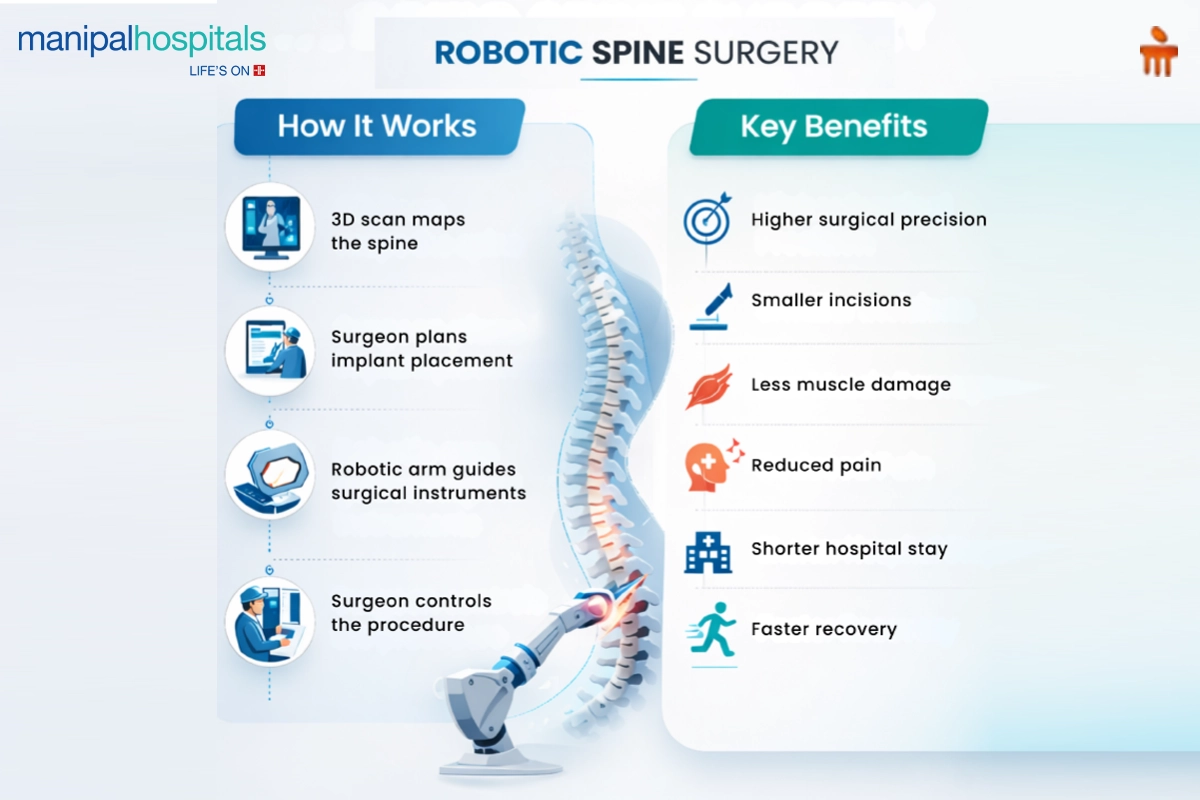
Spine surgery requires a high level of precision because the spinal cord, nerves, and vertebrae are located very close to each other. Even small variations in implant placement can affect nerve structures or spinal stability. Conventional spine surgery heavily depends on the visual judgment of the spine surgeon. However, in robot-assisted spine surgery, the surgeon first takes a detailed 3D image of your spine. This gives the spine surgeon the chance to plan the procedure in advance, knowing exactly where the implant or screw will be placed. Then, the robot will help position the surgical instrument in the exact location, with the spine surgeon in full control of the procedure.
This approach is often paired with minimally invasive spine surgery, which uses smaller incisions and specialised instruments to reduce tissue disruption. Together, these methods aim to make complex spinal procedures safer and more controlled.
Conditions That May Require Robotic Spine Surgery
Not every spine condition requires surgery. Many problems improve with physiotherapy, medications, or lifestyle adjustments. However, when pain becomes severe, neurological symptoms develop, or conservative treatments stop working, surgical intervention may be considered.
Several spinal disorders respond particularly well to robotic spine surgery, especially when accuracy and stability are crucial. Some indications for spinal surgery include:
Degenerative disc disease: Wear and tear on the spinal disc, which results in pain.
Spinal instability: Conditions that occur due to the abnormal movement of the spine.
Scoliosis: Conditions that cause the curvature of the spine.
Spinal fractures: Conditions that occur due to the weakening of the bones, which results in fractures.
Spinal tumours: Growths that may press on nerves or spinal structures.
In some cases, slipped disc surgery may also involve the use of robotics, especially if stabilization is needed.
Why Robotic Spine Surgery Is Changing Patient Outcomes
For years, one of the biggest concerns surrounding spine operations has been the potential for complications or long healing periods. Robotic assistance has gradually begun to shift that narrative by improving surgical accuracy and consistency.
One of the main benefits is the accuracy in the placement of spinal devices, since even a small error in the placement of a screw will affect the stability and the nerves. The second main benefit is the reduced trauma to the body. By using a robot with minimally invasive spine surgery, the size of incisions is smaller, unlike traditional surgery, which involves large incisions.
There are also other benefits that a patient might experience, such as:
Shorter hospital stays
A reduced risk of complications
Less pain
Faster return to daily activities
Improved spinal stability
Improved alignment
While any surgery has its risks, a person might feel more at ease knowing that technology is assisting the surgeon in this procedure, especially since it involves the spine, which is a delicate part of the body.
Comparing Traditional and Robotic-Assisted Spine Procedures
Learning about the difference between traditional spine surgery and robotic-assisted spine surgery can help a person make a more informed decision about the procedure they might need. Although both techniques treat the same spinal problems, the procedure might be different.
Aspect
Robotic-Assisted Spine Surgery
Conventional Spine Surgery
Surgical planning
Uses pre-operative 3D imaging to map implant placement before surgery begins
Planning relies mainly on surgeon's interpretation of imaging during the procedure
Instrument guidance
A robotic arm stabilises instruments and guides precise movements
Instruments are positioned manually by the surgeon
Implant accuracy
Higher consistency in screw placement due to digital guidance systems
Accuracy depends entirely on the surgeon's experience and intraoperative imaging
Muscle disruption
Often combined with smaller incisions and targeted access pathways
Larger exposure may be required to visualise the spine clearly
Radiation exposure
Reduced reliance on repeated intraoperative imaging in many cases
Surgeons and patients may experience higher imaging exposure during procedures
Surgical consistency
Standardised planning can improve reproducibility across complex cases
Outcomes may vary more depending on the surgical approach
While experienced surgeons achieve strong results with both techniques, robotic systems provide an additional layer of planning and control that many centres now consider valuable for complex spine procedures.
What International Patients Can Expect Before Surgery
Travelling abroad for spinal treatment can feel overwhelming at first. Many people worry about navigating unfamiliar healthcare systems or managing logistics in another country. Hospitals that treat international patients usually provide structured support to make the process smoother.
Before robotic spine surgery, the preparation phase typically involves:
Virtual consultations with spine specialists
Review of previous scans and medical records
Additional imaging studies, if needed
Detailed discussion about treatment option
Pre-operative medical fitness evaluation
Patients are also guided through travel planning, accommodation arrangements, and estimated hospital stay durations. Having a clear roadmap before arriving helps reduce stress and allows you to focus on your health rather than administrative details.
Recovery After Robotic Spine Surgery
The healing process after spine surgery varies depending on the condition treated and the complexity of the procedure. That said, many individuals experience a smoother spine surgery recovery when robotic-assisted techniques are used alongside minimally invasive approaches.
A typical spine surgery recovery timeline may include:
First week: Hospital discharge and light walking activity
Weeks two to four: Gradual return to daily tasks with limited bending or lifting
One to three months: Structured physiotherapy and increasing mobility
Three to six months: Most individuals resume normal routines and work
Although improvement often begins early, full healing continues over several months as bone structures stabilise and surrounding tissues adapt.
Conclusion
Living with spinal pain is hard enough, but when the pain is chronic, even the simplest actions seem to drain the energy from your body. Advances in technology have provided safer and more precise treatments for many conditions that were once treated with highly invasive procedures. For international patients exploring advanced treatment options, this technology offers both reassurance and improved recovery prospects. With the assistance of skilled spine surgeons and rehabilitation programmes, individuals are able to regain their movement and live their lives with greater freedom from pain.
If you are considering treatment abroad, specialised spine care speciality at Manipal Hospitals Global provide comprehensive evaluation, advanced surgical techniques, and structured recovery support designed specifically for international patients.