Advancing Orthopedic Care with Robotic Joint Replacement Surgery and Global Clinical Collaboration
Reviewed by: Orthopaeadics & Joint Replacement Department
Posted on Apr 06, 2026
8 Min Read

Loading...

98, HAL Old Airport Road, Kodihalli, Bengaluru, Karnataka 560017
Accreditations


Copyright © 2025 Manipal Hospitals - All Rights Reserved
Reviewed by: Orthopaeadics & Joint Replacement Department
Posted on Apr 06, 2026
8 Min ReadHealthcare is rapidly evolving with technological advancements that are transforming patient outcomes and clinical practices. One such breakthrough is robotic-assisted joint replacement surgery, which is redefining orthopedic care by improving precision, reducing complications, and enhancing recovery.
The Master Medics Training Program by Manipal Hospitals brought together healthcare professionals from across Africa and beyond for a powerful exchange on advancing orthopaedic care, particularly robotic joint replacement surgery and perioperative nursing management. The session was led by an exceptional panel of experts, including Dr. Samarth Arya, Consultant – Orthopaedics and Robotic Joint Replacement Surgeon, and Ms. Varra Manikya Madhuri, Lead Nursing Educator. Notably, the program featured Mrs. Perpetual Ofori-Ampofo, a distinguished global nursing leader and president of the Ghana Registered Nurses and Midwives Association (GRNMA), who also serves as the Africa representative and 3rd vice president on the International Council of Nurses (ICN) Board. With over 26 years of impactful experience in Ghana’s healthcare sector and a strong voice in international nursing leadership, her presence brought invaluable perspective to the discussion. The session focused on advancing clinical excellence, strengthening perioperative nursing practices, and fostering global collaboration in orthopaedic care.
During the session, Dr. Samarth Arya, an internationally fellowship-trained robotic hip and knee replacement surgeon, shared his insights on robotic joint replacement surgery.
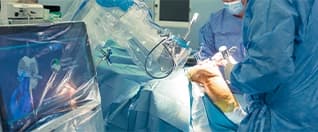
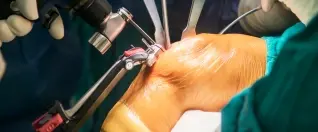
Dr. Arya has extensive global training in robotic arthroplasty and has performed over 1000 robotic joint replacement surgeries using Mako robotic technology. Robotic surgery combines advanced imaging, surgical planning, and robotic precision to achieve optimal implant placement.
Robotic joint replacement surgery begins with a CT scan of the patient’s joint, which helps create a 3D surgical plan before the procedure. During surgery:
Robotic-assisted joint replacement offers several advantages over conventional surgery:
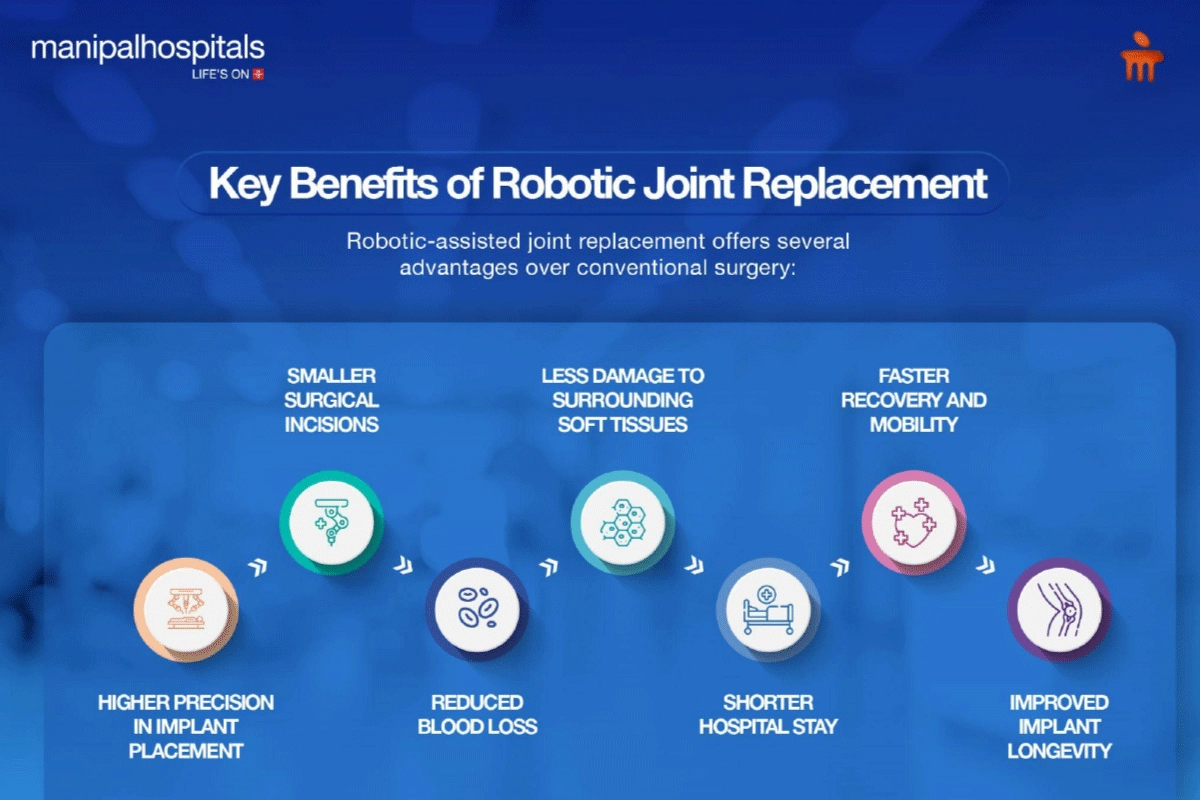
In many cases, patients can begin walking within a day after surgery and return to normal activities within weeks. To dive deeper into the conversation, Dr. Arya explained the condition further and expanded the discussion to the reasons for the rise in the condition we see today.
Orthopaedic conditions are often influenced by a complex interplay of underlying medical issues, trauma patterns, and systemic healthcare challenges. As highlighted in the session, conditions such as metabolic and endocrine disorders, autoimmune diseases, neurological impairments, and chronic degenerative illnesses significantly contribute to musculoskeletal complications.
In regions like Ghana, trauma-related injuries, particularly lower limb fractures involving the tibia, fibula, and femur, form a major portion of orthopaedic admissions, with road traffic accidents being a key driver. Alongside acute injuries, chronic musculoskeletal conditions such as osteoarthritis, osteoporosis, osteonecrosis, and persistent low back pain are increasingly prevalent, especially in urban populations.
However, the burden of orthopedic care extends beyond disease prevalence, encompassing systemic challenges such as limited access to healthcare services, gaps in specialist training and retention, and underdeveloped health information systems. Addressing these issues requires not only clinical advancements but also a strong focus on preventive healthcare, improved infrastructure, and global collaboration.
Emphasizing healthy lifestyles, early diagnosis, workplace ergonomics, and strengthened healthcare systems can play a pivotal role in reducing the long-term impact of orthopaedic conditions and improving patient outcomes.
Every individual has a unique anatomical alignment, known as a joint phenotype. Traditional surgeries often use standardized alignment techniques, which may not perfectly match every patient’s anatomy.
Robotic surgery allows surgeons to customize implant positioning according to the patient’s natural alignment, resulting in improved comfort, mobility, and satisfaction after surgery.
The system also provides accuracy of 0.1 millimeters and 0.1 degrees, which is nearly impossible to achieve with conventional techniques.
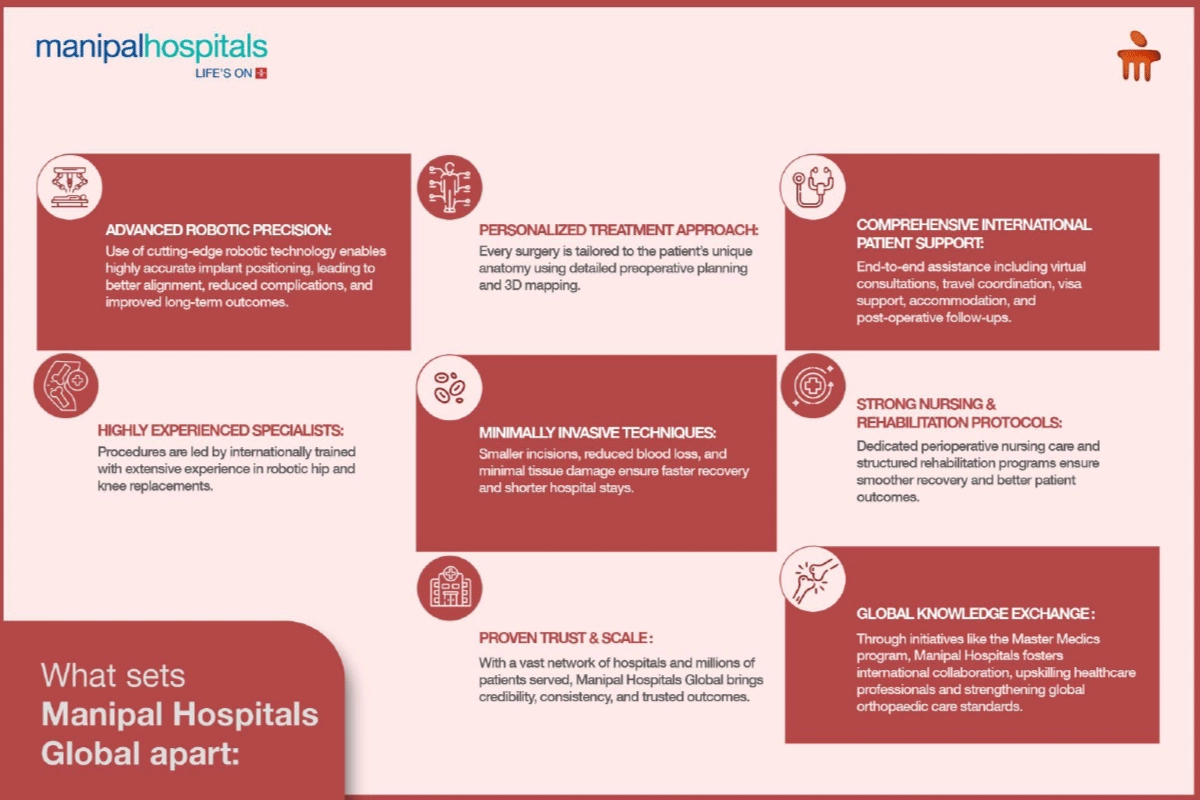
Manipal Hospitals Global is at the forefront of delivering advanced robotic joint replacement solutions to patients worldwide, combining clinical expertise with a seamless, patient-first approach. As a trusted facilitator, the focus goes beyond surgery, ensuring precision, safety, and a holistic care journey.
While surgical technology plays a vital role, nursing care is equally crucial for successful outcomes. During the session, Ms. Varra Manikya Madhuri, whose critical role of nursing in arthroplasty brought together sessions that highlighted the importance of structured nursing care during preoperative and postoperative phases.
Before surgery, nurses focus on:
After surgery, nurses monitor and support patients through the following:
These interventions significantly contribute to faster recovery and improved patient satisfaction.
The session also included a keynote address by Mrs. Perpetual Ofori, President of the Ghana Registered Nurses and Midwives Association. She shared insights into orthopedic conditions in Ghana and across Africa.
In many African countries:
The Master Medics program is designed to empower nurses and healthcare professionals through advanced clinical learning and cross-border knowledge exchange. With 49+ hospitals across India and over 60 million lives served, Manipal Hospitals continues to focus on delivering world-class healthcare while fostering international medical collaboration. https://www.instagram.com/p/DWfv2c0Akm6/
The session brought together surgeons, nursing leaders, and healthcare professionals to discuss the future of orthopedic care, including the growing role of robotics in joint replacement surgery.
Joint replacement surgery is most commonly required in patients suffering from advanced arthritis, a condition that occurs when the protective cartilage between bones wears away. This leads to bones rubbing against each other, causing severe pain, stiffness, and reduced mobility.
Arthritis typically progresses through stages:
Treatment depends on the stage of arthritis. Early management may include medication, physiotherapy, and injections such as steroids or PRP. However, when conservative treatments fail, joint replacement surgery becomes the most effective solution.
Robotic-assisted joint replacement represents a significant step forward in orthopedic surgery. As technology continues to evolve, patients can expect
By combining advanced technology, skilled surgeons, and dedicated nursing care, healthcare institutions can deliver better outcomes and enhance quality of life for patients suffering from joint diseases.

Not sure what you’re looking for?
Not sure what you’re looking for?
Get in touch with our representatives for
help!
Get in touch with our
representatives for help!