Oral Cancer Symptoms, Causes & Treatment Guide for Bangladeshi Patients
Reviewed by: Cancer Care Department
Posted on Aug 25, 2026
10 Min Read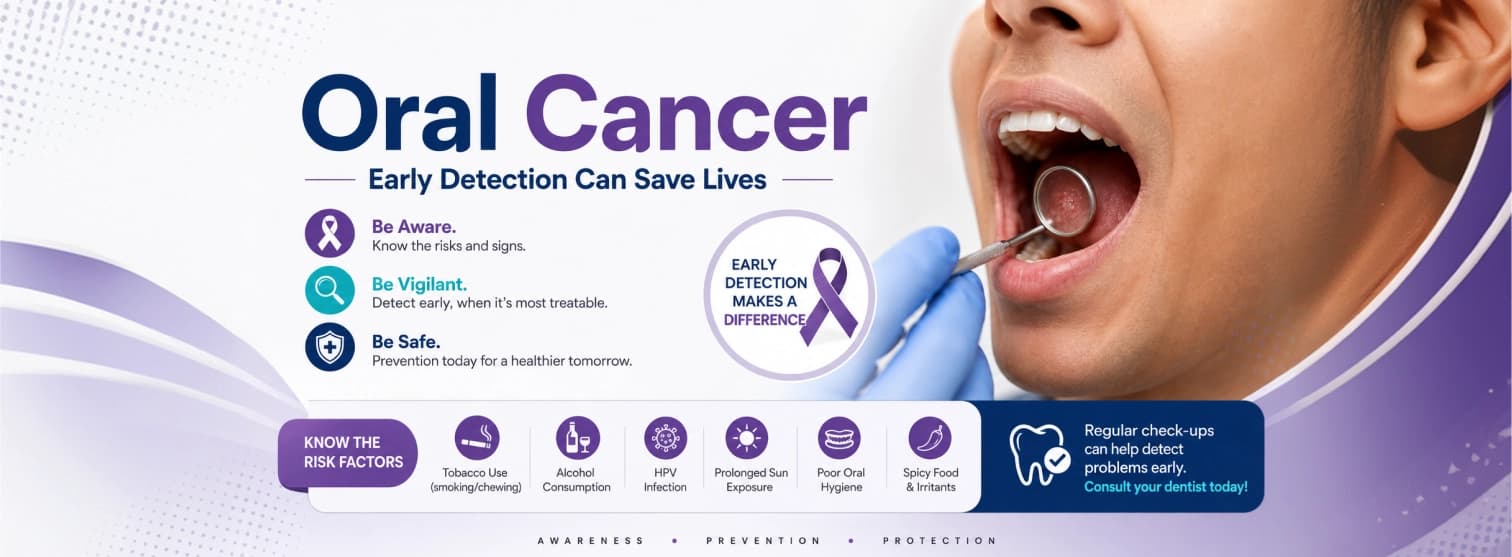
Synopsis
Understanding Oral Cancer and Its Impact in Bangladesh
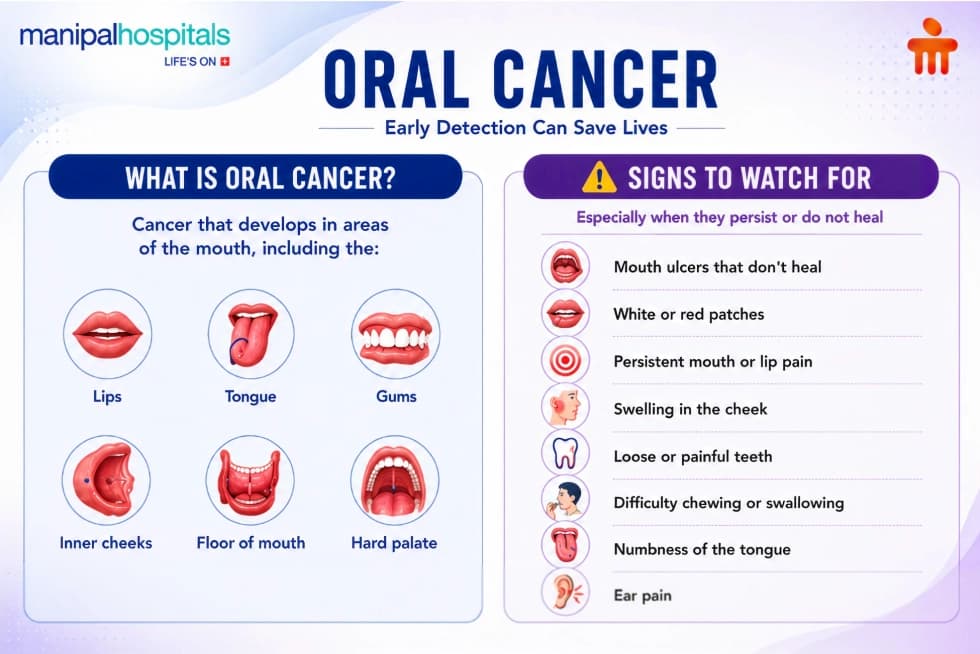
The oral cavity is made up of several delicate, hard-working parts: the lips, the front two-thirds of the tongue, the gums, the lining of the cheeks, the floor of the mouth tucked under the tongue, the roof of the mouth, and the small area just behind your wisdom teeth. When the DNA inside the cells lining these tissues becomes damaged, the cells begin to multiply uncontrollably, forming a malignant growth known collectively as oral cancer.
Unfortunately, the burden of oral cancer in Bangladesh remains among the heaviest in the world. Health registries show that the country records around 9.5 cases per 100,000 people annually, putting it on par with neighbouring South Asian regions where the condition is widespread. Men receive far more diagnoses than women, largely because they face common cultural risk factors on a daily basis.
Recognising how vital early detection is, dedicated community advocates and groups such as the Bangladesh Oral Cancer Society work tirelessly to teach the public that an unhealed sore should never be ignored. Catching the condition early changes everything: when found at Stage 1 or Stage 2, long-term survival rates stand well above 80% to 90%, whereas leaving a lesion to grow into later stages makes the treatment journey far more complicated.
Recognising Common Oral Cancer Symptoms
One of the trickiest aspects of this illness is that, in its earliest days, it rarely causes sharp pain. Because it does not hurt straight away, many people simply assume it will go away on its own and put off seeing a doctor until the problem has had time to grow. Being mindful of these subtle, persistent oral cancer symptoms gives you the best chance of getting help early:
- Non-Healing Mouth Ulcers: A sore on the tongue, lip, or inner cheek that lingers for longer than two or three weeks.
- Red or White Patches: Velvet-like red areas (erythroplakia), rough white patches (leukoplakia), or mixed patches on the gums or cheek lining that cannot simply be wiped or scraped away.
- Persistent Lumps or Thickening: A firm, rough spot or distinct lump along the side of the tongue, on the gums, or on the floor of the mouth.
- Trouble Chewing or Swallowing: Discomfort, tightness, or a sensation that food is getting stuck as you try to swallow.
- Changes in Tongue or Jaw Movement: Finding it difficult to move your tongue freely, struggling to open your mouth wide, or noticing numbness around your lips and chin.
- Loose Teeth and Poorly Fitting Dentures: Teeth becoming loose without any obvious gum disease, or dentures that suddenly feel tight and uncomfortable due to local swelling.
- Unexplained Ear Pain or Neck Lumps: A nagging ache in one ear despite having no ear infection, or a painless, firm swelling in the lymph nodes of your neck.
Key Causes and Cultural Risk Factors
The cellular changes that trigger tumours in the mouth almost always stem from repeated, direct exposure to irritating substances. Across South Asia, several long-standing daily habits play a major role in driving these changes:
- Betel Quid and Paan: Chewing paan with areca nut (supari), slaked lime (chun), and spices is woven into daily life for millions. However, areca nut contain potent natural alkaloids that create ongoing inflammation, cause mouth tissues to stiffen over time, and directly damage cellular DNA.
- Smokeless Tobacco: Adding processed or raw tobacco, such as zarda, sadapata, gul, or khaini, to paan or placing it directly against the gums exposes delicate tissues to concentrated carcinogens for hours on end.
- Smoking Bidis and Cigarettes: Inhaling hot smoke and chemical toxins from bidis, hookahs, and commercial cigarettes irritates the lips, tongue, and throat lining, significantly accelerating cellular damage.
- Alcohol Consumption: When alcohol is consumed regularly alongside tobacco, the two create a dangerous partnership. Alcohol dries and thins the protective lining of the mouth, making it far easier for tobacco toxins to seep deep into the underlying tissue layers.
- Constant Friction from Sharp Teeth: A chipped tooth, rough dental filling, or ill-fitting denture that constantly rubs against the tongue or cheek creates mechanical irritation, forcing cells into continuous, disordered repair.
- Human Papillomavirus (HPV): Certain viral strains, particularly HPV-16, are increasingly linked to tumours forming near the base of the tongue and the back of the throat.
Diagnosis and Advanced Treatment Pathways
Whenever a specialist suspects that a mouth sore is something more serious, the very first and most essential step is an oral cancer biopsy. During this simple, quick procedure, a doctor numbs the area and removes a tiny sample of tissue to examine under a microscope, which provides a definitive diagnosis and reveals the exact nature of the cells.
Once confirmed, treating tumours in the oral cavity relies on a coordinated team of head and neck surgeons, reconstructive specialists, radiation oncologists, and medical oncologists working side by side.
1. Surgical Removal with Clear Margins
Surgery remains the cornerstone of curative treatment. The surgeon carefully removes the primary growth along with a healthy margin of surrounding tissue to ensure no microscopic cancer cells are left behind. If the tumour has grown close to or into the jaw, a portion of the bone is removed (a mandibulectomy). The surgeon usually performs a selective neck dissection at the same time, clearing nearby lymph nodes where stray cells might hide.
2. Microvascular Free-Flap Reconstruction
Modern cancer surgery is not just about removing the disease; it is equally focused on helping you talk, eat, and look like yourself again. Reconstructive surgeons perform microvascular free-flap procedures immediately after the tumour is removed:
- Forearm or Thigh Flaps: Skin and soft tissue taken from the forearm or thigh are delicately shaped to rebuild the tongue and the floor of the mouth.
- Fibula Flaps: A section of bone from the lower leg is used to rebuild the jawbone, creating a strong foundation that can later support dental implants.
3. Targeted Radiation Therapy
For moderate or advanced cases, radiation therapy is typically given a few weeks after surgery to clear any remaining microscopic cells. Advanced techniques like Intensity-Modulated Radiation Therapy (IMRT) sculpt the radiation beams precisely to the tumour area, shielding the salivary glands and healthy tissues to reduce long-term dry mouth and swallowing issues.
4. Chemotherapy and Targeted Therapies
Medical oncologists often prescribe chemotherapy alongside radiation to boost its effectiveness in more advanced stages. For tumours with specific genetic markers, targeted drugs and modern immunotherapies are also used to block the signals that help cancer cells grow and spread.
When dealing with complex head and neck conditions that demand high-precision surgery and sophisticated reconstructive care, many patients and their families choose to travel for oral cancer treatment in India.
Conclusion
Hearing the words 'oral cancer' is undeniably daunting, but the advancements in modern medicine mean that the outlook today is brighter than ever. With early awareness of stubborn mouth sores, a timely oral cancer biopsy, skilled surgical care, and modern reconstructive techniques, patients can look forward to lasting recovery and a fulfilling life. If you or someone in your family has an ulcer, white patch, or mouth lump that has not healed after two weeks, scheduling a thorough clinical evaluation at Manipal Hospitals Global is the safest, most reassuring step you can take.
Share this Article


Not sure what you’re looking for?
Not sure what you’re looking for?
Get in touch with our representatives for
help!
Get in touch with our
representatives for help!