15 Early Warning Signs of Cancer: What Persistent Changes in Your Body Mean
Reviewed by: Cancer Care Department
Posted on Oct 13, 2026
10 Min Read
Synopsis
What Are the Early Signs and Symptoms of Cancer?
Cancer develops when genetic faults cause cells in a specific part of the body to divide and multiply abnormally. As these cells accumulate, they can form a physical mass called a tumour, or in the case of blood cancers, disrupt normal bone marrow production.
Because tumours need energy to grow and can physically press on nearby organs, blood vessels, and nerves, they produce measurable physical changes. Early symptoms usually depend on where the tumour is located, how large it is, and whether it has started interfering with normal organ function.
15 Warning Signs of Cancer You Should Not Ignore
Being aware of the typical early signs of cancer means you can spot unusual changes before they have time to advance.
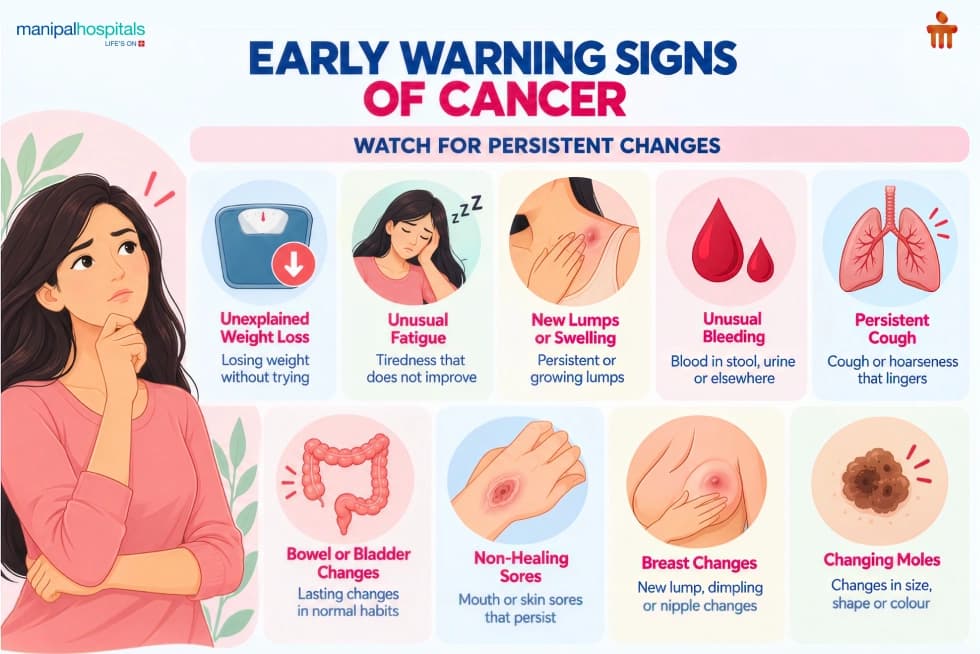
1. Unexplained Weight Loss
Losing weight when you have not changed your diet or started a new exercise routine is a common clinical sign. With unexplained weight loss, cancer-growing tumour cells consume a large amount of the body's energy supply while also releasing inflammatory proteins that break down muscle and fat tissue. Unexplained weight loss can occur with cancers of the stomach, pancreas, oesophagus and lungs, although it can also have non-cancerous causes.
2. Severe, Unrelieved Fatigue
Everyone feels tired from time to time, but fatigue associated with cancer can be very different from normal tiredness. This form of exhaustion does not improve after a full night of sleep or a weekend of rest. It happens because tumours consume nutritional reserves, cause microscopic internal blood loss that leads to anaemia, or alter the body's hormone levels.
3. New Lumps or Swelling Under the Skin
A new or persistent lump can sometimes be a sign of cancer, although many lumps are caused by non-cancerous conditions. These are often noticed in areas rich in lymph nodes or glandular tissue, such as the neck, armpits, groin, testicles, and breasts. While most lumps turn out to be harmless cysts or swollen glands responding to an infection, any lump that remains hard, fixed in place, or grows over time needs examining.
4. Persistent Changes in Bowel Habits
Temporary bouts of loose stools or constipation happen to everyone. But if you notice a lasting change in your normal bowel movements that continues past three weeks, you should get it checked. This includes alternating between constipation and diarrhoea, feeling like your bowel never fully empties, or stools that appear noticeably narrower than normal.
5. Blood in the Stool or Rectal Bleeding
Blood in the stool or rectal bleeding should not be ignored and warrants medical assessment. While bright red blood on toilet paper is often caused by piles (haemorrhoids) or small tears (fissures), it can also signal bowel or rectal tumours. Blood that originates higher up in the colon can make stools look dark, sticky, and tar-like.
6. Changes in Bladder Function
Needing to pass urine far more frequently, waking up multiple times every night to urinate, or experiencing pain and stinging when you urinate can indicate bladder or prostate problems. Passing visible blood in your urine (haematuria), even if it happens only once and causes no pain, should be assessed promptly by a doctor.
7. Chronic Cough or Persistent Hoarseness
A cough linked to a cold or chest infection normally clears up within two to three weeks. A cough that lasts longer than four weeks, gradually worsens, or brings up blood or rust-coloured phlegm needs urgent investigation, especially in people who smoke. A raspy or hoarse voice that does not improve after three weeks can also point to tumours affecting the larynx or thyroid.
8. Difficulty Swallowing (Dysphagia)
If you find that food regularly feels stuck in your throat or chest when you swallow, or if swallowing becomes painful, you should see a doctor. While acid reflux can cause mild swallowing discomfort, progressive difficulty that forces you to switch from solid foods to liquids can be an early sign of cancer in the oesophagus or stomach.
9. Persistent Heartburn or Indigestion
Occasional indigestion after eating a heavy or greasy meal is normal. However, severe, painful heartburn that occurs almost daily, does not respond to regular antacid medicines, and is accompanied by feeling full very quickly after eating small meals should be assessed to rule out gastric tumours.
10. Noticeable Changes to Existing Moles
Melanoma, a serious form of skin cancer, often begins as a change to an existing mole or as a new dark spot on the skin. Doctors use the simple ABCDE guide to identify concerning lesions:
A - Asymmetry: One half of the spot does not match the other.
B - Border: The edges are irregular, ragged, or blurred.
C - Colour: The mole contains uneven shades of brown, black, pink, or blue.
D - Diameter: The spot is larger than 6 millimetres across.
E - Evolving: The mole is visibly changing in size, shape, colour, or has started itching or bleeding.
11. Unusual Bleeding Between Periods or After Menopause
Any vaginal bleeding that occurs between your normal menstrual cycles, after sexual intercourse, or after you have gone through menopause is abnormal. Post-menopausal bleeding, even if it is just light spotting, can sometimes indicate endometrial (womb) or cervical cancer and requires prompt gynaecological evaluation.
12. Non-Healing Mouth Sores or Skin Ulcers
A small cut or mouth ulcer should heal within ten to fourteen days. A sore inside your mouth, on your tongue, or on your lip that remains open, bleeds, or forms a thickened white or red patch past three weeks should be inspected by a dentist or doctor, particularly if you drink alcohol or use tobacco products.
13. Persistent, Unexplained Pain
Pain signals that tissue is inflamed or irritated. While aches from exercise or posture are common, pain that stays in one specific area, such as continuous bone pain, a persistent headache that does not ease, or an ache in your abdomen, and gets progressively worse over several weeks needs a medical opinion.
14. Breast Changes
Understanding the early signs of breast cancer involves looking for more than just a lump. While a painless, hard lump in the breast tissue or under the arm is a common symptom, also look for dimpling or puckering of the breast skin, a nipple that has newly turned inward, fluid or blood leaking from a nipple, or a red, scaly rash around the areola.
15. Urinary and Pelvic Issues in Men
Knowing the early signs of prostate cancer is important for men over 50. In its earliest stages, prostate cancer rarely causes symptoms, but as the tumour enlarges and presses against the urethra, it may cause a weak urine stream, difficulty starting to urinate, straining, or a feeling that the bladder has not emptied completely.
Quick Symptom Reference Guide
Symptom | Common Non-Cancer Causes | When to See a Doctor |
Weight loss | Hyperthyroidism, stress, diet change | Ongoing, unexplained weight loss without dieting |
Tiredness | Lack of sleep, low iron levels, stress | Severe fatigue that does not improve with rest |
Bowel changes | Irritable bowel syndrome, food intolerances | Lasting past 3 weeks or passing blood |
Persistent cough | Post-viral cough, asthma, acid reflux | Lasting longer than 3–4 weeks or coughing blood |
Skin mole changes | Normal ageing, benign sun spots | Asymmetrical shape, irregular borders, bleeding |
Conclusion
Spotting potential cancer symptoms does not automatically mean that you have a malignant tumour. The majority of people who visit their GP with these complaints turn out to have benign conditions like infections, benign polyps, or simple hormonal imbalances.
Care for International Patients with Manipal Hospitals Global
When facing persistent health changes, finding the right answers quickly is important. Manipal Hospitals Global offers international patients access to oncology specialists, diagnostic technologies and cancer treatment options. Patients seeking cancer care in India can consult relevant specialists to discuss their diagnosis, understand available treatment options and plan the next steps based on their individual medical needs.
The International Patient Care Team assists patients throughout the process, including coordinating appointments, arranging medical visa assistance, airport transfers and language interpretation. International patients can also access video consultations and second opinions to discuss medical reports, review their diagnosis and explore potential treatment options before travelling to India.
Whether you are seeking preventive screening, a diagnosis or guidance on a treatment plan, you can explore the available cancer care services and consult relevant specialists to understand the options suited to your medical needs.
Share this Article


Not sure what you’re looking for?
Not sure what you’re looking for?
Get in touch with our representatives for
help!
Get in touch with our
representatives for help!