Varicocele Surgery: Symptoms, Male Infertility, Treatment & Recovery
Reviewed by: Urology Department
Posted on Jun 30, 2026
9 Min Read

You may have noticed a dull ache in the scrotum that worsens after long periods of standing, or a feeling of heaviness on one side. For some men, a varicocele is discovered unexpectedly during an evaluation for fertility concerns. Although the term may sound unfamiliar, a varicocele is one of the most common conditions affecting men and, in many cases, can be managed effectively with timely medical care.
A varicocele occurs when the veins within the scrotum become enlarged, much like varicose veins that develop in the legs. In India, studies suggest that varicoceles affect approximately 10 to 15% of men. The prevalence is even higher among those being investigated for infertility, with nearly 40% of men who experience primary fertility challenges having a varicocele. Understanding the condition, recognising its symptoms, and knowing when to seek medical advice can help you make informed decisions about your reproductive health. In this blog, we explain what varicocele is, explore what causes varicocele, discuss varicocele surgery, and cover the common signs, symptoms, and treatment options available.
What is a Varicocele?
If you are learning about this condition for the first time, you might naturally wonder, "What is a varicocele?" In plain terms, it is an enlargement or swelling of the network of veins inside your scrotum, specifically a group of vessels known as the pampiniform plexus. These veins are responsible for carrying oxygen-depleted blood away from the testicles back toward the heart.
Think of it exactly like getting a varicose vein in your leg. When these scrotal veins swell and stretch out, they create a noticeable clump of fluid-filled vessels above the testicle. In the vast majority of cases, these changes develop slowly over time, starting around puberty. While they are often completely harmless and cause no physical problems, they can sometimes cause mild discomfort or alter your reproductive health.
What Causes Varicocele?
When exploring what causes varicocele development, the issue comes down to internal mechanics and unique anatomical layout:
- Faulty One-Way Valves: The primary trigger is a malfunction within the tiny internal valves inside the testicular veins. When these valves fail or are missing, blood cannot flow efficiently upward against gravity.
- Venous Pooling: Stagnant blood backs up and pools inside the scrotum, causing the thin walls of the veins to stretch, widen, and balloon into a soft mass.
- Left-Side Bias: This condition occurs far more frequently on the left side of the scrotum. This phenomenon is because the left testicular vein takes a sharp, vertical 90-degree path directly into the renal vein, creating significantly higher physical pressure than the right side's gentle diagonal path.
Common Varicocele Symptoms
A vast majority of men living with an expansion experience absolutely no obvious indicators. However, when signs do present themselves, they typically include:
- A Dull Scrotal Ache: A heavy, throbbing, dragging sensation in the scrotum. This discomfort typically worsens during long periods of standing or late in the evening and is characteristically relieved when lying flat on your back.
- A Noticeable Mass: A distinct clump of swollen vessels sitting right above the testicle, often looking and feeling like a "bag of worms" beneath the skin.
- Testicular Asymmetry: The affected testicle (usually the left) may look or feel noticeably smaller than the other due to mild tissue shrinkage from pooled blood.
Can Varicocele Cause Male Infertility? Understanding the Link
This condition is a frequent focus during family planning evaluations due to its direct impact on testicular temperature control:
- The Temperature Rule: Optimal sperm production, maturity, and hormone function require a localised environment that is about 5°C cooler than your core body temperature.
- Failed Cooling System: When scrotal veins swell and accumulate stagnant blood, they lose their ability to act as a natural heat exchanger, causing the testicles to overheat.
- Cellular Stress: This continuous warmth causes local oxidative stress and a buildup of harmful cellular toxins.
- Sperm Damage: Over time, the elevated temperature impairs sperm production, reduces total sperm counts, and lowers sperm movement (motility), making it difficult to father a child.
How Is Varicocele Diagnosed?
Specialists can quickly confirm the condition using two straightforward diagnostic tools:
- Physical Examination: A urologist examines the scrotum while you stand up. They will ask you to take a deep breath and bear down (the Valsalva manoeuvre) to temporarily increase abdominal pressure, which fills the veins and makes them easy to touch.
- Scrotal Ultrasound Scan: A painless sound-wave test used to measure the exact width of the veins. A reading showing vessels wider than 3 millimeters with backward blood flow confirms the condition. It also accurately measures the testicles to check for tissue loss.
Exploring Varicocele Treatment Without Surgery
For many men, an expansion requires no active treatment if it does not cause pain or fertility issues.
- Conservative Care: Standard varicocele treatment without surgery focuses entirely on symptom management. This includes wearing supportive underwear, like an athletic supporter or snug briefs, to relieve physical pressure on the scrotum, alongside taking simple over-the-counter pain relievers like ibuprofen.
- The Reality Check: If you are looking up how to cure varicocele without surgery, medical data shows that lifestyle adjustments cannot shrink damaged vein walls or fix broken valves. If the condition is actively causing persistent pain, testicular shrinkage, or a severe drop in sperm quality, a structural procedure is the only way to fix the blood pathway permanently.
Advanced Surgical Options: Varicocele Surgery
When medical intervention becomes necessary, the primary approach is a structural repair designed to safely tie off or block the malfunctioning veins, redirecting blood flow through healthy alternative pathways:
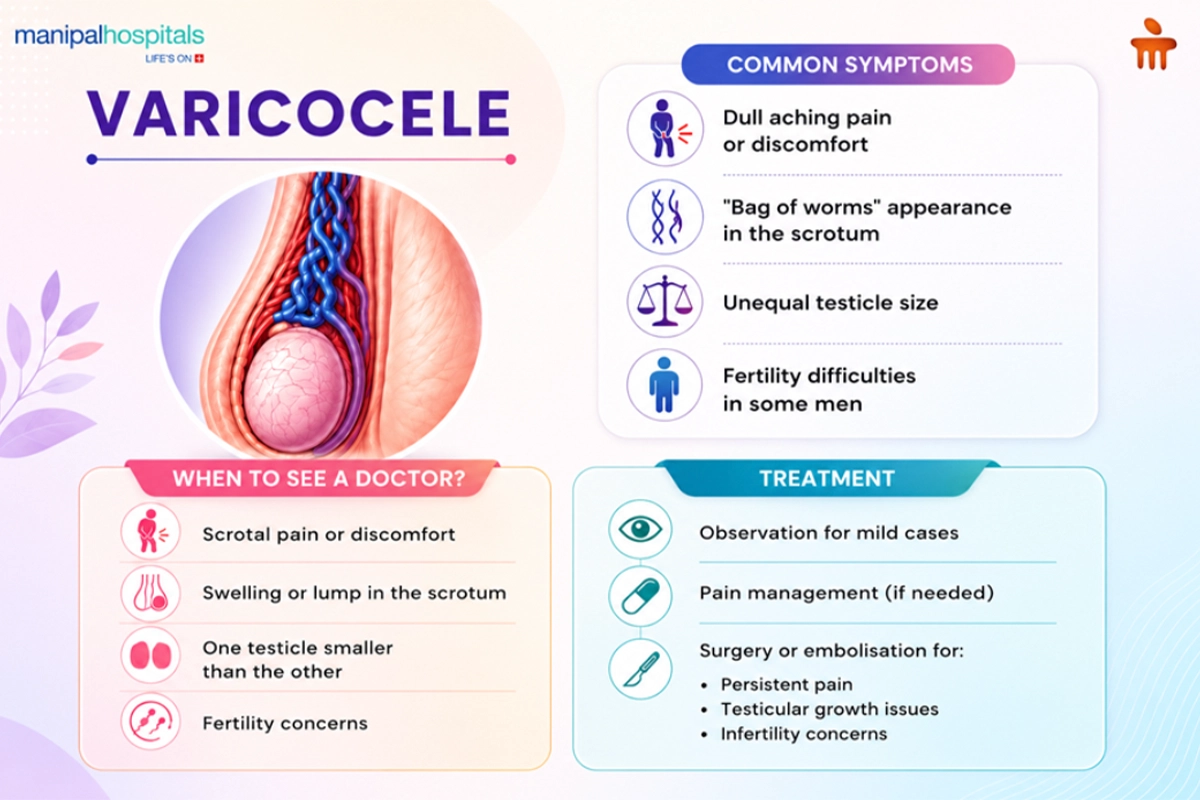
- Microscopic Varicocelectomy (Gold Standard): The surgeon makes a tiny, 1 cm incision just above the scrotum. Using a high-powered operating microscope, they tie off all the enlarged veins while completely protecting the sperm tube and testicular arteries. (Takes 2 to 3 hours; same-day discharge).
- Laparoscopic Varicocelectomy: Performed by inserting thin tubes and a tiny camera through small cuts in the abdomen. The surgeon views a digital monitor to isolate and tie off the problematic vessels. (Takes 30 to 40 minutes; performed under general anaesthesia).
- Percutaneous Embolisation: An interventional radiologist passes a thin catheter through a tiny puncture hole in the groin or neck. Guided by real-time X-rays, they deploy tiny metal coils or a specialised liquid plug to block the backwards blood flow completely. (Takes 45 to 60 minutes; performed under local anesthesia).
Varicocele Surgery Success Rates & Recurrence
- High Reliability: The overall varicocele surgery success rate is exceptionally high across all modern techniques, with serious complications being extremely rare.
- The Gold Standard Advantage: Among the available choices, a microscopic repair boasts the highest long-term success rate and the lowest overall chance of the issue returning.
- Recurrence Risk: There is a minor structural chance (less than 1 in 10 cases) where a varicocele might return. This occurs if a tiny, hidden branch of a vein was missed during the initial repair, causing it to expand over time under physical pressure.
Varicocele Surgery Post-Operative Recovery and Results
Varicocele Surgery Recovery Time
- Return to Work: Most men can return to a regular, low-stress desk job within 5 to 7 days after a surgical repair or within 1 to 2 days following a radiological embolisation.
- Physical Activity Limits: You must avoid strenuous workouts, heavy weightlifting, and intense exercise for 10 to 14 days to allow the treated vessels to seal and heal completely.
How Long After Varicocele Surgery Does Sperm Improve?
- The Structural Window: The standard timeline to see improvements is three to four months.
- The Biology: Because it takes roughly 72 to 90 days for an entirely new batch of sperm to form and mature within a newly cooled testicular environment, your urologist will schedule a follow-up semen analysis around this midpoint.
- The Success Rate: Semen quality, count, and motility improve significantly in about 6 out of 10 infertile men following a successful repair.
Why Choose Manipal Hospitals Global for Varicocele Surgery?
Early diagnosis and timely treatment can help relieve symptoms and improve fertility outcomes. At Manipal Hospitals Global, our experienced urologists and expert multidisciplinary team provide comprehensive care for varicocele using advanced diagnostic techniques and personalised treatment plans.
Our varicocele care includes:
- Accurate diagnosis through clinical evaluation and scrotal ultrasound.
- Personalised treatment options, including conservative management, microscopic varicocelectomy, and minimally invasive procedures.
- Expert care for male infertility with comprehensive fertility evaluation and treatment.
- Dedicated international patient services, including virtual consultations, treatment planning, visa assistance, travel support, and interpreter services.
Whether you are experiencing pain, fertility concerns, or are seeking a second opinion, Manipal Hospitals Global provides expert, patient-centred care to help you achieve the best possible outcomes.
Conclusion
An enlargement of the scrotal veins is a highly manageable structural issue that responds exceptionally well to timely, specialised care. Whether you choose conservative monitoring or an advanced microscopic repair, looking after your reproductive system relies on securing accurate diagnostics and clear medical facts. At the Urology Department at Manipal Hospitals Global, our experienced urologists provide comprehensive evaluation, advanced treatment options, and personalised care to help relieve symptoms, preserve fertility, and support long-term reproductive health.
Share this Article


Not sure what you’re looking for?
Not sure what you’re looking for?
Get in touch with our representatives for
help!
Get in touch with our
representatives for help!