Angioplasty vs Bypass Surgery: Which Treatment Is Right for You?
Reviewed by: Cardiology Department
Posted on Oct 16, 2026
8 Min Read
Synopsis
What Is Angioplasty?
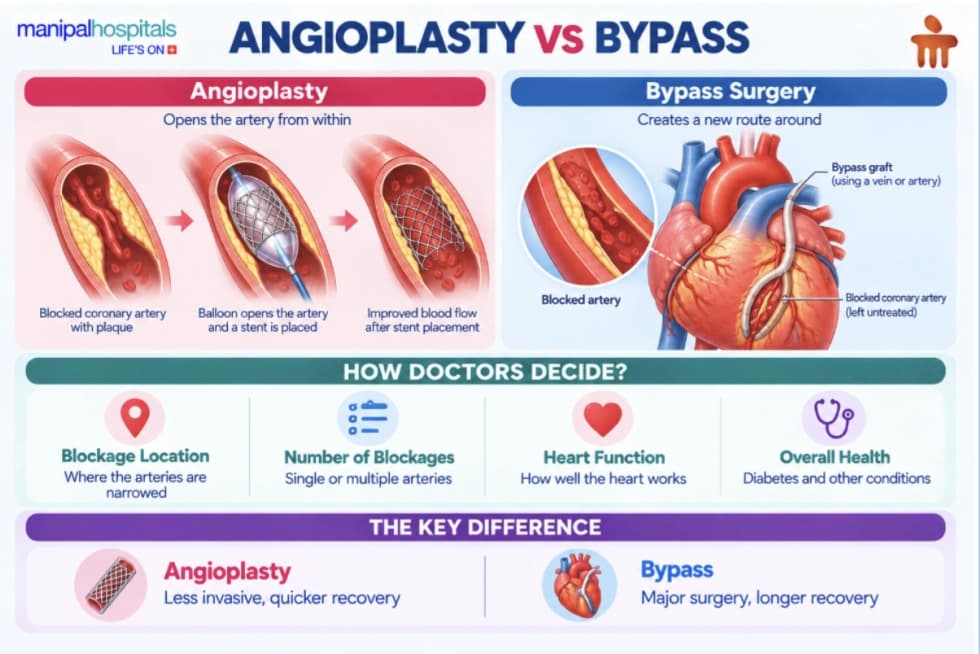
Angioplasty is a procedure in which a thin catheter is guided through a blood vessel to the narrowed part of a coronary artery. The catheter may be introduced through the wrist, arm or groin. Once it reaches the affected area, a small balloon is inflated. The inflated balloon compresses the plaque and expands the narrowed section of the artery. A stent is usually placed at the same site. It acts like a small mesh tube, helping the artery stay open after the balloon is removed.
What Is Bypass Surgery?
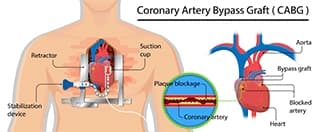
In bypass surgery, a blood vessel from another part of the body is used as a graft to create a new route for blood to flow around the blocked coronary artery.
The main difference is how each procedure restores blood flow. Angioplasty reaches the narrowed artery through a catheter and opens it from within. Bypass surgery involves an operation to route blood around the blockage.
Angioplasty vs Bypass: How Doctors Decide
There is no single procedure that is right for everyone with coronary artery disease. The choice between angioplasty and bypass surgery depends on the location and complexity of the blockages, the number of coronary arteries affected, heart function, symptoms, and other health conditions.
When angioplasty may be considered
Angioplasty may be considered when a narrowed or blocked coronary artery can be treated effectively with a catheter-based procedure. It is commonly used during certain types of heart attack, where restoring blood flow quickly is important. It may also be considered when angina continues despite medicines and lifestyle measures.
The suitability of angioplasty depends on the coronary anatomy and the complexity of the blockage. Factors such as the location of the narrowing, the number of affected vessels, and whether the blockage can be treated effectively with a stent all influence the decision.
When bypass surgery may be preferred
Bypass surgery may be preferred when coronary artery disease is extensive or complex, particularly when several major coronary arteries are affected or the anatomy is less suitable for angioplasty. Bypass surgery may be preferred in some patients with diabetes and multivessel coronary artery disease, complex left main coronary artery disease, or reduced heart function. The decision depends on coronary anatomy, disease complexity, surgical risk, and the expected benefits of each treatment.
The presence of disease in the left anterior descending artery alone does not automatically mean that bypass surgery is required. The cardiologist considers the overall pattern of coronary disease and the expected benefits and risks of each treatment.
How is the final decision made?
Doctors may use coronary angiography and other tests to assess the location and severity of the blockages and how well the heart is functioning. Symptoms, previous treatments, diabetes, kidney disease, and other health conditions may also influence the recommendation.
For people with complex coronary artery disease, the decision may involve a multidisciplinary Heart Team, which can include an interventional cardiologist and a cardiac surgeon. The aim is to select the treatment that is most appropriate for the person's individual condition.
Angioplasty vs Bypass Surgery: Key Differences
The difference becomes easier to see when the two procedures are placed side by side. The table below looks at how they are performed, the hospital stay and the time needed to recover.
Factor | Angioplasty with stenting | Coronary bypass surgery |
Basic approach | Opens the narrowed artery with a balloon and usually places a stent | Creates a new route around the blocked artery |
Invasiveness | Less invasive | More extensive surgery |
Anaesthesia | Local anaesthetic is generally used | General anaesthesia is used |
Typical procedure time | Often around 30 minutes to 2 hours, depending on complexity | About 3 to 6 hours, depending on the procedure. |
Hospital stay | May be the same day or overnight for non-emergency cases | Often several days, depending on recovery and complications |
Return to work | Some patients may return within days to a week after an uncomplicated planned procedure, depending on medical advice and work demands | Usually takes considerably longer |
Full recovery | Generally quicker | Recovery commonly takes several weeks, and full recovery may take around 6 to 12 weeks or longer |
Often considered when | Suitable coronary blockages that can be treated effectively with a catheter-based procedure | Multiple blockages or major coronary artery disease may favour bypass |
Risks and Recovery
The two procedures differ not only in how they are performed but also in what the days and weeks afterwards can look like. The recovery after angioplasty is generally shorter, while bypass surgery requires more time in hospital and a longer period of healing.
Angioplasty
Like any medical procedure, angioplasty carries some risks. These may include:
- Artery damage
- Reaction to the contrast dye
- Bleeding
- Heart attack
- Stroke
After a non-emergency angioplasty, some people may go home the same day or after an overnight stay. Many people can return to normal activities relatively quickly after planned angioplasty, although the timing depends on the procedure, their overall health, and the type of work they do.
Bypass surgery
Bypass surgery is a more extensive procedure and has its own possible complications:
- Atrial fibrillation
- Infection
- Reduced kidney function
- Stroke
- Heart attack
After the operation, a hospital stay of several days is common, although the length varies depending on recovery and any complications. Recovery takes longer than it does after angioplasty, and full recovery may take up to about 12 weeks. The longer recovery is an important practical difference when considering heart disease treatment.
Conclusion
Angioplasty is less invasive and usually means a shorter recovery. Bypass surgery may be appropriate for some patients with extensive or complex coronary artery disease, including selected cases involving the left main or left anterior descending (LAD) coronary artery. The choice depends on the overall pattern of disease and the patient's clinical condition.
What matters is the bigger picture: where the blockages are, how extensive they are, how well the heart is working, the symptoms you have and any other health conditions. If you are unsure which way to go, talk it through with your cardiologist. Patients should discuss their investigation results, treatment options, and individual risks with their treating cardiologist before making a decision.
Understanding Treatment Options at Manipal Hospitals Global
Patients considering angioplasty or coronary artery bypass surgery can discuss their diagnosis and treatment options with the cardiac care team at Manipal Hospitals Global. The Cardiology Department works with relevant specialists, including interventional cardiologists and cardiothoracic surgeons, to assess coronary angiography findings, heart function, the extent of arterial blockages, existing medical conditions, and the potential risks and benefits of each procedure. Where appropriate, a multidisciplinary Heart Team may be involved in evaluating treatment options and determining an approach based on the patient's individual clinical circumstances.
International patients can explore available services such as video consultations to discuss medical reports, second opinions to understand alternative treatment approaches, and assistance with coordinating their medical care in India. Through the Heal in India initiative, patients can also seek information about accessing healthcare services in India and the arrangements involved in planning treatment.
The international patient services team can provide information about the available consultation options, medical documentation, appointments, and treatment coordination. Whether angioplasty or coronary artery bypass surgery is appropriate depends on the patient's coronary anatomy, the severity and complexity of the disease, overall health, and the clinical assessment of the treating specialists.
Share this Article


Not sure what you’re looking for?
Not sure what you’re looking for?
Get in touch with our representatives for
help!
Get in touch with our
representatives for help!