
Dengue NS1 Antigen Positive: What Your Result Means & Essential Next Steps
Reviewed by: Manipal Hospitals Global
Posted on Sep 29, 2026
8 Min Read
Synopsis
What is the NS1 Antigen Test for Dengue?
The dengue NS1 test is a blood test to detect NS1, which stands for non-structural protein 1. The dengue virus produces this protein, and it is present in the blood during an active infection.
The test looks for the actual NS1 antigen, not the antibodies your body makes to fight the virus. The fundamental difference is that an antigen test checks for a piece of the virus, while an antibody test checks for the immune response to it. They draw blood and send it to a lab to be analysed for the presence of NS1. Because this protein is detectable during the acute phase of dengue, the test can help identify the infection early in the course of the illness.
The name may appear as dengue NS1, the dengue NS1 antigen test or just as part of a dengue fever test on a lab report.
When Is the Dengue NS1 Test Most Useful?
The timing of the blood sample matters when testing for NS1. The protein is most useful as a marker during the acute phase of dengue infection, particularly during the first seven days of illness.
NS1 testing can be useful early on because the immune response may not yet have produced detectable antibodies. As the illness progresses, the amount of NS1 that can be detected may change, which can affect the test result.
For this reason, the test is generally most useful when performed:
- During the first seven days of illness, NS1 can be detected in the blood.
- Early in the infection, before antibody testing may become informative.
- With the day of illness recorded, so the result can be interpreted in the right context.
What Does a Positive Dengue NS1 Antigen Test Mean?
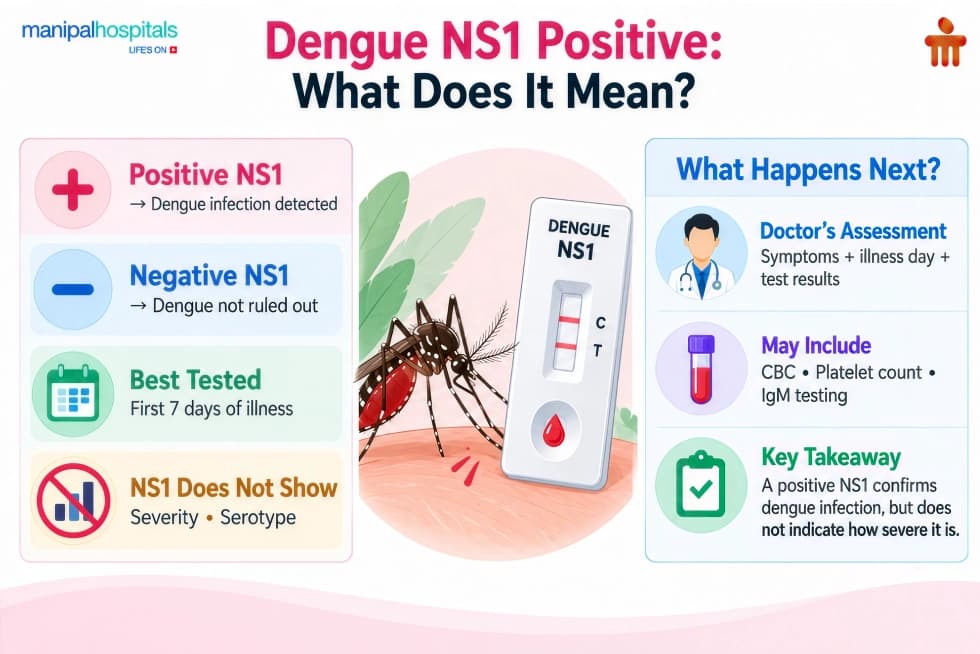
If you are wondering what a positive dengue NS1 antigen test means, the answer is straightforward: it indicates that dengue virus infection has been detected. A report may describe the result as positive or reactive or use similar wording to indicate that the NS1 antigen was found in the blood.
NS1 result | What it means | What it does not tell you |
Positive / Reactive | NS1 antigen was detected, indicating dengue virus infection. | The dengue serotype, or, by itself, how severe the infection is |
Negative / Non-reactive | The NS1 antigen was not detected in the sample. | Dengue infection cannot always be ruled out based on this result alone. |
A positive dengue NS1 report indicates that NS1 antigen was detected, supporting a diagnosis of dengue infection, but it does not indicate which dengue virus serotype is causing the infection. The serotype is also not necessary for routine patient care. Similarly, the result alone does not tell you how severe the illness is.
What Does a Negative NS1 Result Mean?
A negative result means that NS1 antigen was not detected in the blood sample. However, this does not completely rule out dengue infection. One reason is timing: the amount of detectable NS1 can change as the illness progresses.
If dengue is still suspected despite a negative result, further testing may be considered. During the first seven days of illness, NS1 can be combined with an IgM antibody test to improve the chance of reaching a diagnosis. If both results are negative, a second specimen can be tested for IgM later to help confirm or rule out infection.
So, a negative result needs to be considered alongside when the sample was collected and the other test findings. It should not be treated as conclusive evidence that dengue is absent.
Next Steps After a Positive Dengue Test
Following confirmation of a positive result, supportive care and clinical vigilance are necessary. Because there is no direct antiviral medication that cures dengue, dengue fever management focuses on maintaining circulating fluid volume, controlling fever, and tracking vascular integrity.
1. Implement Strict Hydration Protocols
Adequate fluid intake is the cornerstone of clinical management. Patients must maintain a consistent intake of oral fluids throughout the day. Recommended fluids include oral rehydration salts (ORS) dissolved in boiled and cooled water, fresh coconut water, clear vegetable or chicken broth, and clean drinking water. Maintaining systemic hydration helps prevent hypovolaemia (a decrease in the volume of blood circulating in the body) if fluid shifts occur during dengue infection.
2. Safe Symptom Management
Body temperature must be controlled exclusively using paracetamol (acetaminophen) according to age- and weight-appropriate medical dosages.
- Medications to Avoid: Never administer non-steroidal anti-inflammatory drugs (NSAIDs) such as ibuprofen, naproxen, aspirin, or diclofenac. These drugs inhibit platelet aggregation and cause gastric mucosal irritation, significantly elevating the risk of gastrointestinal bleeding.
3. Serial Complete Blood Count (CBC) Monitoring
A single blood test is not sufficient to evaluate the full course of dengue. Your physician will order serial complete blood counts every 12 to 24 hours, particularly as you approach Day 3 to Day 6 of the illness.
The medical team monitors two distinct parameters:
- Platelet Count: A decline in platelets occurs as bone marrow megakaryocyte production slows and peripheral immune complexes clear circulating platelets.
- Haematocrit (HCT / PCV): This measures the percentage of whole blood made up of red blood cells. A rising haematocrit level can be an important indicator of plasma leakage and should be interpreted alongside the patient's clinical condition.
Recognising Critical Warning Signs
The most dangerous stage of dengue—the critical phase—coincides paradoxically with the breaking of the high fever, typically occurring between Day 3 and Day 7 of the illness. During this 24- to 48-hour window, increased capillary permeability can develop.
Immediate hospital evaluation is required if any of these dengue fever warning signs occur:
- Severe, persistent abdominal pain or tenderness over the right upper quadrant of the abdomen
- Persistent vomiting (inability to retain fluids over a 24-hour period)
- Spontaneous mucosal bleeding, including recurrent epistaxis (nosebleeds), bleeding from the gums, or abnormally heavy menstrual bleeding
- Haematemesis (vomiting blood or dark fluid resembling coffee grounds) or melaena (black, tarry stools)
- Extreme lethargy, restlessness, physical confusion, or acute inability to stand
- Rapid, shallow breathing or respiratory distress secondary to pleural effusion
- Cold, clammy extremities, weak peripheral pulses, and postural dizziness, indicating hypotension
Conclusion
An NS1 result is most meaningful when you consider both what the test shows and when it was performed. A positive result indicates dengue infection, while a negative result does not always rule it out. What matters next is how the result fits with your symptoms, the stage of illness and other relevant test findings. If you need help understanding your results or deciding whether further evaluation is needed, Manipal Hospitals Global can support you through the complete diagnostic and treatment process in India. Our experienced doctors and multidisciplinary teams provide comprehensive care for dengue and other infectious diseases, supported by advanced diagnostic facilities and coordinated treatment. International patients can also access video consultations with our doctors before travelling to India, helping them understand their results, discuss treatment options and plan the next steps in their care.
Share this Article


Not sure what you’re looking for?
Not sure what you’re looking for?
Get in touch with our representatives for
help!
Get in touch with our
representatives for help!



