
Dengue in Bangladesh: Early Symptoms, 7 Warning Signs, Stages and Treatment
Reviewed by: Manipal Hospitals Global
Posted on Aug 25, 2026
10 Min Read
Synopsis
What is Dengue Fever and How Does It Spread?
At its core, dengue is a viral infection transmitted by mosquitoes and caused by any of four distinct but closely related virus serotypes: DENV-1, DENV-2, DENV-3, and DENV-4. You cannot catch dengue directly from another person through everyday contact, coughing, or sharing meals. Dengue is primarily transmitted from one person to another through the bites of infected female Aedes mosquitoes, particularly Aedes aegypti and Aedes albopictus. When a mosquito bites someone carrying the virus, it picks up the pathogen and passes it along to the next person it bites.
What Are the Symptoms of Dengue Fever?
Dengue symptoms can vary from person to person. Common symptoms usually begin after an incubation period and may appear suddenly, with fever often accompanied by headache, pain behind the eyes, muscle and joint pain, nausea, rash and other symptoms.
After a bite from an infected mosquito, there is usually a quiet incubation period of 4 to 7 days before any obvious illness sets in. In young children and teenagers experiencing their first infection, it can easily be mistaken for a standard seasonal cold or flu.
Common Symptoms of Dengue
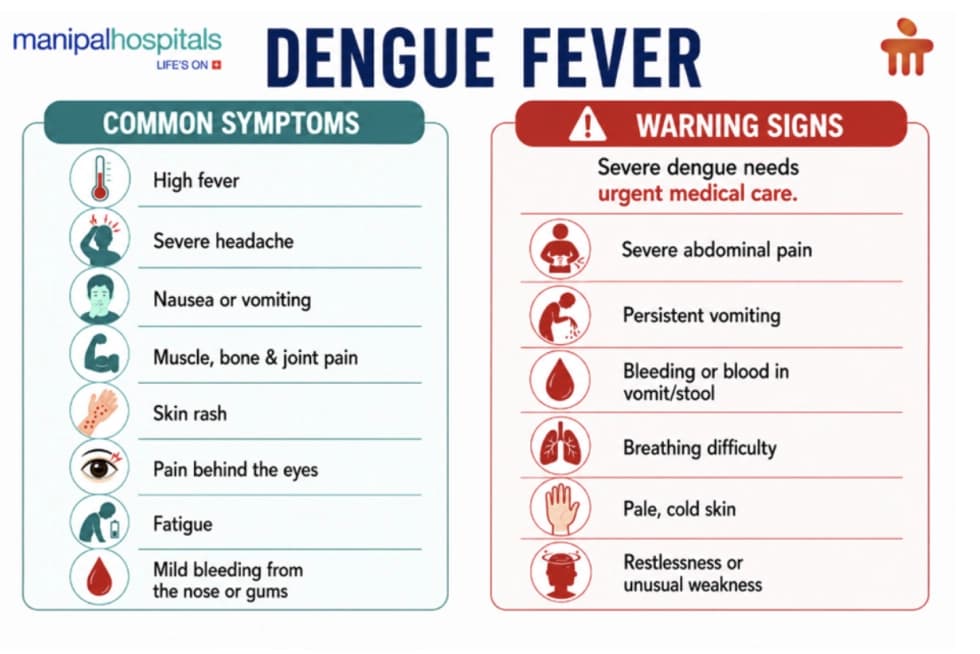
When active illness develops, the initial signs and symptoms of dengue fever typically appear suddenly and all at once:
- Sudden High Fever: Body temperature often shoots up quickly to 40°C (104°F), frequently accompanied by intense chills and sudden exhaustion.
- Pain Behind the Eyes (Retro-Orbital Pain): A common symptom of dengue, this feels like a deep, throbbing ache tucked right behind the eyeballs that noticeably worsens whenever you move your eyes from side to side.
- Severe Musculoskeletal Aches: Deep, relentless aching through the joints and muscles, which earned the condition its old nickname, "breakbone fever".
- Persistent Headaches: Severe, pounding discomfort usually concentrated right across the forehead and temples.
- Digestive Discomfort (Nausea and Vomiting): A sudden loss of appetite, persistent nausea, and a mildly upset stomach.
- A Widespread Rash: A fine, measles-like reddish rash that often emerges across the chest, back, or limbs around 2 to 5 days after the fever first begins.
- Mild Bleeding Tendencies: Traces of blood when brushing your teeth, sensitive gums, or minor nosebleeds.
Dengue Symptoms Day by Day
A sudden drop in fever does not mean the patient is fully recovered. In dengue, the 24 to 48 hours immediately following the fever's decline mark the Critical Phase, which is the most dangerous period of the illness where severe complications can arise.
The course of a dengue infection typically spans 7 to 10 days and is divided into three distinct phases. Here is what patients and caregivers should expect as the illness progresses:
The Three Clinical Phases of Dengue
Illness Phase | Typical Timeline | Key Symptoms & Characteristics | What to Watch For |
1. Febrile Phase | Days 1 to 7 | Sudden high fever (often up to 104°F/40°C), severe headache, pain behind the eyes, intense muscle and joint pain ("breakbone fever"), facial flushing, and sometimes a patchy skin rash. | Focus on managing the high fever with prescribed medication, getting plenty of rest, and maintaining strict hydration. |
2. Critical Phase | Days 3 to 7 (As fever drops) | Fever subsides (defervescence). This is a deceptive period. Patients may either improve or suddenly develop warning signs such as severe abdominal pain, persistent vomiting, bleeding gums/nose, extreme fatigue, or rapid breathing. | Immediate emergency medical care is required if any warning signs appear, as this indicates dangerous fluid leakage or bleeding. |
3. Recovery Phase | Days 7 to 10+ | Gradual improvement in general wellbeing, return of appetite, stabilization of heart rate, and fluid reabsorption. Patients might develop a classic "isles of white in a sea of red" itchy skin rash. | Continued rest is needed as profound fatigue can linger for weeks even after the virus has cleared the body. |
The Deceptive Nature of the Critical Phase
It is a common and dangerous misconception that breaking the fever means the worst of the illness has passed. In a dengue infection, the transition from the Febrile Phase to the Critical Phase occurs exactly when the patient's body temperature drops back down to normal levels.
During this window, the virus can cause the body's blood vessels to become highly permeable. This leads to blood plasma leaking into the chest or abdominal cavity. Caregivers must remain highly vigilant during the 48 hours after the fever breaks. If the patient begins to show signs of persistent vomiting, mucosal bleeding, or severe lethargy, it is a medical emergency requiring prompt hospitalization and fluid management.
7 Early Warning Signs of Dengue Fever: When to Seek Immediate Medical Attention
The most deceptive aspect of dengue is its timeline. With most common viral infections, breaking the fever means you are finally out of the woods, but dengue behaves quite differently. The most critical phase actually begins just as the high temperature starts to subside, usually between day 3 and day 7 of the illness.
During this brief 24- to 48-hour window, the body’s tiny blood vessels (capillaries) can become unusually porous, allowing fluid, or plasma, to seep out of the circulation into surrounding tissues. This leakage can cause your blood pressure to drop suddenly while platelet numbers fall.
The following 7 warning signs may indicate progression toward severe dengue and require prompt medical assessment. If someone with suspected or confirmed dengue becomes significantly unwell, medical care should be sought without delay.
- Severe Abdominal Pain or Tenderness: A constant, sharp, or worsening pain in the stomach area, particularly under the ribs on the right-hand side over the liver.
- Persistent Vomiting: Repeated vomiting or an inability to keep fluids down can be a warning sign of severe dengue and requires prompt medical assessment.
- Mucosal Bleeding: Spontaneous bleeding from the nose, bleeding gums, or unusually heavy, unexpected menstrual bleeding.
- Vomiting Blood or Passing Dark Stools: Bringing up vomit containing dark specks that resemble coffee grounds, or passing black, tarry stools.
- Profound Fatigue or Extreme Restlessness: Sudden, deep lethargy, confusion, irritability, or struggling to stay comfortably awake and alert.
- Fluid Accumulation and Breathlessness: Rapid, tight, or laboured breathing caused by fluid gathering around the lungs or in the abdomen.
- Cold, Clammy Skin and Dizziness: Feeling light-headed when standing up, paired with pale, cold, and sweaty hands and feet, a clear sign that blood pressure is falling.
Paying close attention to these particular dengue symptoms Bangladesh healthcare teams treat during outbreaks, which is vital, as timely hospital fluids can easily reverse plasma leakage within hours.
How Is Dengue Diagnosed?
The accuracy of a dengue test depends heavily on timing. Doctors will select the appropriate diagnostic test based on exactly how many days the patient has been experiencing symptoms.
A dengue diagnosis begins with a clinical assessment. A healthcare provider will evaluate the patient's specific symptoms, travel history, and potential exposure to mosquitoes in endemic areas. Because dengue shares early symptoms with other illnesses like malaria, chikungunya, or typhoid, specific laboratory tests are required to confirm the infection and monitor its severity.
Here are the primary tests used to diagnose and monitor dengue:
Diagnostic Test | What It Measures | Best Time to Administer |
Dengue NS1 Antigen Test | Detects the non-structural protein (NS1) of the dengue virus itself. It provides a rapid and early confirmation of the infection before the body mounts an immune response. | Days 1 to 5 of symptom onset (during the early Febrile Phase). |
Antibody Testing (IgM & IgG) | Checks for the body's immune response to the virus. IgM antibodies indicate a recent or current infection, while IgG antibodies can indicate a past or secondary infection (which carries a higher risk of severe dengue). | Day 5 onwards, as it takes several days for the immune system to produce detectable antibodies. |
Complete Blood Count (CBC) | A standard blood test used to closely monitor platelet levels and hematocrit (the concentration of red blood cells). | Throughout the illness. A rapid drop in platelets or a sudden rise in hematocrit are major warning signs that the patient is entering the dangerous Critical Phase. |
By combining a thorough physical examination with correctly timed blood tests, doctors can accurately confirm a dengue infection and track the patient's blood profile to prevent severe complications.
What Happens to Platelet Counts During Dengue?
During dengue, the virus suppresses bone marrow and destroys blood cells, causing platelet counts to drop sharply, especially during the critical phase. While monitored closely to assess bleeding risks, a low platelet count alone does not define severe dengue. Doctors evaluate platelets alongside vital signs, fluid accumulation, and warning symptoms. This comprehensive clinical picture is vital, as dangerous plasma leakage can occur even when platelet levels do not seem critically low.
Supportive Dengue Fever Treatment and Recovery
At present, there is no specific antiviral medication that eliminates dengue. Instead, dengue fever treatment centres on giving your body the supportive care and fluids it needs while your immune system fights off the infection naturally.
1. At-Home Hydration and Plenty of Rest
For mild cases managed safely at home, prioritising fluids is the most effective thing you can do. Make sure to drink oral rehydration salt (ORS) solutions, fresh coconut water, clear homemade broths, and plenty of water throughout the day. Maintaining a steady intake keeps your circulating blood volume stable and balances minor fluid shifts.
2. Safe Fever Management
To bring down a high temperature and ease uncomfortable body aches, stick strictly to standard paracetamol, following the package directions or your doctor's advice.
3. Hospital Care for Severe Cases
If any red-flag warning signs appear, or if regular blood work reveals a sudden drop in platelets paired with a sharp climb in haematocrit, admission to hospital becomes necessary.
Catching these issues early helps prevent severe complications of dengue fever, such as Dengue Haemorrhagic Fever (DHF) and Dengue Shock Syndrome (DSS), ensuring a steady, reassuring return to health.
4. What to Expect During Dengue Recovery
Dengue recovery begins as acute symptoms stabilize and the appetite gradually returns. While the fever subsides and a classic itchy rash may appear as a sign of healing, complete recovery takes significant time. You should expect to feel profound, lingering tiredness and weakness for weeks after the virus clears. This prolonged fatigue is a normal part of the post-viral phase. Prioritize continued rest and hydration even after you start feeling better to help your body fully rebuild its strength.
How to Prevent Dengue and Control Mosquitoes
Aedes mosquitoes are the primary vectors responsible for dengue transmission. They are quite easy to identify thanks to the distinctive white bands on their legs and bodies. Unlike the common mosquitoes that buzz around your bedroom at night, Aedes mosquitoes are daytime feeders, hunting most actively in the early hours of the morning and again in the late afternoon before dusk settles. They prefer to breed in clean, stagnant water found right around our doorsteps, uncovered water buckets, plant pot saucers, discarded plastic containers, rooftop puddles, and active construction sites. When heavy seasonal downpours arrive, instances of dengue fever in Bangladesh naturally climb as these artificial reservoirs fill up, making consistent household vigilance our best line of defence.
Because targeted vaccines are not yet universally available for every age group across our region, keeping mosquito populations down and avoiding bites remains our strongest everyday protection:
- Clear Away Standing Water: Take a few minutes each week to inspect and empty water storage drums, buckets, flowerpot trays, air-conditioner runoff collection points, and discarded tyres. Keep any essential water storage vessels tightly covered.
- Use Nets and Window Screens: Fit fine mesh screens over open windows and always sleep under a mosquito net, especially during daytime naps when Aedes mosquitoes are actively feeding.
- Apply Insect Repellent: Use a reliable repellent containing proven active ingredients like DEET, picaridin, or oil of lemon eucalyptus on any exposed skin.
- Dress Wisely: When spending time outdoors in the early morning or around sunset, opt for loose-fitting, light-coloured trousers and long-sleeved shirts made from tightly woven fabrics.
Conclusion
While dengue is a regular feature of our seasonal calendar, it is also an illness that responds remarkably well to prompt recognition and sensible supportive care. By tuning in to your body’s signals, remembering that the critical phase begins just as the fever starts to subside, avoiding self-medication with aspirin or ibuprofen, and keeping well hydrated, you can navigate the illness safely. If you notice any of the red-flag warning signs or persistent symptoms of dengue, contact Manipal Hospitals Global immediately to protect yourself and your loved ones.
Share this Article


Not sure what you’re looking for?
Not sure what you’re looking for?
Get in touch with our representatives for
help!
Get in touch with our
representatives for help!



