Loading...

98, HAL Old Airport Road, Kodihalli, Bengaluru, Karnataka 560017
Accreditations


Copyright © 2025 Manipal Hospitals - All Rights Reserved
Reviewed by: Cardiology Department
Posted on Jun 23, 2026
13 Min Read
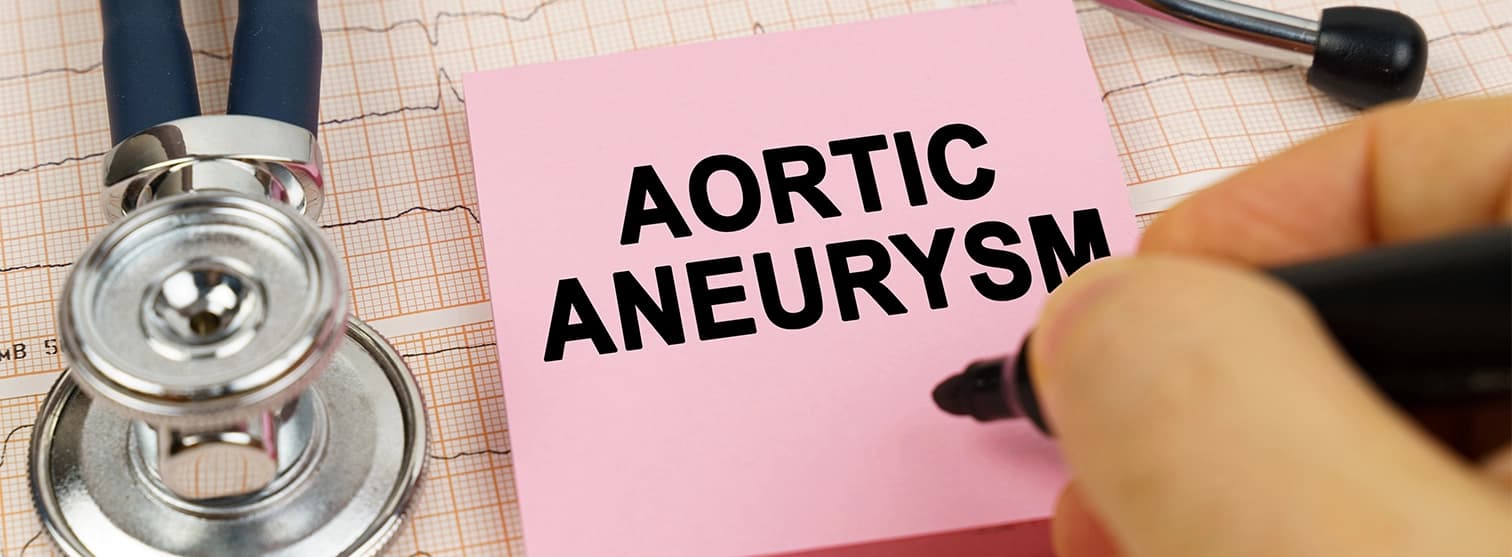
An aortic aneurysm is an abnormal bulging or widening of the aorta caused by weakness in the blood vessel wall. If the aneurysm continues to grow, it may increase the risk of rupture or other serious complications.
To understand what is an aortic aneurysm, it helps to look at the anatomy of your circulatory system. To establish a clear aneurysm definition, it is a permanent, balloon-like bulge that forms within a weakened section of an artery wall.
The aorta is the single largest blood vessel in the human body. Arising directly from the heart, it arches upward through the chest cavity before travelling down into the belly to supply oxygen-rich blood to your organs and limbs. Because the heart pumps blood directly into this channel at high velocity, the aortic walls are built to be remarkably thick and springy. However, if structural damage occurs within the tissue layers of the wall, the relentless force of blood pressure gradually pushes that weak spot to swell outward.
These vascular expansions are more common than many people realise, particularly as we get older. Clinical data shows that abdominal expansions are significantly more frequent than those that occur in the chest cavity, and they affect men four to six times more often than women.
While they only affect around 1% of men between the ages of 55 and 64, the likelihood increases by up to 4% with every single decade of life after that. The lower frequency of chest-based bulges are largely because the upper section of the main artery is built with a thicker, more resilient layer of elastic tissue.
Specialists classify these structural bulges based on their exact location along your central blood pathway. The common types are:
Many people with an aortic aneurysm experience no symptoms in the early stages. When symptoms do occur, they usually depend on the location of the aneurysm. Abdominal aortic aneurysm symptoms differ from thoracic aortic aneurysm symptoms because each type affects different structures within the body.
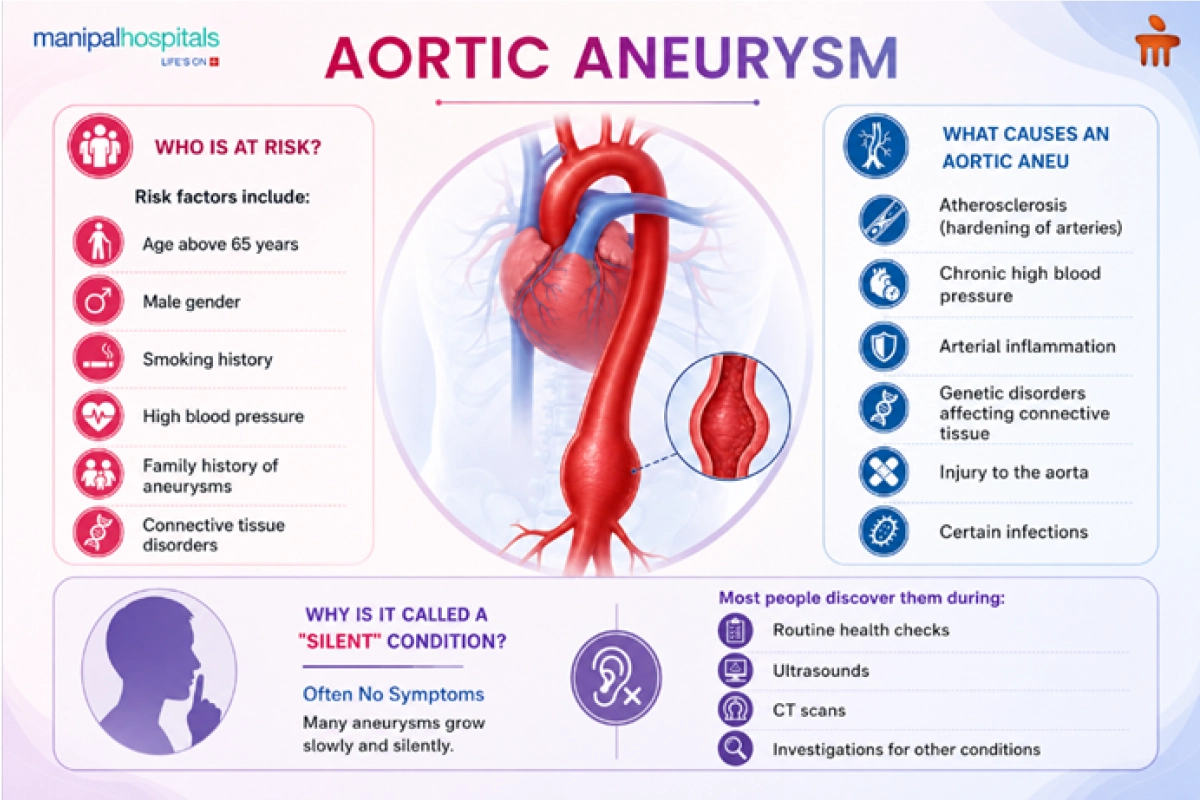
One of the most challenging parts of managing this condition is that it is usually silent. A vast majority of individuals live with an expanding vessel for years without feeling any physical difference. When aortic aneurysm symptoms do start to appear, it means the bulge has grown large enough to push against nearby organs, bones, or nerve tracks.
As an expansion grows within the lower belly, common abdominal aortic aneurysm symptoms include:
When the swelling occurs inside the tight space of the chest, it causes distinct mechanical signs:
While many aneurysms remain stable for years, a rupture is a life-threatening medical emergency that requires immediate treatment. A ruptured aortic aneurysm occurs when the weakened wall of the aorta tears, causing severe internal bleeding.
Symptoms of a ruptured aortic aneurysm may include:
Anyone experiencing these symptoms should seek emergency medical attention immediately, as prompt treatment can be lifesaving.
When looking into what causes aneurysm development, specialists find it is rarely driven by a single factor. Instead, it is typically the result of long-term wear on the structural proteins of the blood vessel wall.
When evaluating which aneurysm is most dangerous, doctors consider several factors, including the location of the aneurysm, its size, growth rate, and whether symptoms are present. Large aneurysms and those that expand rapidly carry a significantly higher risk of rupture.
In general, aneurysms measuring more than 5.5 centimetres are considered high risk and often require surgical repair. However, an aneurysm that grows more than 0.5 centimetres within six months may also require closer monitoring or intervention, regardless of its current size.
Many patients are concerned after learning they have a 4 cm aneurysm and often wonder how dangerous a 4 cm aortic aneurysm is. In most cases, a 4 cm aortic aneurysm is considered small to moderate in size and carries a relatively low risk of rupture.
At this stage, surgery is usually not required. Instead, doctors typically recommend regular imaging tests, blood pressure control, smoking cessation, and lifestyle modifications to reduce the risk of future growth.
Although the immediate risk is generally low, aortic aneurysms can enlarge over time. Regular follow-up appointments are essential to monitor changes in size and determine whether additional treatment may be required in the future.
Because these conditions are typically quiet, doctors rely on simple, non-invasive imaging tests to identify and track them:
The choice of treatment depends entirely on how wide the artery has grown. Small bulges are managed conservatively, while larger ones require structural repair.
1. Regular Image Tracking and Medication: For small expansions (under 5 cm).
Your doctor schedules routine ultrasound or CT scans every 6 to 12 months to measure the growth down to the millimetre. You will take medications like beta-blockers to lower your heart rate and keep your blood pressure stable.
2. Pre-Surgical Evaluation and Planning: When the size reaches 5 to 5.5 cm.
If the vessel expands past the safe threshold, or if it begins causing persistent pain, a vascular surgeon reviews your physical stamina and arterial anatomy to choose the safest method of repair.
3. Structural Placement of a Synthetic Graft: Scheduled intervention.
The surgeon reinforces the weak section of the artery. They will perform either an open surgery to sew a synthetic tube in place or a minimally invasive endovascular repair (EVAR) using a catheter to line the inside of the vessel with a stent graft.
The long-term outlook is highly positive when doctors catch the condition early and monitor it closely. Preventative repairs carry an excellent success rate, allowing most individuals to live a normal, active life. However, if an unmonitored bulge continues to grow until it experiences a complete rupture (burst), it causes sudden, massive internal bleeding.
While you cannot change your age or your family history, you can take practical daily steps to lower your risk of developing a weak spot in your artery:
Managing an aortic aneurysm requires more than monitoring vessel size. Treatment decisions often depend on multiple factors, including the aneurysm's location, growth rate, underlying medical conditions, age, and overall cardiovascular health. At Manipal Hospitals Global, patients benefit from the expertise of the Cardiology Department and a multidisciplinary team that includes vascular surgeons, cardiothoracic surgeons, interventional radiologists, cardiologists, anesthesiologists, and critical care specialists. Together, these specialists develop personalised treatment plans designed to optimise outcomes and support long-term cardiovascular health.
Our advanced diagnostic capabilities include high-resolution CT angiography, MRI vascular imaging, Doppler ultrasound studies, and comprehensive cardiovascular assessments that help identify aneurysms at an early stage and accurately evaluate the risk of complications.
For patients requiring intervention, Manipal Hospitals Global offers both conventional open surgical repair and minimally invasive endovascular aneurysm repair (EVAR), depending on the patient's clinical condition and anatomical suitability. These procedures are supported by modern hybrid operating theatres, advanced imaging technologies, and dedicated intensive care units designed to enhance safety and recovery outcomes.
International patients travelling to India for specialised vascular treatment also receive end-to-end support through our international patient services, including online video consultations, treatment planning, medical visa assistance, travel coordination, interpreter services, accommodation guidance, and post-treatment follow-up care.
Whether an aneurysm is discovered incidentally during a routine scan or requires immediate specialist evaluation, early assessment by an experienced vascular team can significantly improve outcomes and reduce the risk of life-threatening complications.
An aortic expansion is a serious structural issue, but it is one that can be managed safely through regular tracking and simple daily habits. Protecting your vascular health relies on early detection, managing your blood pressure, and avoiding tobacco use entirely. Manipal Hospitals Global offers advanced cardiovascular diagnostics and specialised aortic aneurysm treatment. Our expert teams use state-of-the-art imaging and personalised care plans to help manage vascular conditions effectively.

Not sure what you’re looking for?
Not sure what you’re looking for?
Get in touch with our representatives for
help!
Get in touch with our
representatives for help!