Heart Attack vs Cardiac Arrest: Key Differences, Symptoms, and Emergency Response
Reviewed by: Cardiology Department
Posted on Jun 22, 2026
10 Min Read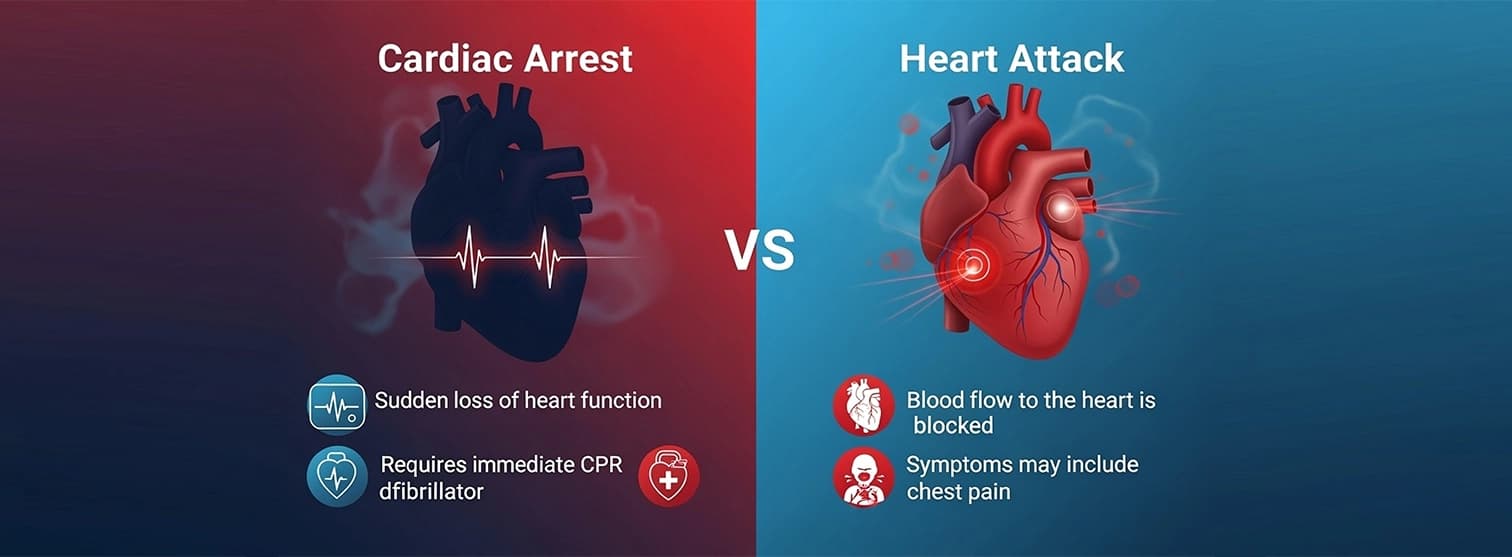
Synopsis
- What Is a Heart Attack?
- Identifying Heart Attack Symptoms
- What Is Cardiac Arrest?
- Recognising the Signs of Cardiac Arrest
- Can a Heart Attack Cause Cardiac Arrest?
- Emergency Response Pathways
- Action Steps for Cardiac Arrest
- Heart Attack vs Cardiac Arrest: Key Differences
- Advanced Cardiac Emergency Care at Manipal Hospitals Global
- Conclusion
What Is a Heart Attack?
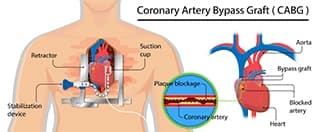
To understand this condition, it helps to look at how the heart muscle receives its fuel supply. So, what is a heart attack? A heart attack is fundamentally a circulation problem. The heart needs a constant supply of oxygen-rich blood to keep pumping. This blood travels through a network of vessels known as coronary arteries.
Over several years, a gradual buildup of fatty plaque can narrow these arteries. If a section of this plaque cracks or ruptures, a blood clot can form over the area, blocking the blood flow through that artery. Here is what happens during a heart attack: because the blood pathway is blocked, the specific section of muscle fed by that artery is starved of oxygen. If a medical team does not reopen the blocked artery quickly, that part of the heart muscle begins to suffer permanent damage and die. The longer a person goes without treatment, the greater the overall damage.
During this event, the heart usually does not stop beating entirely. The individual typically remains conscious, is able to speak, and continues breathing, even though they may be in severe pain or distress.
Identifying Heart Attack Symptoms
The way a person feels during a heart attack can vary significantly. Symptoms can start slowly with mild discomfort or hit suddenly with intense force. It is also possible to have very mild symptoms, or even no symptoms at all, and still experience a major event.
Common Signs in Men | Common Signs in Women |
| Chest pain or pressure (most common), often described as squeezing, fullness, or burning | Chest pain or discomfort (still common but often less intense) |
| Pain spreading to the arms, back, neck, jaw, or stomach | Shortness of breath, sometimes without chest pain |
| Shortness of breath | Nausea or vomiting |
| Cold sweats | Back or jaw pain |
| Nausea or vomiting | Unusual fatigue |
| Lightheadedness or dizziness | Indigestion or a heartburn-like sensation |
| Unusual fatigue | Dizziness or light-headedness |
Women may experience less dramatic chest pain and more subtle symptoms like fatigue, nausea, or back pain.
What Is Cardiac Arrest?
Let us look at the other type of emergency, which happens suddenly and often without warning. If a heart attack is a failure in blood flow, then what is cardiac arrest? This event is an electrical problem rather than a plumbing issue.
Your heart relies on an internal electrical system to control the rhythm and timing of your heartbeat. If this electrical system malfunctions, it triggers a dangerous disruption in the rhythm, known as an arrhythmia. The most frequent cause is ventricular fibrillation, where the lower heart chambers quiver uselessly instead of contracting firmly.
When this electrical failure occurs, the heart can't pump blood to the brain, lungs, and other organs. The effects are immediate: the person loses consciousness within seconds, stops breathing normally, and has no detectable pulse. The person can die if they do not receive help within minutes.
Recognising the Signs of Cardiac Arrest
Because this event causes a total system shutdown instantly, recognising the symptoms immediately allows a bystander to act before professional help arrives. Paying attention to prior heart arrest symptoms, such as unexplainable fainting spells during exercise or a suddenly racing pulse at rest, can sometimes provide an early warning. However, when the event hits, look for these specific signs of cardiac arrest:
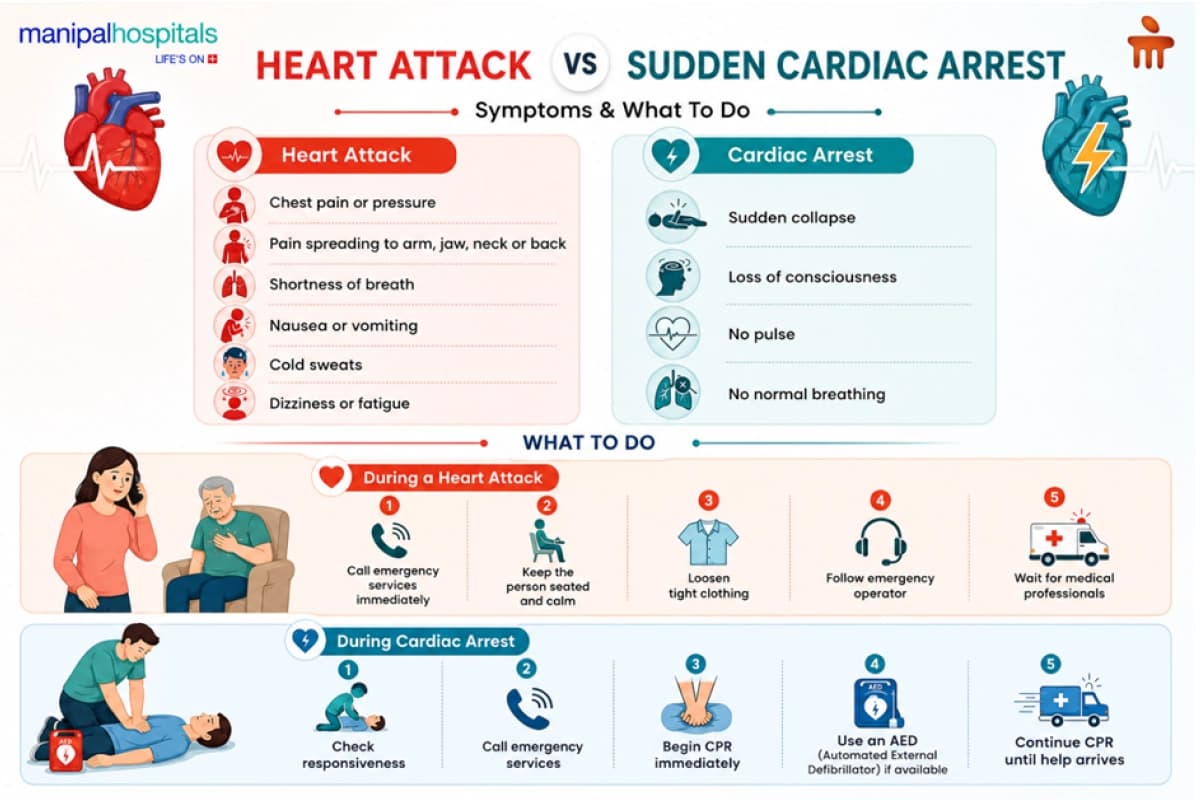
A sudden, unexpected physical collapse.
Complete unresponsiveness when you shake their shoulders and shout for help.
An absolute absence of a pulse or heartbeat.
No breathing at all, or only occasional, irregular gasping sounds.
Unlike a heart attack, cardiac arrest happens suddenly, and the person is unconscious within seconds.
Can a Heart Attack Cause Cardiac Arrest?
When comparing cardiac arrest vs heart attack, the underlying mechanisms are entirely different, but the two conditions are deeply linked. When evaluating what causes cardiac arrest, a heart attack stands out as a major driver.
Sudden cardiac arrest can happen after a heart attack or during the recovery phase. Heart attacks increase the risk for sudden cardiac arrest. While many heart attacks do not lead to sudden cardiac arrest right away, when cardiac arrest does occur, a heart attack is a common underlying cause.
However, other heart conditions can also disrupt the heart's rhythm and cause an electrical shutdown, including:
Cardiomyopathy (where the heart walls become thickened or abnormally stretched).
Advanced heart failure.
Arrhythmias, particularly ventricular fibrillation.
Congenital heart defects that a person is born with.
Acute viral infections that inflame the heart tissue.
Emergency Response Pathways
When a crisis occurs, prompt action can save lives. If you call your local emergency number, stay calm and try to be patient while answering the operator's questions, which usually begin with "What is the emergency?" Know your exact location; if you are in an unfamiliar place, note the address, nearby streets, or landmarks. If you are worried about calling as a bystander, you can choose to remain anonymous. Do not hang up until the rescue team arrives.
Call Emergency Services and Keep the Person Calm: Action for a suspected heart attack.
If the person is conscious but experiencing severe chest pain or spreading aches, call for an ambulance immediately. Have them sit down quietly, loosen any tight clothing around their neck, and prevent them from walking around while you wait for the paramedics to arrive.
Action Steps for Cardiac Arrest
1. Verify Responsiveness and Call for an AED
If the person suddenly collapses and stops breathing, shake their shoulders and shout. If they do not respond, call emergency services immediately and instruct a bystander to find an automated external defibrillator (AED).
2. Begin Immediate Chest Compressions (CPR)
Place your hands in the centre of the person's chest and push hard and fast (100 to 120 compressions per minute). This physical pressure acts as a manual pump, keeping oxygen-rich blood moving to the brain to prevent permanent damage.
3. Attach and Follow the AED Prompts
Turn on the defibrillator as soon as it arrives and attach the pads to the person's bare chest. The machine will automatically analyse the heart's electrical rhythm and instruct you whether to deliver a shock to reset the system.
For infants and children, the primary trigger is often a respiratory arrest (breathing failure) rather than a primary heart issue. Check the airway quickly for any blockages, call emergency services, and begin CPR immediately. If the child collapses suddenly and an AED is nearby, use it straight away.
Heart Attack vs Cardiac Arrest: Key Differences
To keep these two events separate in your mind during a high-stress situation, think about their primary traits:
Feature | Heart Attack | Cardiac Arrest |
| Core Mechanism | Circulation problem (blocked artery). | Electrical problem (malfunctioning rhythm). |
| Consciousness | The person is usually awake and talking. | The person is unconscious and unresponsive. |
| Breathing | Breathing continues, though it may feel laboured. | Breathing stops or drops to occasional gasps. |
| Pulse | A pulse is present. | No pulse can be found. |
| Primary Symptoms | Chest pain, spreading aches, nausea, and sweating. | Immediate collapse and complete stillness. |
Advanced Cardiac Emergency Care at Manipal Hospitals Global
Timely intervention is critical during both heart attacks and sudden cardiac arrest, as every minute can significantly impact survival and recovery. At Manipal Hospitals Global, comprehensive cardiac emergency care is delivered through experienced cardiologists, emergency medicine specialists, interventional cardiologists, cardiac surgeons, and critical care teams working together to provide rapid diagnosis and treatment.
Our advanced cardiac care infrastructure includes 24/7 emergency services, state-of-the-art cardiac catheterisation laboratories, advanced cardiac imaging, coronary angiography, angioplasty, electrophysiology services, and specialised intensive care units. This integrated approach enables swift management of blocked coronary arteries, life-threatening arrhythmias, and other cardiac emergencies.
Beyond emergency treatment, Manipal Hospitals Global offers comprehensive preventive cardiology services, cardiac risk assessments, rehabilitation programmes, and long-term heart health management to help patients reduce future cardiovascular risks. International patients also benefit from dedicated support services, including virtual consultations, treatment planning, travel assistance, and post-treatment follow-up care, ensuring seamless access to advanced cardiac expertise.
Conclusion
A heart attack is a block in your heart's circulation, while a cardiac arrest is a sudden failure in its electrical system. Both conditions are major medical emergencies, but your immediate steps determine how you assist. Protecting your cardiovascular system requires regular health monitoring and practical lifestyle habits. For preventive care or emergency care, contacting Manipal Hospitals Global provides you with the professional support and clinical clarity needed to protect your long-term health safely.
Share this Article


Not sure what you’re looking for?
Not sure what you’re looking for?
Get in touch with our representatives for
help!
Get in touch with our
representatives for help!