Advanced Skin Treatment Options for Overseas Patients: Managing Acne, Pigmentation, and Scars
Reviewed by: Plastic Surgery Department
Posted on Mar 13, 2026
10 Min Read
Synopsis
- Why Acne, Pigmentation, and Scarring Need Professional Skin Care
- Advanced Skin Treatment Technologies Used Today
- Laser Treatments for Acne Scars and Pigmentation
- Comparing Common Dermatology Procedures
- What Overseas Patients Should Expect During Treatment
- Recovery and Long-Term Skin Care After Treatment
- Conclusion
Why Acne, Pigmentation, and Scarring Need Professional Skin Care
Skin issues often appear simple on the surface, yet the processes behind them are surprisingly complex. While acne scars are a result of the inflammation that damages the skin's deeper layers, pigmentation is a result of irregular production of melanin, usually because of sun exposure, hormonal changes, or a previous skin injury.
To treat these problems, however, it is not just a matter of using topical creams. There are several factors that need to be understood before the appropriate skin treatment is determined by a dermatologist, including:
- Skin type
- Skin sensitivity
- Depth of scars or pigmentation
- Duration of the problem
- Previous skin treatments attempted
- Lifestyle
- Sun exposure
Once these factors are understood, the appropriate treatment is designed to improve the texture of the skin and protect the surrounding skin.
Professional dermatological care not only aims at solving the problems but also at preventing any future damage. The aim is long-term improvement rather than temporary cosmetic fixes.
Advanced Skin Treatment Technologies Used Today
Modern dermatology has introduced sophisticated tools that can precisely target damaged skin layers without harming surrounding tissue. These technologies allow dermatologists to treat multiple concerns simultaneously while encouraging natural skin repair.
Some commonly used advanced skin treatment methods include:
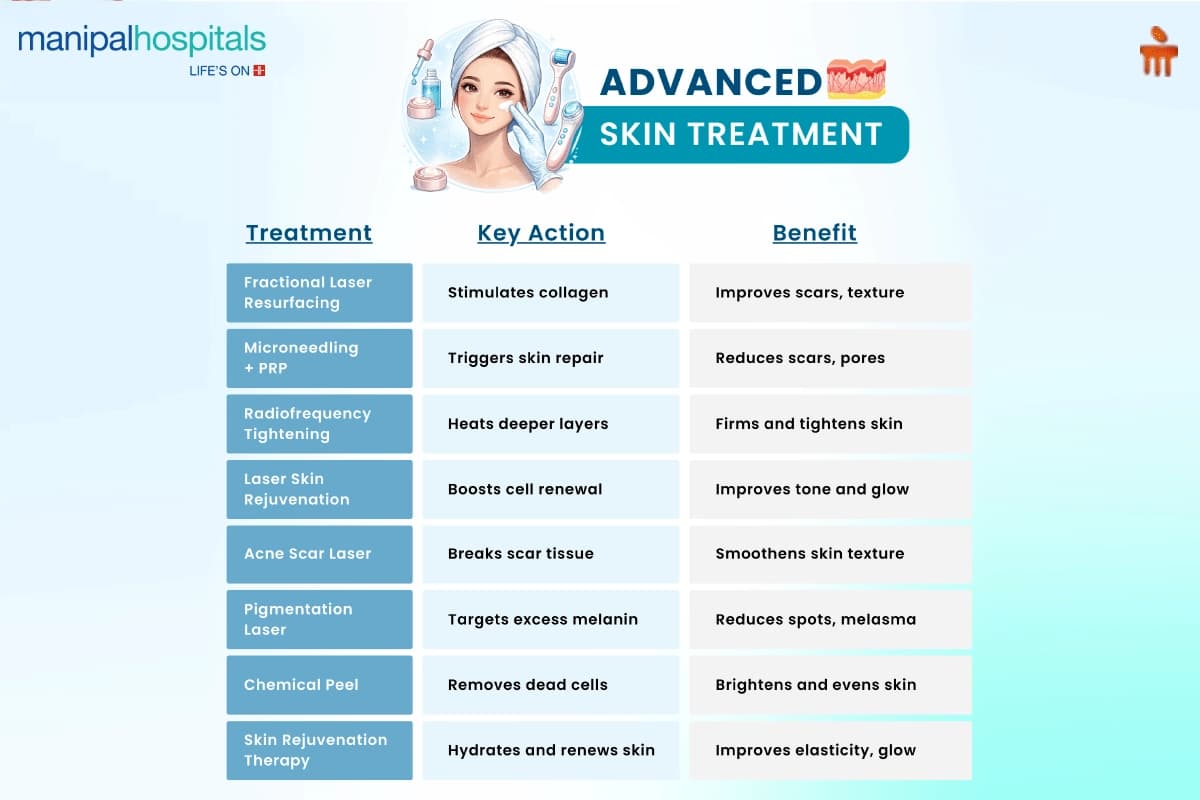
- Fractional laser resurfacing to stimulate collagen and smooth scarred areas
- Radiofrequency-based therapies that tighten and rejuvenate skin
- Microneedling with growth factors to promote skin regeneration
- Platelet-rich plasma (PRP) treatments that enhance natural healing
These procedures work by triggering the body’s own repair mechanisms. Over time, collagen production increases, skin texture becomes smoother, and uneven pigmentation gradually fades.
Unlike older dermatological approaches, these treatments are designed to minimise downtime while delivering noticeable improvements across several sessions.
Laser Treatments for Acne Scars and Pigmentation
Laser treatments have revolutionized the way dermatologists approach skin issues, particularly those deeper in the skin. Rather than removing the outer layer of skin, as is the case with other treatments, laser technology targets the exact areas of the skin where it is needed, promoting skin rejuvenation. To those who suffer from acne scarring and other forms of skin pigmentation, laser treatments are often the first step in a comprehensive skin rejuvenation program.
Acne Scar Laser Treatment
Laser treatment for acne scars works by breaking down the scarring and building collagen in the skin. Over time, this helps soften depressed scars and improve overall skin texture.
The benefits include:
- Removal of acne scar marks
- Improved skin smoothness
- Gradual blending of scarred and normal skin
- Promoted collagen production
- Pigmentation Removal Laser
Pigmentation lasers work by removing excess melanin from the skin. The excess pigment reacts to the laser beam and breaks down into small particles, which the body then removes over time.
This treatment is useful for the following conditions:
- Sun spots
- Melasma spots
- Patches resulting from inflammation
- Irregular skin tone
With this treatment, the skin tone is eventually normalised and looks natural.
Chemical Peels and Skin Renewal Therapies
Not all skin problems need high-tech treatments. Dermatologists recommend skin peeling procedures, where the skin is peeled to promote the growth of new skin cells.
One of the most commonly recommended options is chemical peel treatment. This method uses specially formulated acids to dissolve dead skin cells and encourage fresh skin to appear.
Depending on the strength of the peel, benefits may include:
- Brightening dull skin tone
- Softening superficial acne scars
- Improving pigmentation irregularities
- Refining skin texture
Alongside peels, many dermatology centres also offer skin rejuvenation therapy. The treatments include procedures such as hydrating treatments, collagen stimulation, and resurfacing techniques.
Unlike other treatments, rejuvenation treatments improve several aspects of your skin, such as tone, texture, elasticity, and glow.
Comparing Common Dermatology Procedures
Different skin concerns respond best to different treatments. Dermatologists often combine multiple approaches to achieve better outcomes. The following table highlights how various cosmetic dermatology procedures differ in their purpose and recovery characteristics.
Procedure | Primary Skin Concern Addressed | Typical Number of Sessions | Average Recovery Time | Skin Type Suitability |
| Fractional Laser Resurfacing | Deep acne scars and uneven skin texture | 3-5 sessions | 5-7 days of redness | Best suited for moderate to severe scarring |
| Q-Switched Pigmentation Laser | Dark spots and melasma | 4-6 sessions | 1-3 days mild redness | Safe for many skin tones when performed carefully |
| Medium-Depth Chemical Peels | Pigmentation and mild scarring | 3-4 sessions | 4-6 days peeling | Suitable for acne marks and sun damage |
| Microneedling with PRP | Enlarged pores and early scars | 3-6 sessions | 1-2 days redness | Works well for sensitive skin types |
Each of these options may be used individually or as part of a combined skin treatment plan tailored to your specific condition.
What Overseas Patients Should Expect During Treatment
Travelling for dermatological care can feel overwhelming at first. However, specialised centres typically follow a structured approach that helps make the process smoother for international visitors. The treatment process for you will include:
Initial consultation
You will be assessed by a dermatologist who will examine your skin. This helps determine the severity of acne scars, pigmentation, or other concerns.
Personalised treatment plan
The dermatologists will not offer you a standard treatment, as is common with other procedures, but will offer a combination of treatments best suited for your skin type.
Procedure sessions
Many treatments are done as short outpatient procedures. Some may require local numbing creams to improve comfort.
Post-treatment care
Dermatologists provide detailed guidance on sun protection, skincare products, and recovery precautions to ensure the best outcome.
For overseas visitors, careful scheduling ensures that procedures are spaced appropriately during the stay while allowing adequate recovery time before travel.
Recovery and Long-Term Skin Care After Treatment
The work does not end once the procedure is complete. Healthy skin recovery depends heavily on how well you care for your skin afterwards.
After professional skin treatment, dermatologists typically recommend:
- Strict daily sun protection
- Gentle cleansing and moisturising routines
- Avoiding harsh skincare products during healing
- Hydrating the skin regularly
- Following scheduled follow-up visits when needed
These steps help maintain treatment results and reduce the chances of pigmentation returning.
Consistency matters. Even the most advanced dermatological procedures produce the best outcomes when combined with disciplined skincare habits.
Conclusion
Advances in dermatology have made it possible to address long-standing skin concerns with precision and safety. Whether you are dealing with acne scars, stubborn pigmentation, or uneven skin texture, the right skin treatment approach can significantly improve both skin health and confidence.
Through carefully selected technologies such as acne scar laser treatment, pigmentation removal laser, and chemical peel treatment, dermatologists can design personalised solutions that target the root cause of skin damage rather than simply masking it.
For international patients seeking specialised dermatological care, expert teams at Manipal Hospitals Global provide comprehensive evaluation and advanced cosmetic dermatology procedures, helping individuals move closer to clearer, healthier skin with treatments tailored to their specific needs.
Share this Article


Not sure what you’re looking for?
Not sure what you’re looking for?
Get in touch with our representatives for
help!
Get in touch with our
representatives for help!