Chronic Kidney Disease Treatment to Recovery: A Guide for International Patients
Reviewed by: Nephrology Department
Posted on Mar 03, 2026
9 Min Read
Have you or a loved one been told you have chronic kidney disease, and all of a sudden, you are feeling overwhelmed by unfamiliar terms, life-changing decisions, and the need to go overseas for treatment? Managing the disease can be stressful in itself, but add to it the need to adapt to a different country, and it is no wonder that patients and their companions get overwhelmed to no end. But don’t worry, a little planning and understanding of the disease can ensure that both patients and caretakers can navigate the medical scene smoothly, even when receiving the treatment overseas. This blog explores everything an overseas patient needs to understand ensuring proper care for CKD, from staging and treatment options to dialysis, transplant pathways, travel considerations, and long-term kidney disease management.
Synopsis
Understanding Chronic Kidney Disease and Its Stages
Chronic kidney disease is a long-term condition where the kidneys gradually lose their ability to filter waste and excess fluid from the blood. It progresses quietly in many people, often without dramatic symptoms in the early stages. This situation necessitates the need for early intervention and prompt treatment. But once diagnosed, careful and structured care becomes essential to protect kidney function, reduce complications, and maintain quality of life.
However, understanding your current condition is crucial even before making treatment decisions. The progression of kidney damage varies, and the stage of the disease significantly influences management.
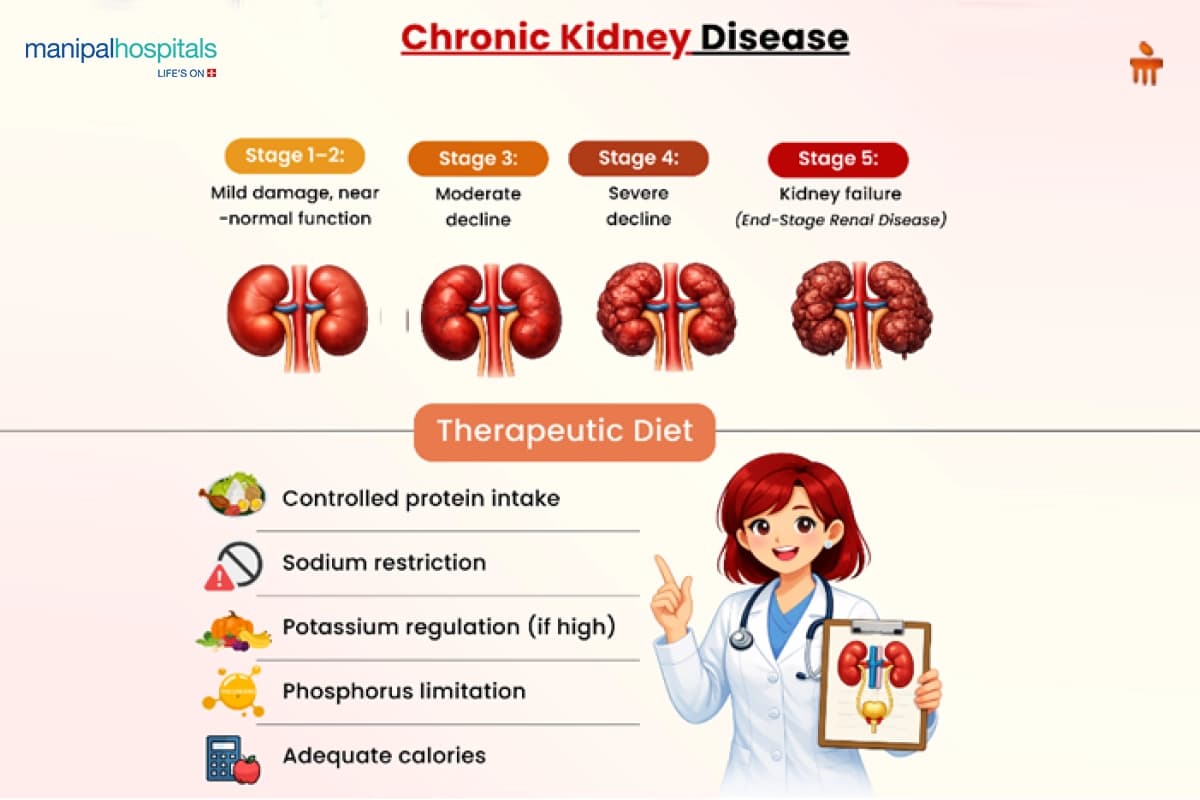
Chronic kidney disease is classified into five stages based on estimated glomerular filtration rate (eGFR), which reflects how efficiently the kidneys filter blood.
Stage 1-2: Mild damage, often with normal or near-normal eGFR
Stage 3: Moderate reduction in kidney function
Stage 4: Severe reduction
Stage 5: Kidney failure (end-stage renal disease)
Many patients in the early stages feel completely well. Others may notice fatigue, swelling in the ankles, changes in urination, or difficulty concentrating as the disease progresses. Recognising the stage helps tailor chronic kidney disease management to delay further deterioration.
Core Principles of Chronic Kidney Disease Management
Managing CKD is not about one single medicine or procedure. It is a structured, layered approach designed to slow progression and prevent complications such as heart disease, anaemia, bone disorders, and electrolyte imbalance.
Effective management of chronic kidney disease usually includes:
Blood pressure control (often using ACE inhibitors or ARBs)
Blood sugar optimisation in diabetic patients
Cholesterol regulation to reduce cardiovascular risk
Dietary modifications tailored to stage and lab values
Regular monitoring of kidney function and electrolytes
The aim is not merely to treat numbers in a report but to protect overall health. Cardiovascular disease remains the leading cause of mortality in CKD patients, so treatment always considers the heart as much as the kidneys.
Medical Management of Chronic Kidney Disease
When kidney function begins to decline, careful medication planning becomes central. Drug doses often need adjustment because reduced filtration affects how medicines are cleared from the body. Medical management of chronic kidney disease may involve:
Antihypertensives to maintain optimal blood pressure
SGLT2 inhibitors in selected diabetic and non-diabetic patients to slow progression
Erythropoiesis-stimulating agents for anaemia
Phosphate binders and vitamin D analogues for bone health
Diuretics to manage fluid overload
Importantly, some common medications, including certain painkillers (NSAIDs), can worsen kidney damage. Overseas patients should always provide a full medication list when seeking treatment abroad to avoid harmful interactions.
Nutritional Therapy: A Cornerstone of Kidney Disease Management
Diet is not a secondary recommendation when it comes to managing CKD—it is, in fact, therapeutic. That is why a renal diet that is customised to the patient’s condition is prescribed, depending on lab parameters and stage. The diet may include:
Controlled protein intake
Sodium restriction to reduce fluid retention
Potassium regulation if levels are elevated
Phosphorus limitation to prevent bone disease
Adequate calorie intake to prevent muscle wasting
For patients going overseas for treatments, cultural dietary habits are carefully considered. Prior research, consultation, and planning are crucial to ensure that dietary preferences and restrictions are considered without compromising medical goals.
Dialysis Options for Advanced Chronic Kidney Disease
When kidney function declines to a critical level, dialysis becomes necessary to replace the filtering function. Choosing the right modality depends on medical condition, lifestyle, and travel plans.
Haemodialysis: This procedure is performed using a machine that filters blood through a dialyser. It is typically done three times a week in a dialysis centre. Advantages include close medical supervision. However, it requires fixed scheduling and vascular access through a fistula or catheter.
Peritoneal Dialysis: This home-based therapy uses the lining of the abdomen as a natural filter. Fluid is instilled and drained through a catheter. It offers more flexibility and independence, which many overseas patients find appealing. However, it requires training and strict infection precautions.
Both options are medically effective. The decision is personalised, and patients are guided through detailed counselling before initiation.
Kidney Transplant: When and How It Is Considered
For suitable candidates, transplantation offers the best long-term survival and quality of life compared to dialysis. However, specialists cannot transplant the first available organ for affected patients—careful evaluation ensures compatibility between patient and donor. Evaluation includes:
Cardiac assessment
Infection screening
Cross-matching for compatibility
Psychological readiness
Overseas patients must also understand legal frameworks governing organ donation. India follows strict transplant regulations to ensure ethical practices. Living donor transplantation and deceased donor transplantation pathways differ, and both require careful documentation. Post-transplant care includes lifelong immunosuppressive therapy and regular follow-up to prevent rejection and infection.
Pre-Travel Medical Planning for Overseas Patients
Traveling for kidney care requires thoughtful preparation. This is especially crucial in chronic kidney disease (CKD), as the continuity of care is critical in managing the condition. Accordingly, prior to travelling, patients should:
Carry detailed medical records and recent lab reports
Obtain a summary letter from their primary nephrologist
Ensure vaccination status is updated
Confirm dialysis scheduling (if already on dialysis)
Arrange accommodation near the treating centre
Time zone changes, dietary differences, and climate variations may affect fluid balance and medication timing. Careful coordination ensures a smooth transition.
Laboratory Monitoring: What Needs Regular Tracking?
Routine monitoring allows early detection of complications before symptoms appear. These tests mentioned below provide insights that are not always obvious through symptoms alone. Structured monitoring is one of the most critical elements of effective kidney disease management.
Test
Why It Matters
Monitoring Frequency (Stage Dependent)
Clinical Insight
Serum Creatinine & eGFR
Measures kidney filtration efficiency
Every 3-6 months (early stages), monthly (advanced stages)
Tracks disease progression
Urine Albumin-to-Creatinine Ratio
Detects protein leakage
Every 6-12 months
Indicates kidney damage severity
Serum Potassium
Monitors electrolyte safety
Every 3-6 months
Prevents dangerous heart rhythm disturbances
Haemoglobin
Screens for anaemia
Every 3-6 months
Guides anaemia therapy
Calcium & Phosphate
Assesses bone metabolism
Every 6-12 months
Prevents bone weakening
Parathyroid Hormone (PTH)
Evaluates secondary hyperparathyroidism
Annually or as advised
Guides bone-protective treatment
Emotional and Psychological Well-Being
A diagnosis of chronic illness often carries emotional weight. Anxiety about progression, dialysis, or transplant is natural.
Patients may experience:
Fear of dependency
Financial stress
Social withdrawal
Mood fluctuations
Integrated care should include psychological counselling and support groups. Addressing emotional well-being improves treatment adherence and overall outcomes.
Long-Term Outlook and Preventing Complications
The trajectory of chronic kidney disease varies from person to person. While some patients remain stable for years with disciplined care, others may progress more rapidly despite best efforts. With these realities in mind, complication prevention primarily focuses on:
Cardiovascular risk reduction
Bone protection
Infection prevention
Fluid balance maintenance
Avoidance of nephrotoxic substances
This sort of prevention and monitoring makes disease management much more effective in the later stages. The earlier chronic kidney disease management begins, the better the long-term kidney preservation.
Conclusion
Living with chronic kidney disease requires clarity, planning, and consistent follow-up, especially when seeking treatment abroad. From early-stage monitoring and medical management of chronic kidney disease to dialysis planning and transplant evaluation, each decision must be individualised. With structured care, many patients lead active, meaningful lives despite reduced kidney function. If you are considering treatment for CKD, then a consultation with an expert at Manipal Hospitals Global can help ensure seamless and comprehensive kidney disease management.