Polycystic Ovary Syndrome (PCOS): Understanding Symptoms, Causes and Treatment
Reviewed by: Obstetrics and Gynaecology Department
Posted on Sep 28, 2026
10 Min Read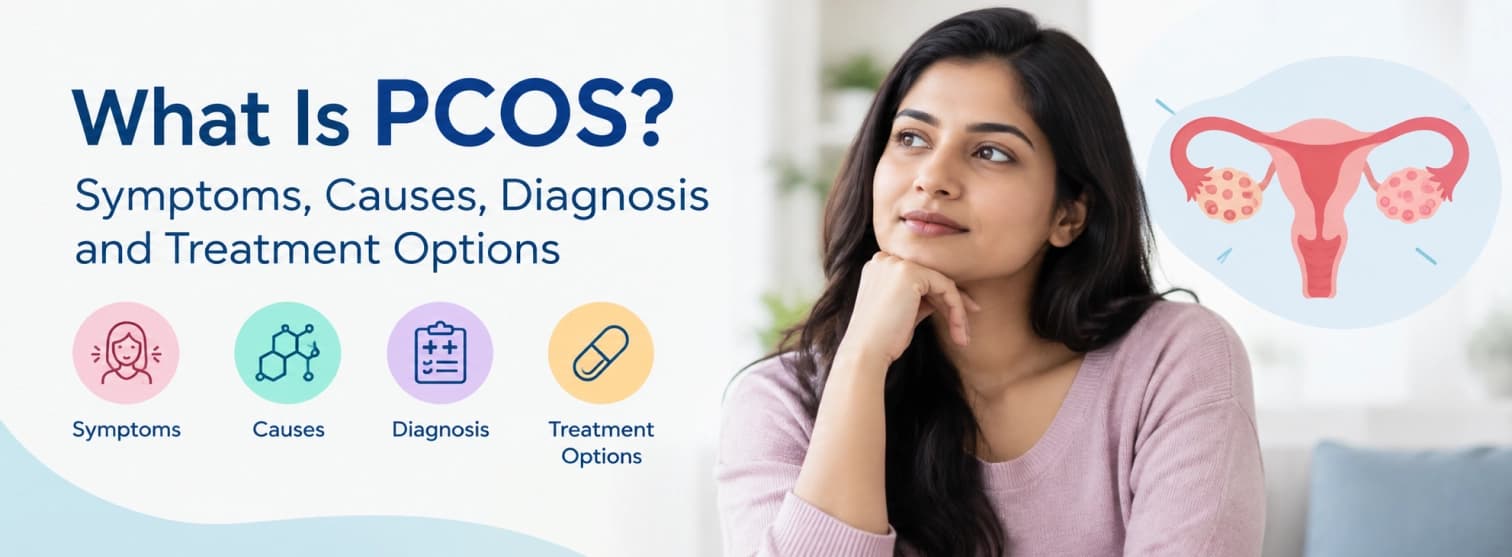
Synopsis
What Is PCOS?
Polycystic ovary syndrome (PCOS) is a common hormonal and metabolic condition associated with higher androgen levels, irregular ovulation and menstrual irregularities. Despite its name, having ovarian cysts is not necessary for a diagnosis of PCOS. Some women with PCOS may have polycystic ovarian morphology on ultrasound, while others may not.
In women with PCOS, hormonal changes can interfere with normal ovulation and the development of ovarian follicles. Instead of one follicle maturing and releasing an egg regularly, multiple small, immature follicles may remain in the ovaries. These may give the ovaries a characteristic “string of pearls” appearance on ultrasound. Because ovulation may occur less frequently or not at all, women with PCOS may experience absent or irregular periods.
Common PCOS Symptoms
The presentation of PCOS symptoms varies considerably from woman to woman, with some experiencing mild changes while others encounter extensive metabolic and physical disruptions:
- Irregular periods: Infrequent menstrual cycles (oligomenorrhea), completely absent cycles (amenorrhoea), or unpredictable, prolonged bleeding.
- Excess androgen signs (hyperandrogenism): Unwanted coarse hair growth on the face, chest, back, or abdomen (hirsutism).
- Severe adult acne: Deep, painful cystic acne along the jawline, chin, and neck that resists standard topical treatments.
- Male-pattern hair thinning: Diffuse shedding or thinning along the crown of the scalp (androgenic alopecia).
- Unexplained weight gain: Difficulty managing weight, particularly excess fat accumulation around the lower abdomen.
- Acanthosis nigricans: Darkened, velvety patches of skin appearing along neck creases, armpits, and groin folds, indicating insulin resistance.
- Fertility difficulties: Challenges conceiving due to infrequent or absent ovulation.
PCOS Causes and Risk Factors
While the precise origin remains an area of active study, clinical consensus points to several interrelated PCOS causes:
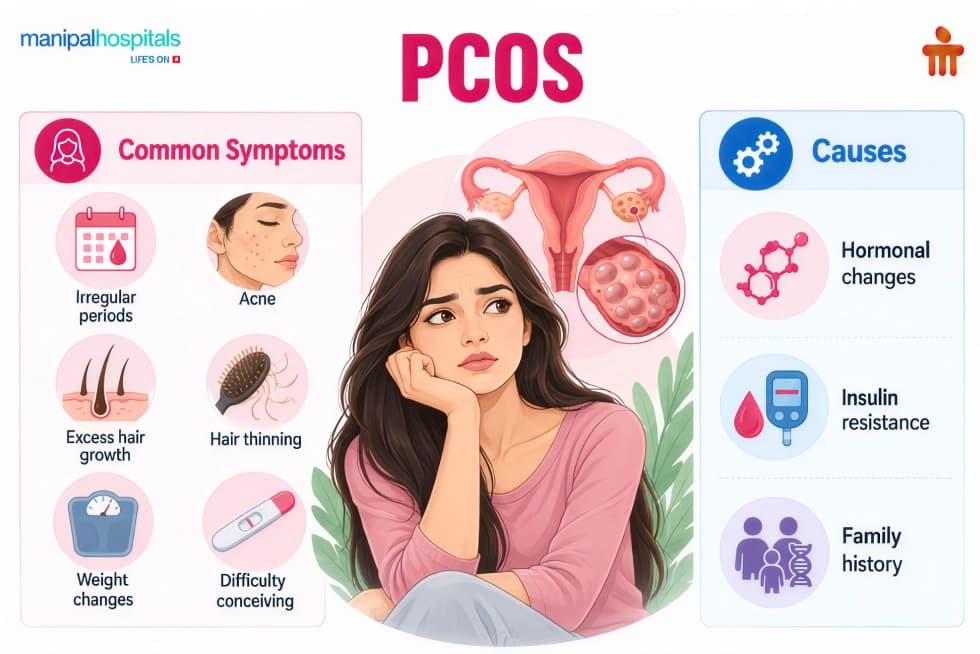
- Insulin resistance in PCOS: Up to 70% of women with PCOS have cells that respond poorly to insulin. To compensate, the pancreas produces excess insulin. Elevated circulating insulin drives the ovaries to overproduce androgens, disrupting ovulation.
- Hormonal imbalance: Medical research indicates that Polycystic Ovary Syndrome is a complex metabolic and endocrine condition driven by a combination of genetic predisposition (family history), insulin resistance, androgen excess, and low-grade chronic inflammation rather than a single hormonal mechanism.
- Low-grade chronic inflammation: Women with PCOS frequently exhibit ongoing low-grade systemic inflammation, which further stimulates androgen production and vascular risks.
- Genetic predisposition: Having an immediate family member (mother or sister) with PCOS significantly increases your likelihood of developing the condition.
How Is PCOS Diagnosed?
There is no single standalone test for PCOS. A PCOS diagnosis is made through clinical evaluation using the updated Rotterdam Criteria. A diagnosis is established in adults when at least two of the following three features are present, and other mimicking conditions have been actively excluded:
Diagnostic Feature | Clinical Definition & Updated 2023 Standards |
Ovulatory dysfunction | Infrequent, irregular, or completely absent menstrual periods. |
Hyperandrogenism | Physical signs (excess facial/body hair, severe acne, or scalp hair loss) or laboratory blood tests confirming high androgen levels. |
Polycystic ovarian morphology (PCOM) | Either an updated pelvic ultrasound showing 20 or more immature follicles (2–9 mm) in at least one ovary (or an ovarian volume of 10 mL or more) OR an elevated blood level of Anti-Müllerian Hormone (AMH) as an alternative marker in adult women. |
There is no single standalone test for PCOS. A PCOS diagnosis is made through clinical evaluation, typically using the internationally recognised Rotterdam Criteria. A diagnosis is established when at least two of the following three features are present:
- Ovulatory dysfunction: Infrequent or absent menstrual periods.
- Hyperandrogenism: Physical signs (excess facial hair, acne, hair loss) or laboratory blood tests confirming high androgen levels.
- Polycystic ovarian appearance: A pelvic ultrasound showing 12 or more immature follicles in one or both ovaries, or increased ovarian volume.
Clinical Investigations Used During Evaluation
- Pelvic ultrasound: May be used to assess ovarian morphology and the endometrial lining when clinically indicated.
- Hormone blood tests: Your doctor may recommend blood tests to assess androgen levels and rule out other conditions that can cause similar symptoms. Depending on your symptoms and medical history, these may include testosterone, DHEA-S, prolactin, TSH and other hormone tests.
- Metabolic screening: Your doctor may recommend tests such as blood glucose testing and a lipid profile to assess metabolic health and identify associated risk factors.
PCOS Treatment Options
Since the condition varies from person to person, PCOS treatment options are individualised to address certain symptoms, lifestyle factors, and reproductive goals:
Lifestyle Change (First-line Therapy)
Nutritional changes: A sustainable, balanced eating pattern tailored to individual nutritional needs and health goals can support metabolic health and overall well-being.
- Regular physical activity: Combining cardio and resistance strength training helps to improve insulin sensitivity and balance hormones.
- Weight management: Gradual shifts in body composition can significantly lower insulin levels and reduce androgens. This supportive metabolic change helps restore more regular menstrual cycles and improve natural ovulation rates on an individual basis.
Medical therapies for symptom control
Combined oral contraceptive pills: Regulate the menstrual cycle, protect the uterine lining from hyperplasia and reduce acne and unwanted hair growth by reducing androgen production.
- Metformin: An insulin-sensitising medication that can improve insulin sensitivity and metabolic health. It may also support weight management and, in some women with PCOS, help improve ovulation and menstrual regularity. Its use depends on the individual's symptoms, metabolic health and treatment goals.
- Anti-androgens (e.g. Spironolactone): These block androgen receptors to manage stubborn facial hair growth and hormonal hair thinning.
Topical skin treatments: Prescription creams or laser treatments done in the office for hirsutism and cystic acne.
Treatments for Fertility
- Ovulation induction medications: Letrozole is generally recommended as the first-line pharmacological option for ovulation induction in women with PCOS and anovulatory infertility when there are no other infertility factors. Other medications, such as clomiphene citrate, may also be considered in appropriate cases.
- Assisted reproductive technology (ART): Women who do not respond to oral medication may benefit from procedures such as intrauterine insemination (IUI) or in-vitro fertilisation (IVF).
When Should You Visit A Gynaecologist
See a professional gynaecologist without postponement if you notice:
- Periods that occur less frequently than every 35 days or are missed for months
- Rapid growth of coarse facial or body hair
- Cystic acne that everyday skincare won't fix
- Inability to conceive after 6 to 12 months of unprotected sex
Comprehensive PCOS Care at Manipal Hospitals Global
At Manipal Hospitals Global, at the department of Obstetrics and Gynaecology, we understand that Polycystic Ovary Syndrome (PCOS) is not just a gynaecological issue; it is a complex, systemic endocrine and metabolic condition that affects your daily well-being, confidence, and future health.
Because PCOS impacts multiple systems in your body, we do away with "one-size-fits-all" treatments. Instead, we offer a multispecialty, collaborative care model that brings together world-class experts to treat the whole person, not just the symptoms.
Our Integrated Care Team
Speciality | Clinical Focus in Your PCOS Journey |
Gynaecology & Obstetrics | Managing menstrual cycles, protecting endometrial health, and addressing physical symptoms like hirsutism. |
Endocrinology | Targeting systemic insulin resistance, managing metabolic markers, and balancing key hormones. |
Reproductive Medicine | Providing advanced ovulation induction and Assisted Reproductive Technologies (ART) like IUI and IVF for family planning. |
Dermatology | Tailoring advanced clinical treatments for stubborn hormonal acne, hair loss, and skin changes. |
Clinical Nutrition & Lifestyle | Designing sustainable, low-glycemic dietary plans and exercise regimens tailored to your metabolic rate. |
Why International Patients Choose Manipal Hospitals
- Tailored Treatment Plans: Your goals are our priority, whether that means managing cystic acne, regulating your cycle, reversing insulin resistance, or achieving a healthy pregnancy.
- Cutting-Edge Diagnostics: Access to high-resolution pelvic ultrasound imaging and comprehensive endocrine hormone profiling under one roof.
- Global Patient Support: Seamless assistance for international patients, including tele-consultations, travel and visa facilitation, and personalized multi-lingual care coordinators.
Take Control of Your Health Journey
Polycystic ovary syndrome can seem overwhelming, but it is a treatable condition. You do not have to navigate the complexities of hormonal imbalance alone. Understanding PCOS and managing its hormonal and metabolic features can help improve symptoms, support menstrual health, protect metabolic health and address individual family planning goals. At Manipal Hospitals Global, we bring together the experience of our gynaecologists, endocrinologists, dermatologists and clinical dietitians to design personalised care plans for your health journey, offering holistic women’s health services. Our dedicated team of specialists is here to guide, support, and treat you at every step.
Share this Article


Not sure what you’re looking for?
Not sure what you’re looking for?
Get in touch with our representatives for
help!
Get in touch with our
representatives for help!