Hearing Loss in Children: Early Signs, Diagnosis and Cochlear Implants
Reviewed by: Pediatrics and ENT Department
Posted on Jun 26, 2026
11 Min Read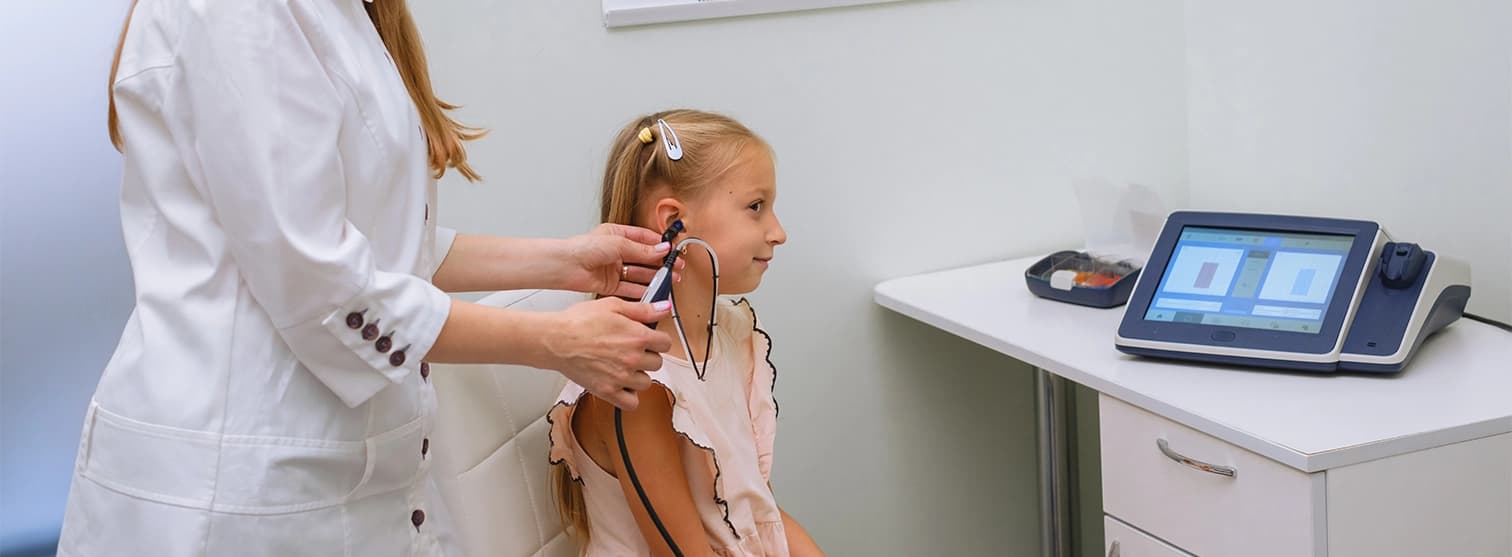
Synopsis
Defining Childhood Auditory Challenges
Medical terminology in this field can feel confusing. Professionals use specific terms to categorise the severity and nature of a child's condition. A generic hearing impairment refers to any deviation from normal performance, ranging from a mild inability to hear soft whispers to a total absence of sound processing.
Within this spectrum, specialists distinguish between children who are hard of hearing and those living with profound hearing deafness. Children who are hard of hearing experience a mild-to-severe drop but can usually process spoken language effectively when supported by standard digital devices, classroom modifications, and speech therapy. Conversely, profound structural deafness means the child can process little to no sound at all, even with maximum amplification.
When a family receives a diagnosis, a key question arises: is hearing loss a disability? Legally and clinically, an unaddressed severe reduction in sound processing is classified as a developmental disability because it directly restricts a child's access to standard education, baseline communication, and social integration. However, modern specialists agree that this classification is highly manageable. When an infant receives timely medical support, their functional ability can match that of their peers, ensuring their long-term independence.
Classifying the Types of Hearing Loss
To plan an effective care pathway, a specialist must first determine exactly where the processing breakdown occurs within the ear structure. The human ear is divided into three functional parts: the outer, middle, and inner ear. Problems within these specific zones fall into distinct categories.
Conductive Conditions
If you want to know what conductive hearing loss is, it is a mechanical failure in the outer or middle ear that blocks sound waves from physically reaching the inner ear. In children, this is frequently a temporary issue. Common triggers include thick earwax buildup in the canal, fluid behind the eardrum caused by a cold or chronic ear infection, or a small foreign object pushed into the ear canal.
Sensorineural Conditions
Conversely, to understand what is sensorineural hearing loss, you must look at the delicate internal mechanisms of the inner ear. This type occurs when there is permanent damage to the microscopic hair cells inside the cochlea or along the auditory nerve pathways to the brain. When these hair cells are damaged or missing, the ear cannot convert sound vibrations into electrical signals for the brain to interpret. This condition is permanent and cannot be cured with medicine, requiring advanced technical support to restore access to sound.
Investigating the Underlying Causes
Determining what causes hearing loss in children requires a thorough look at a child’s medical history, starting from pregnancy. When specialists evaluate what causes loss of hearing in young populations, they divide potential triggers into three distinct developmental windows:
- The Prenatal Window (Before Birth): Genetic factors are responsible for nearly half of all congenital cases. This includes both inherited genetic traits and spontaneous mutations. Non-genetic prenatal causes include maternal infections during pregnancy, such as rubella, cytomegalovirus, or toxoplasmosis, which can directly disrupt the development of the foetal auditory system.
- The Perinatal Window (During Birth): Complications during labour can occasionally cause structural issues. A severe lack of oxygen at birth (birth asphyxia), low birth weight, or severe newborn jaundice (hyperbilirubinaemia) in the days following delivery can damage fragile nerve structures within an infant's inner ear.
- The Childhood Window (After Birth): As a child grows, environmental factors can damage healthy ears. Chronic, unmanaged middle ear infections can cause fluid to build up for months, hardening the tiny bones of the ear. Serious infections like meningitis can directly scar the inner ear. Additionally, prolonged loud noises or specific ototoxic medications (medicines causing inner ear damage as a side effect) can destroy inner ear hair cells.
Recognising the Early Signs in Infants and Children
Indicators in Babies and Toddlers
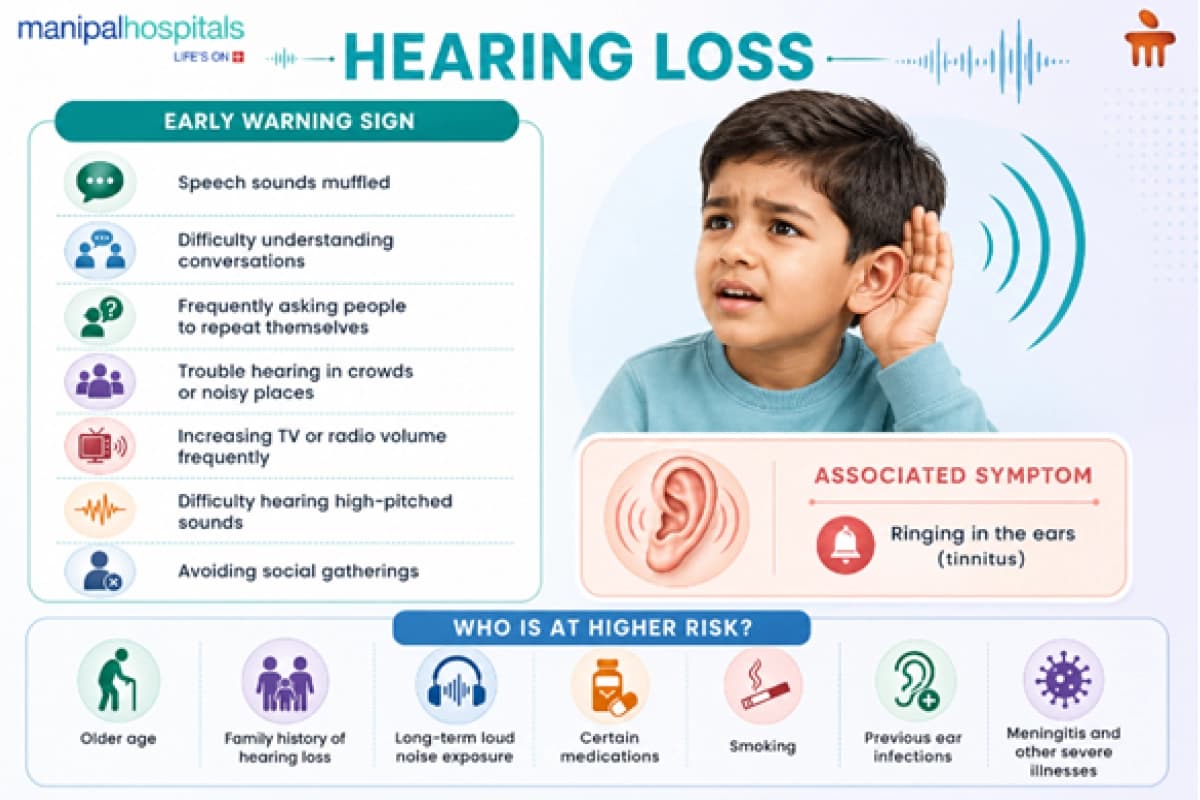
- 0 to 3 Months: The infant does not startle, blink, or cry out in response to sudden, loud noises like a plate dropping. They do not calm down or soothe at the sound of a parent's voice.
- 3 to 6 Months: The baby does not shift their eyes or turn their head toward a sound source outside their direct line of sight. They stop making cooing or babbling sounds when left alone.
- 6 to 12 Months: The child does not respond when their name is called from across the room. They do not attempt to imitate simple speech sounds or respond to basic words like "no" or "bye-bye".
- 12 to 18 Months: The toddler does not use single words by their first birthday and relies entirely on pointing or physical gestures to communicate daily needs.
Indicators in Older Children
In older children, an issue might present as a behavioural struggle or difficulties in the classroom. You might notice the child routinely turns up the television or tablet volume much higher than needed. They may struggle to follow instructions in a noisy room, frequently ask you to repeat yourself, or experience a sudden dip in school marks.
Additionally, experiencing a sudden hearing loss in one ear after an illness or exposure to a loud sound can cause a child to become suddenly irritable, complain of a blocked feeling, or withdraw entirely from social settings due to the stress of trying to follow conversations.
The Staged Diagnostic Pathway
Confirming an issue involves a series of quick, painless tests that do not require the child to speak or actively participate.
- Universal Newborn Screening via OAE: A nurse places a tiny, soft probe inside the sleeping baby's ear canal. The device plays a series of soft clicks; a healthy inner ear will echo these sounds back, which are recorded by a computer as Otoacoustic Emission (OAE).
- Automated Auditory Brainstem Response (ABR): Specialists place small, painless sensors on the infant's forehead and behind the ears. Headphones play soft sounds, and the machine measures the electrical activity of the auditory nerve to confirm if signals reach the brain correctly.
- Visual Reinforcement Audiometry (VRA): In a specialised soundproof room, the child sits on a parent's lap. Sounds are played through speakers, and the child is rewarded with an animated, lit-up toy whenever they turn toward the sound, allowing the specialist to map their hearing limits.
Advanced Pediatric Hearing Care at Manipal Hospitals Global
Early diagnosis is crucial for helping children with hearing impairment develop speech, language, and learning skills. At Manipal Hospitals Global, pediatric hearing care is delivered through a multidisciplinary team of ENT specialists, audiologists, cochlear implant surgeons, speech therapists, and rehabilitation experts.
Our comprehensive diagnostic services include newborn hearing screening, OAE, ABR, behavioural audiometry, and advanced hearing assessments to accurately identify the type and severity of hearing loss. Based on the diagnosis, children receive personalised treatment plans ranging from hearing aids and medical management to advanced cochlear implant surgery.
For children with severe to profound hearing loss, our specialised cochlear implant programme combines advanced surgical expertise with structured auditory-verbal therapy, speech rehabilitation, and long-term developmental support to maximise outcomes.
International families also benefit from dedicated support services, including virtual consultations, treatment planning, medical visa assistance, travel coordination, accommodation support, and follow-up care, ensuring a seamless treatment journey from diagnosis to rehabilitation.
With timely intervention and specialised care, many children with hearing impairment can develop effective communication skills and lead confident, independent lives.
Management and Intervention: Cochlear Implants
Once a diagnosis is confirmed, the medical team creates a targeted plan for hearing damage treatment. For mild-to-moderate conditions, digital hearing aids are highly effective. These devices act as precise amplifiers, making incoming sounds louder and clearer so the child can process them through their existing inner ear cells.
However, if a child is diagnosed with profound, permanent inner ear damage, traditional hearing aids cannot solve the problem because there are no healthy hair cells left to amplify. In these cases, surgical treatment for severe hearing loss in child populations—the placement of a cochlear implant—becomes the standard choice.
A cochlear implant is an advanced electronic device that works by bypassing the damaged parts of the inner ear entirely. It consists of two primary components:
- The External Processor: A small device worn behind the ear that captures sound waves from the environment, filters out background noise, and converts the sound into a digital code.
- The Internal Implant: A surgeon places this component beneath the skin behind the ear. It receives the digital code from the processor and sends electrical impulses down a thin wire array placed directly inside the cochlea. This array directly stimulates the auditory nerve, allowing the brain to perceive the electrical signals as clear sound.
Following the procedure, the child works closely with speech and language therapists during a structured rehabilitation programme. This training helps the child's brain learn how to interpret these new electrical patterns, allowing them to develop fluent spoken language and participate fully in mainstream classrooms.
Conclusion
Navigating a child's developmental milestones requires timely attention to any changes in how they interact with their environment. Identifying a sound processing issue early is the single most effective way to prevent permanent communication barriers and support a child's natural learning potential. Whether your child requires a simple clearance of fluid from the middle ear, a customised digital hearing aid, or an advanced cochlear implant, modern medicine provides reliable options to help them thrive. To access advanced diagnostic screening or specialised treatment for severe hearing loss in child cases at Manipal Hospitals Global.
Share this Article


Not sure what you’re looking for?
Not sure what you’re looking for?
Get in touch with our representatives for
help!
Get in touch with our
representatives for help!