
Gastric Sleeve Surgery: A Complete Guide for International Patients
Reviewed by: Bariatric Surgery Department
Posted on Mar 12, 2026
10 Min Read

Synopsis
- Understanding Gastric Sleeve Surgery
- Who Is Eligible for Gastric Sleeve Surgery?
- Step-by-Step: How the Sleeve Gastrectomy Procedure Is Performed
- Possible Risks and Side Effects to Be Aware Of
- Recovery Timeline After Surgery
- Nutritional Stages After Gastric Sleeve Surgery
- What Overseas Patients Should Know Before Travelling
- Conclusion
Understanding Gastric Sleeve Surgery
Weight loss surgery can feel like a big decision, and knowing exactly what the treatment involves often brings clarity and reassurance.
Before exploring eligibility or recovery, it helps to understand what gastric sleeve surgery is and why doctors recommend it.
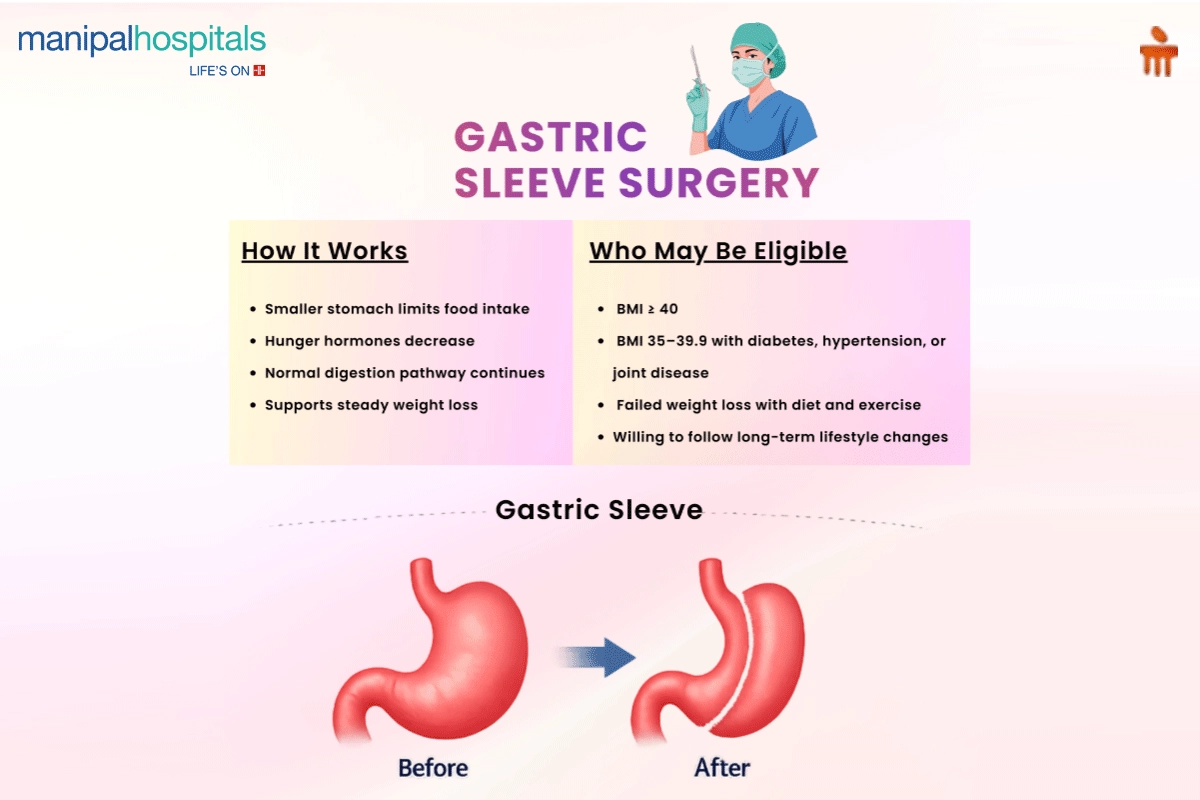
Gastric sleeve surgery is a type of bariatric surgery that is meant to decrease stomach size. During this procedure, surgeons remove a large portion of the stomach, thereby creating a small sleeve. This small stomach contains less capacity for holding food, which also influences the hormone that regulates hunger, reducing the feeling of hunger.
The key characteristics of this surgery are:
- The stomach is made smaller, reducing its capacity for holding food by 70% to 80%.
- Food continues to follow the normal digestive pathway.
- The procedure does not involve intestinal bypass.
- Hormonal changes may help reduce hunger signals.
Because of these combined effects, gastric sleeve surgery can lead to steady weight reduction and improvement in obesity-related health conditions such as type 2 diabetes, fatty liver disease, and sleep apnoea.
Who Is Eligible for Gastric Sleeve Surgery?
Not everyone struggling with weight needs surgery. Doctors carefully assess medical history, body weight, and existing health problems before recommending this treatment. The goal is to ensure the procedure is safe and beneficial for you.
You may be considered a candidate for gastric sleeve surgery if you meet certain criteria:
- Body Mass Index (BMI) of 40 or higher
- BMI between 35 and 39.9 with health conditions such as diabetes, hypertension, or joint disease
- Difficulty achieving weight loss through supervised diet and lifestyle programmes
- Willingness to adopt long-term dietary and lifestyle changes
Doctors also review several additional factors before approving surgery:
- Previous abdominal surgeries
- Eating patterns and psychological readiness
- Hormonal or metabolic disorders
- Long-term commitment to follow-up care
For overseas patients, this evaluation often begins with remote consultations, medical reports, and imaging reviews before travelling for treatment.
Step-by-Step: How the Sleeve Gastrectomy Procedure Is Performed
Many people feel more comfortable once they understand how the operation actually takes place. The sleeve gastrectomy procedure is typically performed using minimally invasive laparoscopic techniques, which involve small incisions rather than a large open surgery.
The steps involved in a normal procedure include the following:
- Anaesthesia and preparation: You will be under general anaesthesia, which means that you will sleep through the entire process.
- Small laparoscopic incisions: Small incisions are made in the abdomen, which enable the insertion of equipment into the body.
- Stomach reshaping: Surgeons remove a large portion of the stomach, leaving behind a narrow sleeve-shaped structure.
- Sealing and reinforcement: The remaining stomach edges are sealed with surgical staples to ensure secure closure.
- Final inspection and closure: The surgical team checks for bleeding or leaks before closing the small incisions.
The entire operation usually takes 60–90 minutes, and most patients remain in the hospital for two to three days for observation.
Possible Risks and Side Effects to Be Aware Of
Every surgical treatment carries some degree of risk, and understanding these possibilities helps you make informed decisions.
Fortunately, major complications of the surgery are rare if the bariatric surgery is conducted by qualified personnel.
Some temporary effects after gastric sleeve surgery may include:
- Nausea, which occurs during the initial liquid diet
- Fatigue, which occurs as the body gets used to the new calorie intake
- Hair thinning, which occurs due to rapid weight loss
- Sensitivity to food
Some less common but more serious gastric sleeve risks include:
- Staple line leak
- Infection
- Bleeding
- Acid reflux
- Nutritional deficiencies, which occur if the patient does not take their vitamins regularly
Doctors monitor patients closely after surgery to detect and manage any complications early.
Recovery Timeline After Surgery
Healing after weight-loss surgery happens in steps. You may feel able to move around quickly, but your body is still adjusting to a new way of eating and digesting. Bariatric surgery recovery typically follows this general timeline:
First week
- Stick mostly to clear liquids (broths, water, and sugar-free clear drinks).
- Short, gentle walks are encouraged; they help circulation and reduce clot risk.
- Expect mild abdominal soreness and tiredness: this is normal as your body heals.
Weeks 2–4
- You’ll start moving on to pureed or very soft foods (think smoothies, blended soups, yoghurt).
- Slowly increase activity, more walking, and light household tasks. Don’t rush back into heavy exercise.
- Energy usually begins to pick up; be kind to yourself on low-energy days.
Weeks 4–6
- Small, solid meals are reintroduced. Focus on tiny portions and chew thoroughly.
- You’ll notice better stamina for daily activities.
- Weight loss becomes more visible, and it can be motivating, but remember it’s gradual.
After 2–3 months
- By now, you’ll likely have settled into a steady eating routine with controlled portions.
- Regular exercise should feel easier to maintain.
- Weight reduction continues steadily as you adapt to your new habits.
The single most important thing after gastric sleeve surgery is how you eat: slow, mindful bites; prioritise protein at every meal; and drink plenty of fluids between (not during) meals. These small habits make a big difference in both recovery and long-term success.
Nutritional Stages After Gastric Sleeve Surgery
Eating habits change dramatically after stomach reduction surgery. These stages aid the digestive system’s healing process, along with the gradual introduction of food into the system.
Recovery Phase | Typical Duration | Foods Allowed | Key Focus |
Liquid Phase | First 5-7 days | Broths, protein shakes, electrolyte drinks | Prevent dehydration and protect the surgical area |
Pureed Phase | Weeks 2-3 | Blended lean meats, yoghurt, mashed vegetables | Introduce protein while maintaining soft textures |
Soft Food Phase | Weeks 3-5 | Scrambled eggs, cottage cheese, soft fruits | Build tolerance for small meals |
Stabilisation Phase | After Week 6 | Balanced small meals with protein, vegetables, and healthy fats | Establish lifelong eating habits |
What Overseas Patients Should Know Before Travelling
Medical travel involves a few extra considerations, which go along with the surgery. This helps in reducing stress and ensures that the appropriate medical attention is provided at all times.
Key aspects international patients usually prepare for include:
- Sharing medical records and laboratory results before travel
- Scheduling online consultations with bariatric specialists
- Planning a short recovery stay after surgery
- Arranging follow-up care once you return home
Many people also ask about weight loss surgery cost, which can vary depending on hospital facilities, surgeon experience, and post-operative support services.
A clear plan, travel, and support system can make the entire process much easier.
Conclusion
Choosing gastric sleeve surgery is rarely a quick decision. It usually comes after years of struggling with weight-related health challenges and searching for a long-term solution. When performed in the right setting with proper guidance, the procedure can help reduce excess weight, improve metabolic health, and restore confidence in everyday life. For international patients considering treatment abroad, careful planning, experienced surgical teams, and structured follow-up care make a significant difference. Manipal Hospitals Global offers advanced bariatric surgery treatments, including gastric sleeve surgery, using evidence-based weight reduction procedures. Our services ensure that the patient receives the best possible care, including nutritional support, long-term follow-up, and support for the recovery process after the surgery.
Share this Article


Not sure what you’re looking for?
Not sure what you’re looking for?
Get in touch with our representatives for
help!
Get in touch with our
representatives for help!



