Non-Surgical vs Surgical Back Pain Treatment for Kenyan Patients
Reviewed by: Spine Care Department
Posted on Aug 21, 2026
9 Min Read
Synopsis
Identifying the Root Cause of Back Pain
Back pain can result from problems affecting the discs, joints, muscles, ligaments or nerves. Determining the exact backache cause through a careful clinical evaluation and appropriate diagnostic imaging helps guide the most suitable treatment approach.
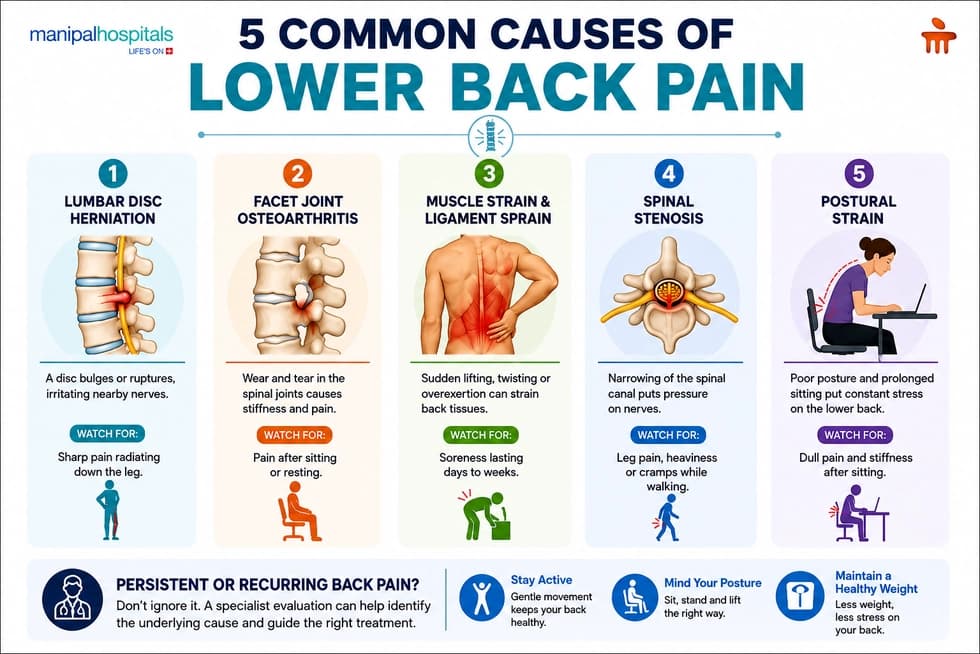
Several factors commonly contribute to spinal discomfort:
- Lumbar disc herniation: The gel-like centre of a disc pushes through its outer layer, pressing on nearby spinal nerves and often sending sharp pain down one leg.
- Facet joint osteoarthritis: The small joints linking the vertebrae gradually wear down, causing stiffness and a persistent ache in the lower back, especially after periods of inactivity.
- Muscle strain and ligament sprain: Overexertion, an awkward lift, or a sudden twisting movement can overstretch the muscles and ligaments supporting the spine, leaving a sore lower back that may take days or weeks to settle.
- Spinal stenosis: A gradual narrowing of the spinal canal places steady pressure on the spinal cord and nerve roots, commonly leading to leg heaviness and cramping when walking or standing.
- Postural strain: Spending long hours seated with inadequate back support, or habitually leaning forward over a screen, creates continuous low-grade stress on the lumbar tissues.
How Back Pain Is Diagnosed
Before selecting a treatment pathway, the priority is to identify the specific source of the pain. A reliable diagnosis combines a detailed medical history, physical and neurological examination, and appropriate investigations. This helps ensure that treatment addresses the actual cause of the backache pain rather than an incidental finding.
Medical history and symptom review
The doctor will ask when the pain first appeared, what positions or activities worsen or relieve it, and whether any sensation travels into the legs. Information about previous injuries, existing medical conditions, and the nature of daily physical demands all contribute to the clinical picture.
Physical and neurological examination
During the examination, the doctor observes posture, checks the range of spinal movement, and gently palpates along the spine to locate tender areas. A neurological assessment evaluates muscle strength, reflexes, and sensation in the lower limbs. These findings offer clear indicators of whether a nerve root is involved.
Imaging studies
Imaging is generally requested when specific warning signs are present or when pain persists beyond a reasonable period of conservative care.
- X-rays show the alignment of the vertebrae and can identify fractures, advanced arthritic changes, or significant spinal instability.
- MRI scans provide detailed views of the soft tissues, including discs, nerves, and the spinal canal. This is the preferred examination when a herniated disc or spinal stenosis is suspected.
- CT scans may be used when MRI is unavailable or when finer detail of the bony architecture is required for surgical planning.
Exploring Non-Surgical Back Pain Treatment Options
For many patients, non-surgical treatment is the first approach to managing backache pain. The aim is to reduce symptoms, improve mobility and address the underlying cause where possible.
Core non-surgical modalities include:
- Targeted physical rehabilitation: A physiotherapist designs a programme of strengthening and flexibility exercises that focus on the deep core muscles, which act as a natural brace for the spine. As these muscles become stronger, mechanical pressure on sensitive structures is reduced, and backache pain often improves considerably.
- Pharmacotherapy: Short courses of anti-inflammatory medications, muscle relaxants, or nerve-calming agents can help control acute flares. This allows patients to engage more fully in their exercise programme without being held back by severe discomfort.
- Interventional pain injections: When pain is intense and localised, image-guided epidural steroid injections or facet joint injections deliver medication directly to the inflamed area. These procedures can provide enough relief to enable the patient to participate actively in rehabilitation. They serve as a bridge rather than a permanent solution.
- Postural and ergonomic coaching: Adjusting how a person sits, stands, lifts, and arranges their workspace can prevent the repetitive strain that often underlies chronic lumbar problems. Small, consistent changes in daily habits often yield significant long-term benefits.
Many patients achieve lasting improvement through structured non-surgical treatment programmes that combine active rehabilitation with expert medical oversight. When considering back pain treatment in India for Kenyan patients, consulting a dedicated Spine Care Department can help ensure a thorough evaluation and a personalised treatment plan based on the underlying condition and individual needs.
When Is Spine Surgery Necessary?
Spine surgery is generally considered when a clearly identified structural problem causes significant symptoms that have not responded to appropriate non-surgical treatment or when urgent neurological intervention is required. Surgery may be recommended in the following circumstances:
- A herniated disc is compressing a nerve root and causing progressive leg weakness that makes walking or standing increasingly difficult.
- Spinal stenosis has narrowed the canal to a degree that produces disabling leg pain and heaviness, unrelieved by rest.
- A vertebra has slipped forward substantially (spondylolisthesis) and is unstable, causing both mechanical back pain and nerve symptoms.
- Cauda equina syndrome, a rare condition in which severe nerve compression leads to loss of bladder or bowel control, requires emergency surgical decompression.
- A vertebral fracture resulting from trauma or osteoporosis is unstable or causing nerve injury.
- A spinal tumour or infection is present and requires surgical management.
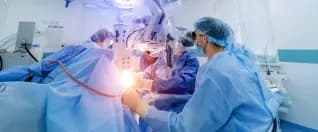
The type of operation chosen depends on the underlying condition and the patient's individual clinical needs. Modern surgical techniques increasingly rely on smaller incisions, microscopic visualisation, and real-time nerve monitoring to improve safety and shorten recovery times.
Surgical Treatment Options for Back Pain
When an operation is recommended, the procedure is matched precisely to the diagnosis and becomes a method for chronic back pain management. The most commonly performed procedures are outlined below.
At Manipal Hospitals Global, we have revolutionised spine surgery by shifting away from highly invasive, open-back operations. By utilising robotic-assisted spine navigation and intraoperative 3D O-Arm Imaging, our surgeons can visualise your spine in real-time, placing implants with sub-millimetre precision. This advanced technology ensures maximum safety for your spinal cord and reduces recovery times by up to 50%.
Our primary advanced surgical interventions include:
Procedure | What It Treats | How It Works | Key Recovery Benefit |
Endoscopic Discectomy | Herniated or slipped discs compressing spinal nerves. | A tiny camera and instruments are inserted through an incision smaller than 1 cm to remove the herniated gel. | No muscle cutting; patients are often up and walking just a few hours after the procedure. |
Minimally Invasive Laminectomy | Spinal stenosis causing leg heaviness and walking difficulties. | Specialised tubular retractors gently push muscles aside to remove the bony arch compressing the spinal canal. | Preserves the natural supporting ligaments of the spine, resulting in significantly less post-operative pain. |
Degenerative disc disease or unstable vertebrae (spondylolisthesis). | Bone grafts and titanium rods are placed using robotic arm guidance to permanently stabilise a weak spinal segment. | Sub-millimetre accuracy minimises the risk of nerve irritation and ensures highly durable structural stability. |
Conclusion
The right approach to back pain begins with an accurate diagnosis. Many conditions improve with non-surgical treatment, while surgery may be appropriate when a structural or neurological problem requires intervention. A personalised treatment plan can help determine the most suitable option based on the underlying cause and severity of symptoms.
Take the First Step Toward a Pain-Free Life
For Kenyan patients seeking back pain treatment in India, consulting the Spine Care Department and experienced spine care doctors at Manipal Hospitals Global can help ensure a thorough evaluation and a personalised treatment plan based on the underlying condition and individual treatment needs.
Share this Article
Not sure what you’re looking for?
Not sure what you’re looking for?
Get in touch with our representatives for
help!
Get in touch with our
representatives for help!