Loading...

98, HAL Old Airport Road, Kodihalli, Bengaluru, Karnataka 560017
Accreditations


Copyright © 2025 Manipal Hospitals - All Rights Reserved
Reviewed by: Ear Nose Throat Department
Posted on Apr 16, 2026
7 Min Read
The small pieces of tissue behind the nasal cavity are called adenoids. These tissues are part of the immune system, helping block bacteria and viruses from entering the body, especially in young kids. Adenoids naturally shrink as children grow older.
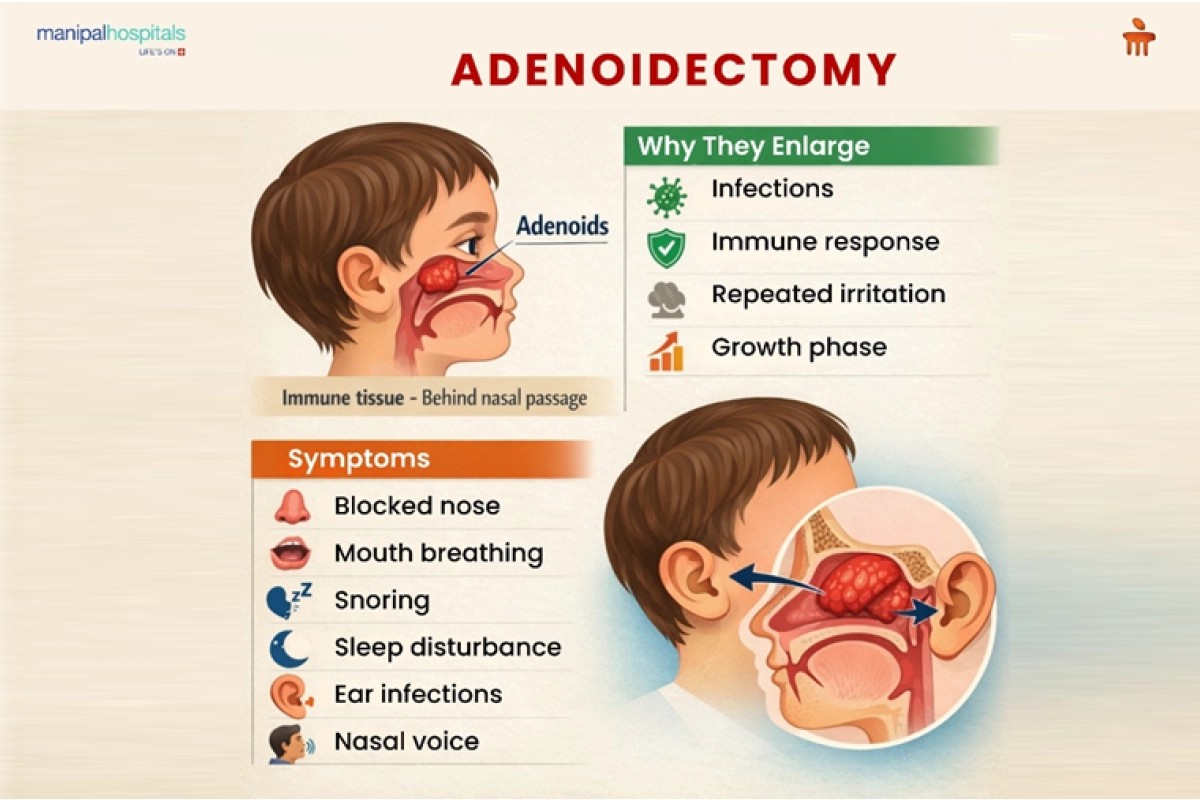
But sometimes these tissues get enlarged more than normal, which can cause nasal blockage and breathing discomfort. Doctors recommend treating enlarged adenoids through medicine or, in some cases, surgery to remove the adenoids. Understanding how adenoids work helps parents and patients make smart choices.
Catching the signs of enlarged adenoids early can help a lot. These symptoms often appear slowly and can be mistaken for normal breathing problems.
Common symptoms of enlarged adenoids include the following:
These signs of enlarged adenoids may get worse over time, so it's important to get treatment for enlarged adenoids as soon as possible.
Surgery isn't always necessary. Doctors often begin by prescribing medication to treat enlarged adenoids. So, when is it time to consider adenoidectomy surgery?
In these situations, surgically removing the adenoids can provide lasting relief and help prevent further problems. Adenoids naturally shrink as kids grow, so doctors only suggest surgery if symptoms are bad or won't go away.
The treatment depends on how bad the problem is and what symptoms you have.
Choosing the right treatment for enlarged adenoids means better results and no need for repeat procedures.
Adenoidectomy is commonly done with general anaesthesia. Most people do well with this procedure. Here is what typically happens during an adenoidectomy:
The whole adenoidectomy process usually takes less than an hour. Adenoidectomy surgery is thought to be safe and effective because it is a minimally invasive procedure.
Here’s a simple comparison to help you understand the available treatment options:
Treatment Type | Approach | Best For | Benefits | Considerations |
Medical Therapy | Medications | Mild symptoms | Non-invasive relief | Temporary results |
Observation | Monitoring | Minimal symptoms | Avoids surgery | Symptoms may persist |
Adenoid Removal Surgery | Surgical removal | Moderate to severe cases | Long-term relief | Requires anaesthesia |
Enlarged Adenoids Treatment | Combined approach | Variable severity | Personalised care | May involve multiple steps |
One thing that makes adenoidectomy surgery more manageable is that the recovery time is short. The usual time it takes to recover from an adenoidectomy is:
Most children and patients usually recover within 7 to 10 days. However, how quickly you heal after an adenoidectomy can vary based on your age and overall health. Doctors usually recommend soft foods during the first few days, adequate hydration, and sufficient rest with limited physical activity. These steps reduce the recovery time and make the journey smoother.\
People often notice the benefits of adenoidectomy surgery soon after they recover. Common advantages include the following:
For many patients, having their adenoids removed makes their daily lives and long-term health much better.
Below is a simple list of possible risks from adenoidectomy surgery, explained in plain language.
Don't ignore symptoms that don't go away. If you have any of the following, you should see a doctor:
Early evaluation can help identify the problem and ensure timely treatment for enlarged adenoids.
Breathing easily and getting quality sleep are two essential things every individual deserves, especially kids who are still growing. When enlarged adenoids start to affect your daily life, getting the right care can make a big difference. Patients can get long-term relief from their symptoms with a safe and effective adenoidectomy that causes little pain and has a short recovery time. At Manipal Hospitals Global, international patients receive coordinated ENT care from evaluation to recovery, ensuring a smooth and reassuring surgical journey.

Not sure what you’re looking for?
Not sure what you’re looking for?
Get in touch with our representatives for
help!
Get in touch with our
representatives for help!