



Coronary Angioplasty for International Patients: A Complete Guide for What to Expect After the Procedure
Reviewed by: Cardiology Department
Posted on Apr 23, 2026
8 Min Read

Synopsis
- What Is Coronary Angioplasty?
- Why Do You Need Coronary Angioplasty?
- Types of Stents Used
- What Happens During the Heart Stent Procedure?
- Angioplasty vs Bypass Surgery
- Benefits of Coronary Angioplasty
- Possible Risks
- Angioplasty Recovery Time
- Life After Coronary Angioplasty
- When Should You Seek Medical Help After Angioplasty?
- Conclusion
What Is Coronary Angioplasty?
Coronary angioplasty, also called Percutaneous Coronary Intervention (PCI), is a procedure that opens up the coronary arteries that have become too narrow or blocked. Plaque buildup (atherosclerosis) is the most common cause of these blockages.
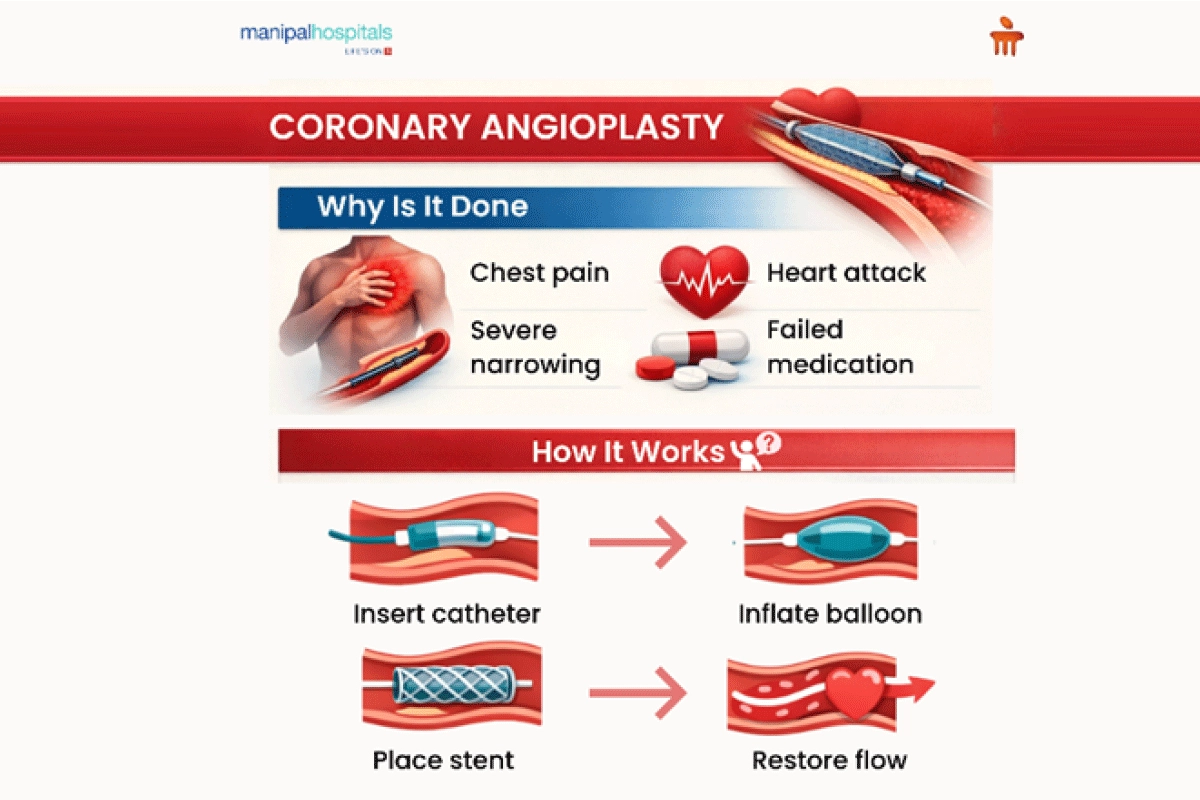
During angioplasty surgery:
- A thin tube (catheter) is inserted into a blood vessel
- A small balloon is inflated to open the artery
- A stent is placed to keep it open (this is called coronary stent placement)
This heart stent procedure improves the blood flow and lessens symptoms like chest pain.
Why Do You Need Coronary Angioplasty?
Doctors suggest coronary angioplasty as a way to treat a blocked artery in the following cases:
- Chest pain (angina) not controlled by medication
- Heart attack (emergency)
- Severe artery narrowing was seen in angiography
Angioplasty can restore blood flow in a blocked artery in less than 30 minutes during a heart attack, saving heart muscle. The heart stent procedure helps reduce symptoms and lowers the risk of future cardiac events.
Types of Stents Used
Different kinds of stents can be used when putting in a coronary stent:
- Drug-eluting stents (DES): Release medication to prevent re-blockage
- Bare-metal stents: Simple designs, used in select cases
The choice depends on how sick the patient is and how challenging the angioplasty surgery is.
What Happens During the Heart Stent Procedure?
Knowing how the heart stent procedure is performed can help you feel less anxious.
Step-by-step process:
Local anaesthesia is administered at the catheter insertion site. The patient remains awake but comfortable.
- A catheter is inserted through an artery in the wrist (radial artery) or groin (femoral artery).
- The catheter is guided to the coronary arteries using real‑time X‑ray imaging.
- A contrast dye is injected to locate the exact site of the blockage.
- A small balloon at the catheter tip is inflated, compressing the plaque against the artery wall.
- A stent is deployed at the site of the blockage to keep the artery open.
- The balloon is deflated and removed. The stent remains in place permanently.
- Blood flow is restored immediately.
It usually takes 30 minutes to 2 hours for the whole angioplasty surgery.
Angioplasty vs Bypass Surgery
Patients often weigh the pros and cons of angioplasty and bypass surgery to make the best choice. The following are the key differences:
Feature | Angioplasty Surgery | Bypass Surgery |
Procedure type | Minimally invasive | Open-heart surgery |
Recovery time | Shorter | Longer |
Hospital stay | 1 to 3 days | 5 to 7 days |
Best for | Single/few blockages | Multiple complex blockages |
Angioplasty and bypass surgery are both options, but many patients choose coronary angioplasty because it helps them heal faster.
Benefits of Coronary Angioplasty
There are several benefits to choosing coronary angioplasty:
- Quick restoration of blood flow
- Minimally invasive procedure
- Shorter angioplasty recovery time
- Reduced hospital stay
- Immediate symptom relief
This procedure makes it a preferred blocked artery treatment for many patients worldwide.
Possible Risks
Angioplasty surgery is usually safe, but there are some risks:
- Bleeding at the insertion site
- Restenosis or re-narrowing of the artery
- Blood clots in the stent
- Rare risk of heart attack or stroke
- Stent thrombosis (rare but serious)
When doctors put in coronary stents, they take steps to lower these risks. Modern drug-eluting stents help reduce the risk significantly.
Angioplasty Recovery Time
One of the main advantages of coronary angioplasty is the relatively short recovery period. What to expect after the procedure
Phase | What You Experience | How to Take Care |
First 24 hours | Mild soreness, monitoring | Rest and stay hydrated; avoid driving |
1–2 weeks | Gradual return to work or other activities | Avoid heavy lifting |
3–4 weeks | Improved energy levels | Resume normal routine |
Long-term | Stable heart health | Lifestyle changes |
Most people who have angioplasty can go back to their normal activities in a few days, which is much shorter than the time it takes to recover from surgery.
Life After Coronary Angioplasty
Maintaining heart health after coronary angioplasty is essential to prevent future blockages and complications.
Required lifestyle changes:
- Follow a heart‑healthy diet low in saturated fats, trans fats, and sodium. Emphasise fruits, vegetables, whole grains, and lean protein.
- Engage in regular physical activity as advised by the cardiologist (e.g., walking 30 minutes daily).
- Quit smoking completely. Smoking significantly increases the risk of stent thrombosis and new blockages.
- Take prescribed medications without interruption. Dual antiplatelet therapy (aspirin plus a P2Y12 inhibitor such as clopidogrel, ticagrelor, or prasugrel) is typically required for 6–12 months to prevent clots.
- Attend all scheduled follow‑up visits for blood pressure, cholesterol, and glucose monitoring.
These steps reduce the likelihood of needing repeated blocked artery treatment.
When Should You Seek Medical Help After Angioplasty?
Patients should contact their physician or seek emergency care if they experience any of the following after angioplasty:
- Recurring chest pain
- Swelling or bleeding at the catheter site
- Shortness of breath
- Unusual tiredness or fever
Angioplasty is a life-saving procedure during heart attacks. Early care makes sure that the recovery time after angioplasty goes smoothly.
Conclusion
Coronary angioplasty is a safe and effective way to treat blocked arteries. It helps blood flow better and makes the heart healthier. At Manipal Hospitals Global, this procedure is performed by experienced cardiologists and interventional specialists using advanced technology to ensure accurate diagnosis and effective treatment. It gives international patients better care with shorter hospital stays and a quicker recovery time after angioplasty.
You can make better choices at Manipal Hospitals Global if you know what to expect after coronary stent placement, how the heart stent procedure works, and how angioplasty and bypass surgery are different. International patients can also benefit from video consultations and second-opinion services before travelling, allowing cardiologists to review medical reports, guide treatment planning, and provide clarity on the next steps.
Coronary angioplasty doesn’t just treat blocked arteries. It gives many patients a second chance at a healthy, active life. So if you are seeking expert care for you or your loved ones, consult a specialist at Manipal Hospitals today.
Share this Article


Not sure what you’re looking for?
Not sure what you’re looking for?
Get in touch with our representatives for
help!
Get in touch with our
representatives for help!