Pregnancy Care: Tips for a Healthy Pregnancy and Antenatal Care
Reviewed by: Obstetrics and Gynaecology Department
Posted on Oct 15, 2026
10 Min Read
Synopsis
Early Pregnancy: Symptoms and Changes to Expect
Early pregnancy does not feel the same for all women. Some notice several changes, while others may have fewer symptoms. If you are wondering what the symptoms of pregnancy are, common early changes include nausea, morning sickness, and tiredness.
Other changes may occur too. Some women may also experience headaches during early pregnancy. These changes are part of a period in which the body is adjusting to pregnancy, while the baby is undergoing rapid development.
The first trimester can bring some of the more noticeable symptoms. As pregnancy moves into the second trimester, nausea and morning sickness may begin to settle for some women.
Not every symptom during pregnancy should simply be assumed to be a normal part of the process. Some changes can indicate that medical attention is needed, particularly when they are unusual, persistent or occur alongside other concerning symptoms.
What is Antenatal Care?
Antenatal care is the care a woman receives from healthcare professionals during pregnancy to check her health and monitor the baby's development. These appointments are not simply routine visits. They give the healthcare team an opportunity to check how the pregnancy is progressing, carry out recommended screening and identify concerns that may need closer attention.
Antenatal care starts early in pregnancy. The timing and number of appointments can vary depending on whether it is a first pregnancy and whether the mother or baby needs additional monitoring. At these visits, checks may include blood pressure, urine, blood tests and the baby's growth and movements. Scans and screening are also offered at particular stages.
| Pregnancy stage | Main checks and discussions |
| 8–12 weeks | Health history, mental health, lifestyle, blood pressure, urine test and blood group |
| 11–14 weeks | Dating scan, development and screening options |
| 16 weeks | Health and wellbeing, blood pressure, urine and screening results |
| 18–21 weeks | Ultrasound to assess development |
| 24–28 weeks | Assessment for gestational diabetes when recommended, along with routine maternal and fetal checks. |
| 28 weeks onward | Blood tests, blood pressure, urine, baby's growth and movements, and mental health |
| 36 weeks onward | Baby's position, growth, movements, blood pressure and preparation for birth |
The timing of antenatal appointments and tests can vary depending on where you receive care, your pregnancy history, and whether you or your baby needs additional monitoring.
Keep your maternity records accessible throughout pregnancy. They contain important information about your health, test results, scans, and the care you have received, which can help your healthcare team make informed decisions as the pregnancy progresses.
Nutrition and Weight Management During Pregnancy
These are the important pointers to keep in mind:
Eating well during pregnancy
Pregnancy increases the body's need for several nutrients. It does not simply mean eating more food. The quality of what you eat matters too. A balanced diet can include fruits and vegetables, whole grains, lean sources of protein, healthy fats and calcium-rich foods.
Meals do not have to become complicated. A varied diet, with different food groups included through the day, can help provide the nutrients needed during pregnancy. Some nutrients, however, deserve particular attention because their requirements increase during this time.
Nutrients that matter
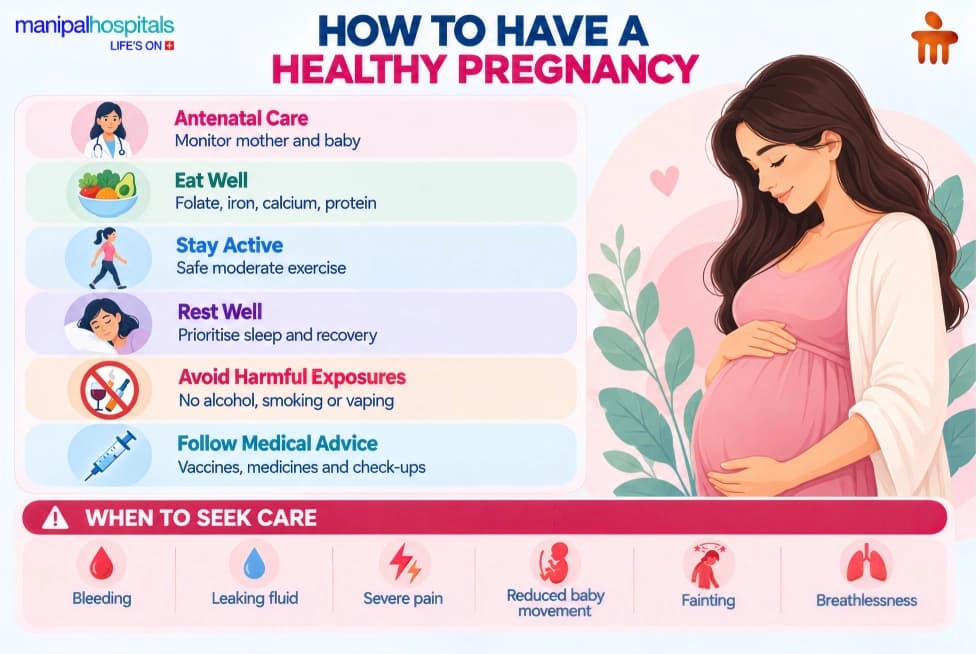
Folate or folic acid, iron, calcium, vitamin D and protein all have an important place in pregnancy nutrition.
- Folate or folic acid supports the baby's development and is especially important early in pregnancy.
- Iron needs increase during pregnancy as the body makes more blood and supports the baby's growth.
- Calcium is needed for the development of the baby's bones and teeth. Pregnant adults need about 1,000 mg a day.
- Vitamin D supports bone health and other functions. The recommended amount during pregnancy is 600 IU a day.
- Protein supports the growth of the baby and other changes taking place in the body. The recommended amount is about 71 grams a day.
Keeping weight gain within a healthy range
Weight gain is a normal part of pregnancy, but the amount recommended depends on your pre-pregnancy BMI. Gaining too little or too much can create health concerns, so the target is not the same for everyone. Pregnancy is not the time to deliberately lose weight. The focus should instead be on appropriate weight gain and healthy eating.
Foods and drinks to avoid or limit
Some foods and drinks carry risks during pregnancy. Avoid alcohol during pregnancy and limit caffeine intake to less than 200 mg a day. High-mercury fish should also be avoided. Raw or undercooked meat, eggs and seafood, along with certain unpasteurised foods, can also pose a risk and should be avoided.
Lifestyle Habits That Support a Healthy Pregnancy
Stay physically active
For most women, staying active during pregnancy is safe and beneficial. Aim for at least 150 minutes of moderate-intensity aerobic activity each week, when there is no medical reason to avoid it. Walking and other moderate activities can be good ways to remain active without making exercise feel like a chore.
Regular movement may help with weight management and some common pregnancy discomforts, including backaches, leg cramps and bloating. Heavy sports activities that could cause a fall or an injury to the abdomen should be avoided. So should overheating, hot tubs and saunas.
Make time for rest
Sleep and rest become important parts of how to have a healthy pregnancy. Pregnancy can be tiring, particularly as the body changes and the baby grows. Making time to rest, relax and manage stress can support overall wellbeing during this period.
Avoid harmful exposures
Smoking, vaping, tobacco exposure and alcohol can be harmful during pregnancy. Exposure to certain drugs and chemicals can also pose risks. This includes some substances that may be encountered at home or at work.
Medicines need similar care. Do not start, stop or change a medicine on your own during pregnancy. Discuss medicines and other possible exposures with your healthcare provider first.
Keep vaccinations and medicines in check
Vaccination is also an important part of pregnancy care. Vaccines such as influenza, Tdap, and COVID-19 vaccines may be recommended during pregnancy depending on current guidance, your health, and the stage of pregnancy. Some vaccines, particularly certain live vaccines, are generally avoided during pregnancy. Your healthcare provider can advise you on which vaccinations are appropriate and when they should be given.
Warning Signs and When to Seek Medical Care
Some pregnancy symptoms need prompt medical attention, particularly when they are new, severe or unusual for you. You do not have to wait until your next scheduled appointment if you are concerned about your health or your baby's health. Contact your healthcare provider if you experience:
- Vaginal bleeding
- Leaking fluid
- Strong cramps or significant pain
- Contractions
- Reduced baby movement
- Dizziness or fainting
- Shortness of breath
- Heart palpitations
- Severe or persistent vomiting, particularly if you cannot keep fluids down.
- Difficulty walking
- Sudden or significant swelling of the face or hands, particularly when accompanied by a severe headache or visual changes.
Seek emergency medical care for severe breathing difficulty, fainting or other sudden, severe symptoms. Do not wait until your next scheduled appointment if you are concerned.
Conclusion
A healthy pregnancy is supported by regular antenatal care, balanced nutrition, appropriate physical activity and attention to changes in your health. Every pregnancy is different, so the care you need may also vary with your health, pregnancy stage and individual circumstances. Keeping scheduled appointments and speaking to your healthcare team when something feels unusual can help address concerns at the right time.
For personalised guidance throughout your pregnancy, consult the experienced obstetricians and maternity specialists at Manipal Hospitals Global. Our highly experienced obstetricians and gynaecologists can support you through routine pregnancy care, monitoring and the different stages of your pregnancy.
Comprehensive Maternity and Antenatal Care at Manipal Hospitals Global
Navigating pregnancy requires clinical precision, trusted guidance, and compassionate maternal care at every developmental milestone. At Manipal Hospitals Global, our multidisciplinary department of Obstetrics and Gynaecology provides end-to-end antenatal supervision tailored to both routine and high-risk pregnancies. Backed by internationally accredited maternal-fetal specialists, advanced high-resolution 3D/4D fetal imaging, and comprehensive genetic screening, the team supports the identification and management of pregnancy-related conditions, such as preeclampsia, gestational diabetes, and fetal growth restrictions. Every care pathway is meticulously customized to prioritize the health, comfort, and safety of both mother and baby.
For cross-border families and international patients seeking world-class delivery and prenatal care, Manipal Hospitals Global combines advanced medical infrastructure with empathetic, personalized support. Our maternity wings feature comfortable labor-delivery-recovery (LDR) rooms, emergency obstetric surgical suites, and round-the-clock Level III Neonatal Intensive Care Units (NICU) to manage complex neonatal requirements. Supported by dedicated international patient coordinators who streamline everything from pre-travel virtual consultations and visa assistance to multilingual care and postpartum recovery planning, we ensure you experience a reassuring, safe, and memorable birth journey.
Share this Article


Not sure what you’re looking for?
Not sure what you’re looking for?
Get in touch with our representatives for
help!
Get in touch with our
representatives for help!