1. Less risk, More Effective:
By avoiding cutting spinal muscles, bones and nerves, OLIF spares you excessive pain, muscle damage, and scar tissue formation. A big advantage of this is “significantly reduced risk of spinal nerve damage”.
2. Faster Recovery:
Most patients can stand and “walk the next day” after surgery. The technique often translates to a hospital stay of 4-5 days, which includes supervised physiotherapy. Many patients return to daily activities in the next few weeks.
3. Better Correction & Fusion Rates, Reduced risk of future spinal surgeries:
A major benefit of the OLIF approach is the ability to insert a large inter-body cage, which “restores spinal height and natural balance, encourages strong bone fusion, reduces risk of future spinal surgeries”. OLIF spine surgery allows for excellent correction of spinal deformities, such as scoliosis or flat-back syndrome.
4. Minimal Blood Loss & Less Post-Op Pain:
Thanks to the nature of the approach and the use of advanced imaging like fluoroscopy, OLIF surgery is associated with “minimal blood loss and lower pain scores post-operatively”.
OLIF spine surgery is typically recommended when other conservative treatments like physical therapy, medications, and injections haven’t worked. This approach is especially effective for these lumbar spine conditions:
Degenerative disc disease.
Herniated discs.
Spinal stenosis (narrowing of the spinal canal).
Scoliosis and other spinal deformities.
Spondylolisthesis (slipping of one vertebra over another).
Spinal instability.
Not everyone is a candidate; the decision is always individualised, based on detailed imaging and a thorough evaluation by a spinal specialist.
1. Preparation & Anaesthesia:
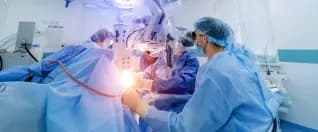
The patient is given general anaesthesia and is positioned on their side to start with.
2. Surgical Approach:
A small incision typically around 6-8 cm is made on one side of the abdomen. Using advanced imaging, the surgeon gently moves aside the abdominal muscles and tissues. The approach avoids major back muscles, bones and nerves.
3. Accessing the Spine:
Care is taken to reach the damaged disc space without disturbing surrounding vital structures. Special instruments are used to remove the degenerated disc and clean the disc space.
4. Insertion of the Graft/Cage:
Through this corridor, a large cage often made of titanium or medical-grade plastic filled with a lot of bone graft is inserted in place of the removed disc, restoring disc height and realigning the spine. The graft encourages the adjacent vertebrae to fuse, creating a stable, pain-free segment through spinal fusion.
5. Stabilisation:
The patient is then turned prone, and additional screws and rods are inserted from the back to support the spine further during healing.
6. Closure:
The incision is closed with careful attention to minimise scarring. The time for the procedures depends on the number of spinal levels being treated.
Behind every successful surgery is a life reclaimed, a family relieved, and a sense of independence restored. At Manipal Hospitals, Dwarka, our expert spine team has helped hundreds of patients rediscover comfort and confidence. Here are three remarkable journeys from our practice:
Case 1:
A 70-year-old woman came to us six months ago, suffering from spinal slip and stenosis that left her with significant leg weakness and loss of bladder and bowel control. She underwent an OLIF surgery, a procedure that stabilises the spine and brings back natural balance with less risk to nerves and excellent fusion rates. Today, her mobility and bladder and bowel functions are fully restored, and she is enjoying her daily life once more.
Case 2:
For more than five years, a 52-year-old woman endured severe back and leg pain due to spinal listhesis and disc loss. We treated her using a combination of ALIF and OLIF lumbar surgery techniques. By restoring her spinal alignment and correcting her lordosis, her back and leg pain has resolved and she is back to doing what she loves, pain-free.
Case 3:
Complex spinal problems require a tailored approach. A 52-year-old woman who had previously undergone spine surgery in 2021 returned to us with a failed outcome called distal junction failure, as her spine tried to compensate for lost balance. Through revision of OLIF lumbar surgery at two levels, we were able to restore her natural lumbar lordosis. Six months on, she reports renewed comfort and satisfaction with her quality of life.
These actual results of real patients are a testament to why so many rely on Manipal Hospitals Global for their spinal health. We offer advanced surgical techniques, OLIF and ALIF are surgeries that only some of the most experienced spine surgeons in India perform. They prioritise patients' recovery, safety, and well-being for the long term. If you are suffering from back pain or have a complicated spinal issue, let us help you get back to being strong and confident, with compassionate care and proven competence throughout.