Scoliosis: Symptoms, Types, and Treatment Options for Patients from Cameroon
Reviewed by: Spine Care Department
Posted on Aug 24, 2026
10 Min Read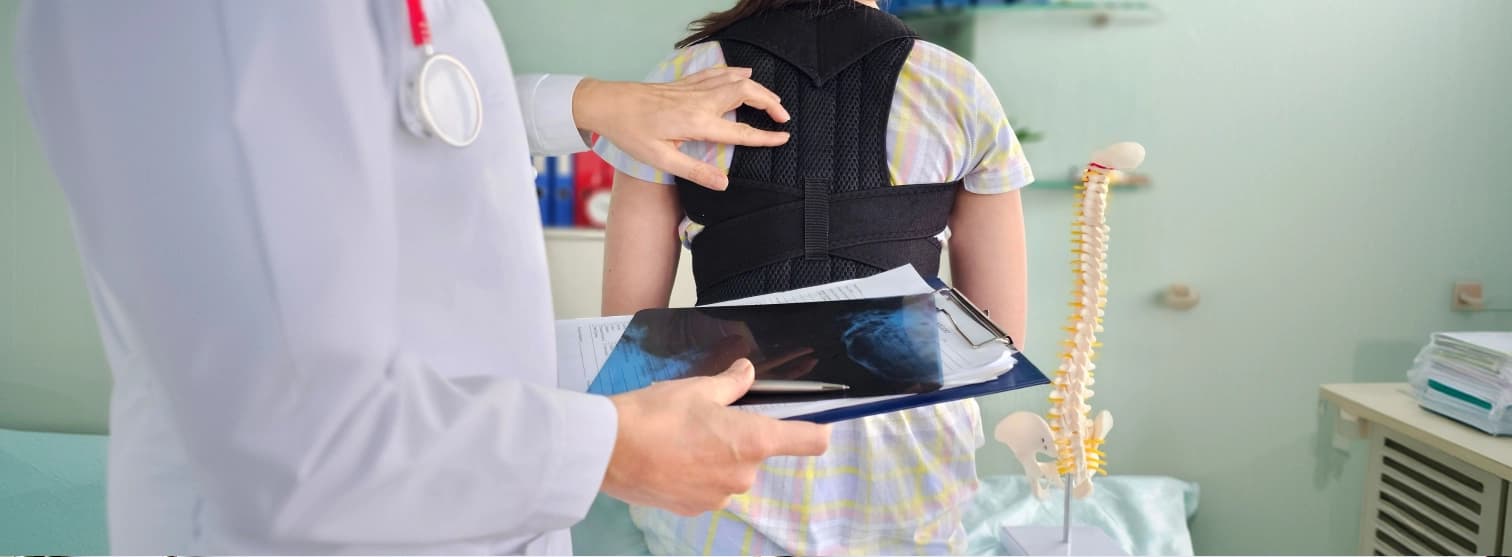
Synopsis
What is Scoliosis & Types of Scoliosis
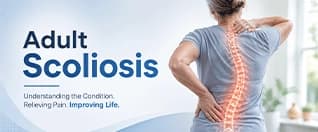
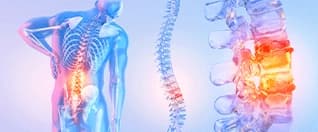
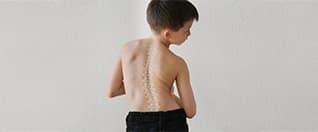
Scoliosis is a condition where the spine twists and curves sideways into a C-shape or an S-shape instead of staying in a straight vertical line. Doctors diagnose the condition when this sideways curve measures 10 degrees or more on a standing X-ray. As the backbone curves, it often rotates slightly as well, which can make one side of the ribs or waist look slightly higher or more prominent than the other.
To help guide care, orthopaedic specialists group the condition into different categories based on when and why the curve develops. The table below outlines the primary types of scoliosis:
Type of Scoliosis | Primary Underlying Cause | Typical Age of Onset |
| Idiopathic Scoliosis | Has no single known cause, though it frequently runs in families due to genetic links. It is the most common form (80-85% of cases). | Subdivided into Infantile (under 3), Juvenile (4–10), Adolescent (11–18), and Adult. |
| Congenital Scoliosis | Occurs when the bones in the spine (vertebrae) do not form or separate properly before birth. | Present at birth, though often noticed during early childhood growth. |
| Neuromuscular Scoliosis | Driven by conditions that affect the nerves and muscles supporting the spine, such as cerebral palsy or muscular dystrophy. | Develops at any age as muscle weakness or imbalance changes posture. |
| Degenerative (Adult) Scoliosis | Caused by natural wear and tear on the discs, joints, and bones in the lower back as the body ages. | Typically diagnosed in adults over 50 due to joint changes or bone density loss. |
Recognising Symptoms and Signs of Scoliosis
Spinal curvature in its early phase rarely produces sharp pain, so visual checks and posture observations are essential for catching it early.
Observable Physical Signs
- One shoulder that sits higher than the other or one shoulder blade that sticks out more.
- An asymmetric waistline, or one hip resting noticeably higher.
- The head appears off-centre relative to the pelvis when standing straight.
- The whole body leaning or tilting to one side.
- Clothing that hangs unevenly, such as a skirt hem or trouser leg looking crooked.
Associated Physical Symptoms
While mild curves often bring no discomfort, a curve that progresses to moderate or severe levels can produce noticeable scoliosis symptoms:
- A dull ache or feeling of tiredness in the mid or lower back after long periods of sitting or standing.
- Core muscle weakness and uneven strain along the spine.
- Discomfort, numbness, or stiffness in the legs if a nerve root is compressed.
- Reduced stamina during physical activities because the spine’s mechanics are altered.
- In severe curves beyond 60 to 70 degrees, the ribcage may push on the lungs and cause breathlessness during exertion.
Causes and Risk Factors
The exact biological trigger for idiopathic scoliosis is still being researched, but several factors raise the chance of a curve appearing or getting worse.
- Age and Growth Spurts: The rapid growth phase of early adolescence is the highest-risk window for curve progression.
- Biological Family History: A child with a parent or sibling who has scoliosis carries a higher likelihood of developing a curve.
- Sex: Mild curves affect boys and girls at similar rates, but girls are far more likely to experience a curve that progresses enough to need a brace or surgery.
- Underlying Neuromuscular Conditions: Any condition that alters muscle tone, nerve signals, or connective tissue directly affects spinal stability.
Diagnostic Evaluation and Measurement
Finding scoliosis early through routine wellness checks or school screenings makes proactive care possible before a curve worsens.
Adam's Forward Bend Test: The person bends forward from the waist with arms hanging down. The examiner looks from behind for a rib hump or an uneven prominence in the lower back, which can reveal spinal rotation.
Scoliometer Measurement: If a rotation is noted, a small level-like tool is placed on the spine during the forward bend to measure the angle of trunk rotation.
Full-Length Standing X-Rays: Images taken from the front and side allow the specialist to calculate the Cobb Angle, the standard measurement of curve severity in degrees:
- Mild: 10° to 24°
- Moderate: 25° to 39°
- Severe: 40° or greater
Advanced Imaging (MRI or CT): These scans are ordered when the curve pattern is unusual, the progression is rapid, or neurological signs like altered reflexes or leg weakness appear, to rule out spinal cord problems.
Scoliosis Treatment Without Surgery
For mild to moderate curves, non-surgical scoliosis treatment aims to stop the curve from getting worse, maintain spinal alignment, build core strength, and manage any discomfort.
Observation and Monitoring
For curves under 20 to 25 degrees in a growing child, the spine specialist will typically recheck the back and repeat an X-ray every four to six months to see if the angle stays steady.
Custom Spinal Bracing
Bracing is recommended for growing children and adolescents with moderate curves between 25 and 40 degrees. A brace will not permanently straighten the spine, but it holds it in a corrected position to prevent worsening during growth spurts.
- Boston Brace (TLSO): A rigid, custom-moulded plastic jacket worn under clothing, usually for 16 to 23 hours each day.
- Charleston Bending Brace: A nighttime-only brace that holds the spine in a strongly corrected position while the child sleeps.
Physical Therapy & Specialised Exercise
- Schroth Method: A specialised approach that uses custom breathing techniques, posture awareness, and isometric exercises to de-rotate and lengthen the spine.
- Core Strengthening & Low-Impact Exercise: Pilates, yoga, aquatic therapy, and swimming strengthen the abdominal and back muscles that support the trunk, improving overall stability and comfort.
Surgical Procedures for Scoliosis Correction
When non-surgical care is not enough, or when a curve exceeds 40 to 50 degrees with a high chance of progressing into adulthood, scoliosis surgery becomes an important consideration. The primary goals of surgery are to safely straighten the sideways curve, balance the shoulders and hips, and permanently stabilise the spine to prevent future complications.
At Manipal Hospitals Global, patient safety is our highest priority during complex spinal reconstructions. Every procedure is performed under the guidance of Intraoperative Neuromonitoring (IONM), an advanced technology that continuously monitors spinal cord nerve signals in real-time, drastically reducing the risk of neurological damage and ensuring the safest possible outcome.
The table below outlines the modern surgical options available to patients
Procedure | Ideal Candidate | How it Works | Key Benefit |
| Spinal Fusion with Instrumentation | Growing adolescents or adults with rigid curves exceeding 40°–50°. | Metal rods, screws, and bone grafts are placed along the curved vertebrae to hold the spine in alignment until the bones fuse into a single solid column. | The gold standard of scoliosis care provides permanent and highly predictable correction of severe curves. |
| Vertebral Body Tethering (VBT) | Growing adolescents with flexible, moderate-to-severe curves. | A strong, flexible cord (tether) is secured with screws to the outer side of the curve, guiding the spine to straighten naturally as the child grows. | Preserves spinal mobility and natural flexibility without permanently fusing any bones together. |
| Minimally Invasive Scoliosis Surgery (MISS) | Select candidates with specific curve patterns requiring targeted correction. | The surgeon corrects spinal alignment through smaller incisions using specialised tubular retractors and computer-assisted 3D navigation. | Significantly faster recovery, less post-operative pain, minimal muscle damage, and smaller surgical scars. |
| Motion-Preserving Dynamic Stabilisation | Adults experiencing degenerative scoliosis with localised joint instability. | Combines targeted, limited fusion with flexible implants (like dynamic stabilisation systems or artificial discs) to restore alignment. | Corrects spinal balance while preserving natural movement in the healthy sections of the back. |
Scoliosis Treatment Options for Cameroon Patients
While monitoring, bracing, and some physiotherapy can be accessed locally in Cameroon, surgical options for complex curves are limited. The infrastructure for advanced spinal fusion, intraoperative neuromonitoring, and 3D navigation is not widely available. Consequently, many families turn to scoliosis surgery in India for Cameroon patients.

India has become a trusted destination for spinal reconstruction, combining experienced surgeons, modern technology, and cost-effective care. The best scoliosis hospital in India for Cameroon patients offers dedicated international patient services.
Conclusion
Noticing a curve in your spine or your child's posture can feel overwhelming at first, but early detection and expert medical care make a profound difference. Whether managed through gentle observation, custom bracing, or modern surgical correction, effective treatment helps individuals with scoliosis live active, confident lives. At Manipal Hospitals Global, our international spine care teams are dedicated to delivering compassionate, world-class treatment tailored to your specific health needs. From detailed diagnostic evaluations to advanced surgical solutions, we are here to support Cameroonian families every step of the way.
Share this Article
Not sure what you’re looking for?
Not sure what you’re looking for?
Get in touch with our representatives for
help!
Get in touch with our
representatives for help!