
Living Donor vs Deceased Donor Liver Transplants: Key Differences
Reviewed by: Organ Transplant Department
Posted on Dec 24, 2025
4 Min Read

Synopsis
- What Is A Liver Transplant?
- What Do You Mean By Living Donor Liver Transplant?
- What Is a Deceased Donor Liver Transplant?
- Key Differences Between Living And Deceased Donor Transplants
- Who Can Be A Liver Transplant Donor?
- How Living Donor Transplants Work Step By Step
- How Deceased Donor Transplants Are Performed
- Risks And Safety Considerations
- Recovery And Life After Transplant
- Liver Transplant Survival Rate And Outcomes
- Living Donor Vs Deceased Donor: Which Is Better?
- Emotional And Family Considerations
- Preparing For A Liver Transplant
- Lifestyle After Liver Donation And Transplant
- Conclusion
How Deceased Donor Transplants Are Performed
Once an organ becomes available, deceased donor transplantation generally occurs in less than 24 hours. The typical sequence of events associated with a deceased donor transplant is as follows:
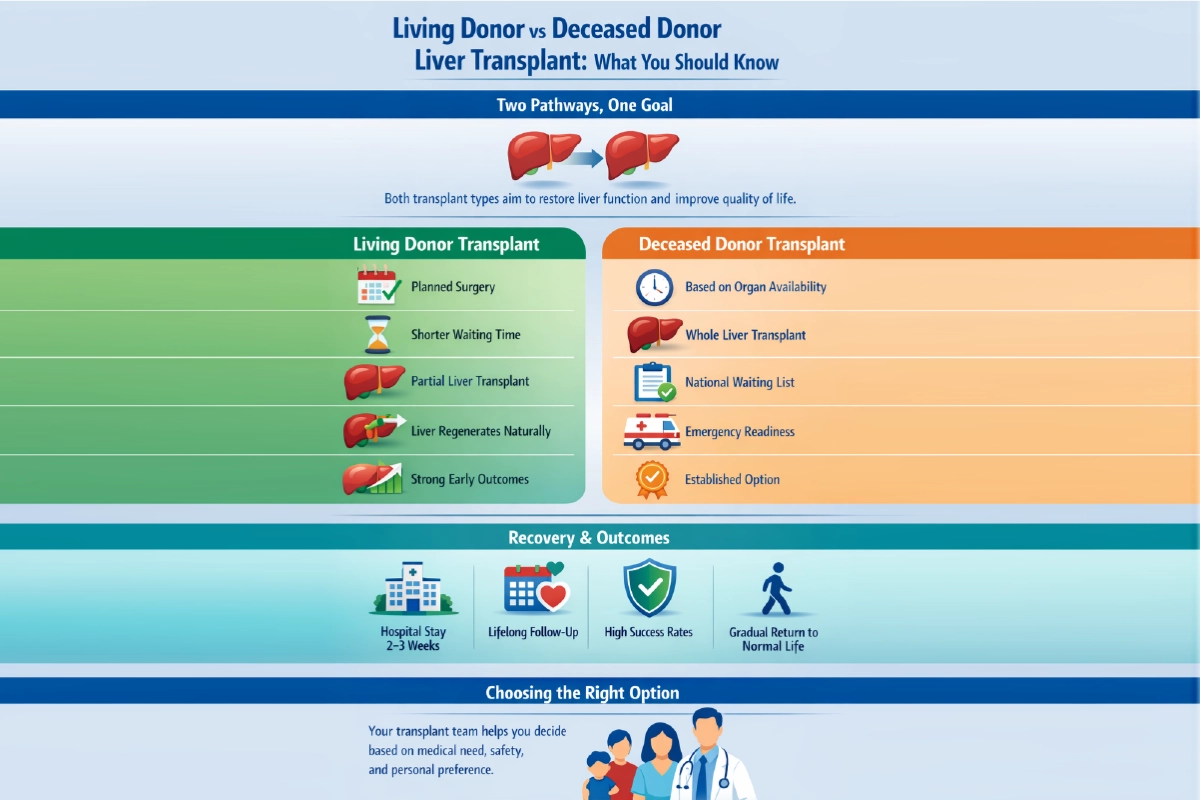
- An emergency admission is done following an organ match
- Follow-up testing on potential donor (pre-operative assessment)
- Transplant surgery is performed within a matter of hours after the match is found
- Close supervision following the transplantation
- A gradual recovery period of several weeks following surgery
Because timing is uncertain, patients stay prepared. This can feel stressful, but teams guide patients through each step.
Risks And Safety Considerations
All surgeries carry some risk. Liver transplantation is no different, though success rates are high.
Possible risks include:
- Infection during early recovery
- Bleeding during or after surgery
- Rejection of the new liver
- Bile duct complications
For living donors, risks are low but present. These include pain, infection, and temporary liver dysfunction.
Safety protocols, regular monitoring, and patient education reduce these risks significantly.
Recovery And Life After Transplant
Recovery takes time and patience. Most patients stay in the hospital for two to three weeks, depending on progress.
After discharge, patients:
- Take medicines to prevent rejection
- Attend regular follow-up visits
- Adjust diet and daily habits
- Gradually increase activity levels
Over time, many return to work and social life. The goal is stable health, not perfection. Recovery feels different for everyone. Support and reassurance matter greatly.
Liver Transplant Survival Rate And Outcomes
The survival rate for liver transplants has improved greatly over the years. Today, survival rates are high, and long-term results continue to improve with advances in surgery, immunosuppressive therapy, and follow-up care.
Outcomes depend on factors such as:
- Overall health at the time of transplant
- Cause of liver disease
- Adherence to post-transplant care
Living donor transplants often show strong early outcomes due to planned timing and reduced waiting periods.
Living Donor Vs Deceased Donor: Which Is Better?
There is no single right answer. Each option suits different patients.
Living donor transplant may suit patients who:
- Have a willing, healthy donor
- Need timely surgery
- Prefer planned treatment
Deceased donor transplant may suit patients who:
- Do not have a suitable living donor
- Are stable enough to wait
- Prefer not to involve family donation
Doctors guide this choice carefully, based on medical and personal factors.
Emotional And Family Considerations
Transplant decisions impact not only the patient but also their family and loved ones. Families play a central role. Living donation can bring mixed emotions. Gratitude, worry, and hope often coexist. Open discussions help everyone feel supported.
Deceased donation carries its own emotional weight. Waiting can feel heavy, but counseling helps manage anxiety.
Preparing For A Liver Transplant
Preparation supports smoother recovery. Patients are often advised to:
- Maintain nutrition as advised
- Avoid alcohol and harmful substances
- Stay physically active within limits
- Keep vaccinations updated
- Follow medical advice closely
Mental readiness also matters. Understanding the process builds confidence and calm. Preparation is about the partnership between the patient and the care team.
Lifestyle After Liver Donation And Transplant
After recovery, lifestyle adjustments support long-term health. These include:
- Balanced diet
- Regular physical activity
- Medication adherence
- Routine health checks
Living donors also receive follow-up care. Most return to normal activities within months. Life after transplant is not about restriction. It is about mindful living and steady care.
Conclusion
Living donor and deceased donor liver transplants both save lives. Each follows its own pathway, timetable, and emotional journey. Knowing the differences helps families choose confidently and prepare practically for what comes next.
For personalised guidance and expert care, speak with the liver transplant team at Manipal Hospitals Global. Book a consultation to discuss options, timelines, and the support available for you and your family
Share this Article


Not sure what you’re looking for?
Not sure what you’re looking for?
Get in touch with our representatives for
help!
Get in touch with our
representatives for help!



