
Don't Ignore the Headache Causing Signs: Early Neurological Consultation Can Improve Headache Management by 70%
Reviewed by: Neurology Department
Posted on Feb 11, 2026
7 Min Read

Synopsis
- Understanding Frequent Headaches: More Than Just a Pain
- Common Types of Headaches You Should Know About
- Why Choose Manipal Hospitals Global for Neurological Care?
- When to Consult a Neurologist for Your Headaches?
- The Neurologist's Role in Headache Management
- Effective Headache Treatment Strategies at Manipal Hospitals
- Care Essentials: Do's and Don'ts for Managing Headaches
- Frequently Asked Questions (FAQs)
Understanding your headache's nature, its causes, and effective headache treatment is key to a better quality of life. This blog explores when frequent headaches signal a more serious underlying issue, prompting the need for expert neurological care.
Understanding Frequent Headaches: More Than Just a Pain
Frequent headaches are complex, often stemming from various underlying headache causes. Some are primary (the headache itself is the issue), while others are secondary, indicating an underlying condition. Globally, nearly 50% of adults experience a headache annually, with many facing chronic or severe forms. Recognizing your headache's pattern and characteristics—whether it's dull, throbbing, or sharp, and if it comes with other symptoms like visual disturbances or nausea—is crucial. A headache diary can provide valuable information for diagnosis.
Common Types of Headaches You Should Know About
- Tension Headaches: The most common, a tight band around the head; typically mild-to-moderate without other symptoms.
- Migraine Headaches: Often severe, throbbing, and usually on one side. Accompanied by nausea, vomiting, and extreme sensitivity to light/sound. (Migraine) affects 1 in 7 people globally.
- Cluster Headaches: Intensely painful, occur in clusters around one eye; rare but debilitating.
- Chronic Daily Headaches: Headaches that occur 15+ days a month for at least three months. These require a comprehensive chronic headache treatment plan.
Manipal Hospitals Global is committed to world-class healthcare across specialties. Our dedicated Department of Neurology is equipped with state-of-the-art facilities and a patient-centric approach to deliver exceptional care. We empower patients with knowledge and advanced headache treatment options, ensuring the best outcomes for complex conditions like headache disorders.
Manipal Hospitals’ comprehensive approach to headache disorders includes:
- A multidisciplinary team of neurologists, pain management specialists, and psychologists.
- Personalized headache treatment plans tailored to individual needs and specific headache causes.
- Accurate diagnosis using advanced imaging and diagnostic tools.
- Emphasis on both acute and preventive treatments for long-term relief from conditions like chronic headache and migraine headache.
At Manipal Hospitals, our neurologists leverage cutting-edge diagnostic and therapeutic technologies for effective headache disorder management:
- Advanced Imaging: MRI and CT scans to rule out structural abnormalities in the brain, detecting underlying issues in up to 10% of patients with concerning headache patterns.
- Neurophysiological Studies: EEG for detecting abnormal brain activity when seizures are suspected alongside headaches.
- Specialized Procedures: Botox injections for chronic headache and nerve stimulation therapies for resistant types.
We are committed to staying abreast of the latest advancements, ensuring effective and evidence-based headache treatment.
Why Choose Manipal Hospitals Global for Neurological Care?
Choosing Manipal Hospitals’ Neurology specialty for your neurological care, especially for headache management, means opting for:
- Expert Neurologists: Our team of experienced neurologists comprises highly experienced specialists in headache disorders.
- Comprehensive Approach: Holistic care addressing symptoms and underlying headache causes.
- Advanced Diagnostics & Treatment: Access to latest technology for accurate diagnosis and personalized headache treatment plans.
- Proven Outcomes: Specialized care leads to 70% improvement in complex headache conditions, with over 85% of chronic headache patients reporting a substantial reduction in headache days.
- Multidisciplinary Support: Benefit from a collaborative team including pain management specialists and psychologists, offering advanced care for migraine headache and other severe forms.
When to Consult a Neurologist for Your Headaches?
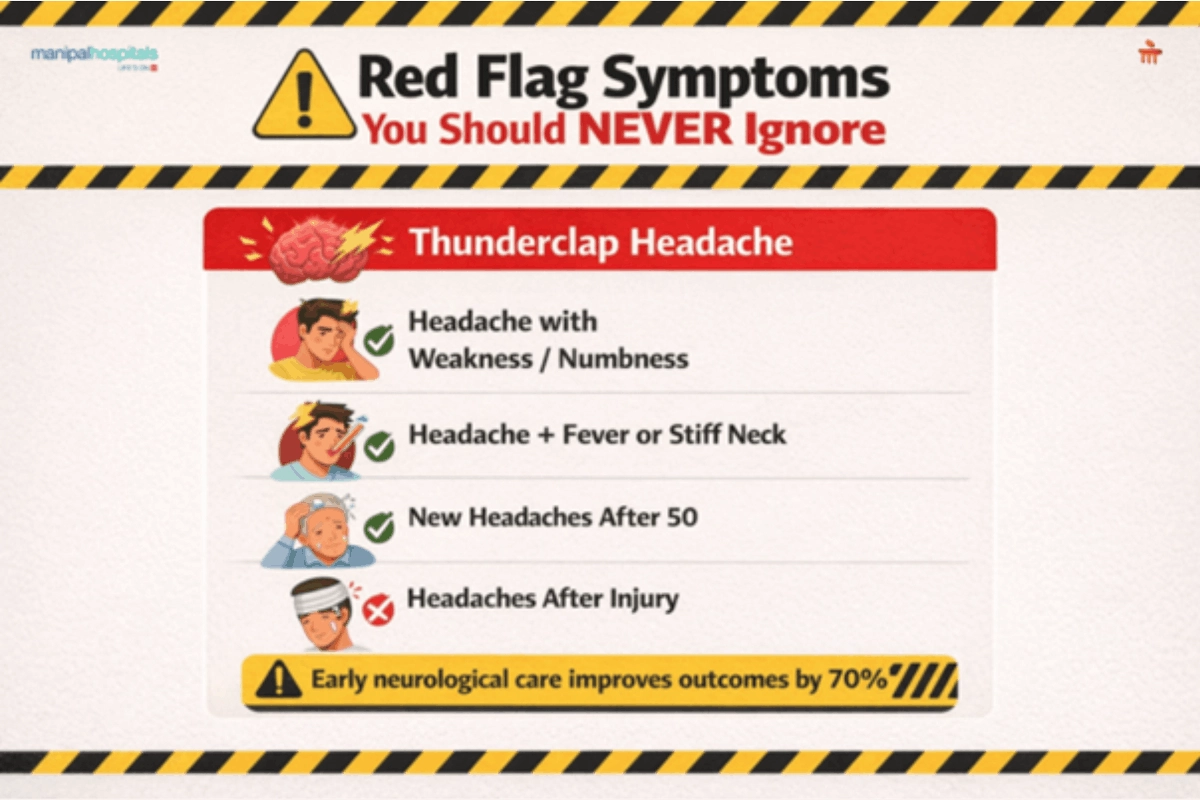
While most headaches are benign, certain severe headache symptoms warrant a specialist's consultation. A neurologist specializes in brain, spinal cord, and nerve disorders. If your headaches are frequent or you experience any of the following, seek expert evaluation. Early intervention significantly improves outcomes; specialized care can lead to a 70% improvement in managing complex headache conditions.
You should consider consulting a neurologist if you experience:
- Sudden, Severe Headache: A "thunderclap" headache, reaching maximum intensity instantly.
- Changes in Headache Pattern: Sudden shifts in frequency, severity, or character.
- Headaches Following an Injury: Any headache developing after head trauma, especially if worsening.
- Neurological Symptoms: Headaches with weakness, numbness, vision changes, speech difficulty, or loss of balance. These are often severe headache symptoms.
- Headaches with Fever or Stiff Neck: Could indicate an infection like meningitis.
- Headaches that Wake You Up or Worsen with Coughing/Straining: Suggests potential increased intracranial pressure.
- New Headaches After Age 50: Warrants investigation for specific headache causes.
- Persistent Headaches: Chronic headache for over 15 days a month, severely impacting daily life.
The Neurologist's Role in Headache Management
A neurologist offers specialized knowledge to accurately identify headache causes and tailor an effective headache treatment plan. They differentiate between various types, especially complex cases like migraine headache or chronic headache.
At Manipal Hospitals, our neurologists employ a comprehensive approach, starting with a detailed medical history and neurological examination. Diagnostic tests may include:
- MRI or CT Scans: To rule out structural abnormalities like tumors or aneurysms.
- EEG (Electroencephalogram): To check for abnormal brain activity.
- Lumbar Puncture: To analyze cerebrospinal fluid for infections.
Effective Headache Treatment Strategies at Manipal Hospitals
After diagnosis, your neurologist develops a personalized headache treatment plan, combining approaches:
- Lifestyle Modifications: Identifying triggers, stress management, regular sleep, and a balanced diet.
- Acute Treatments: Medications taken at headache onset to relieve pain.
- Preventive Treatments: Regular medications to reduce frequency and severity, vital for chronic headache and migraine headache. Studies show these can reduce headache frequency by 50% or more.
- Specialized Procedures: Botox injections for chronic migraine or nerve stimulation for resistant cases.
Beyond core neurological consultation and headache treatment, Manipal Hospitals offers supporting services for well-being and recovery:
- Pain Management Clinics for chronic pain.
- Physiotherapy and rehabilitation.
- Psychological counseling and stress management.
- Nutritional guidance for diet-related headache triggers.
Our multidisciplinary approach ensures you benefit from diverse expertise for holistic well-being.
Care Essentials: Do's and Don'ts for Managing Headaches


Share this Article


Not sure what you’re looking for?
Not sure what you’re looking for?
Get in touch with our representatives for
help!
Get in touch with our
representatives for help!



