Discovering the fact that your kidneys have suddenly stopped working can be alarming and a medical emergency. This condition is named acute kidney injury and can happen in a matter of hours or days. Many people wonder, ‘Can it be fixed?’ What are the signs that something is wrong? Is it possible to treat it quickly?
The good news is that many patients fully recover with early diagnosis and treatment right away. But putting off care can cause serious problems. In this blog, we will discuss everything related to acute kidney injury, such as symptoms of acute renal failure, the causes of acute kidney injury, acute renal failure treatment, emergency care, and acute kidney injury recovery in patient-friendly language.
Acute kidney injury (AKI), or acute renal failure, occurs when the kidneys suddenly lose their ability to function properly. The kidneys filter waste, maintain fluid balance, and regulate electrolytes. With the onset of AKI, the following things happen:
There are too many waste products in the blood.
The balance of fluids is off.
The electrolyte levels become imbalanced.
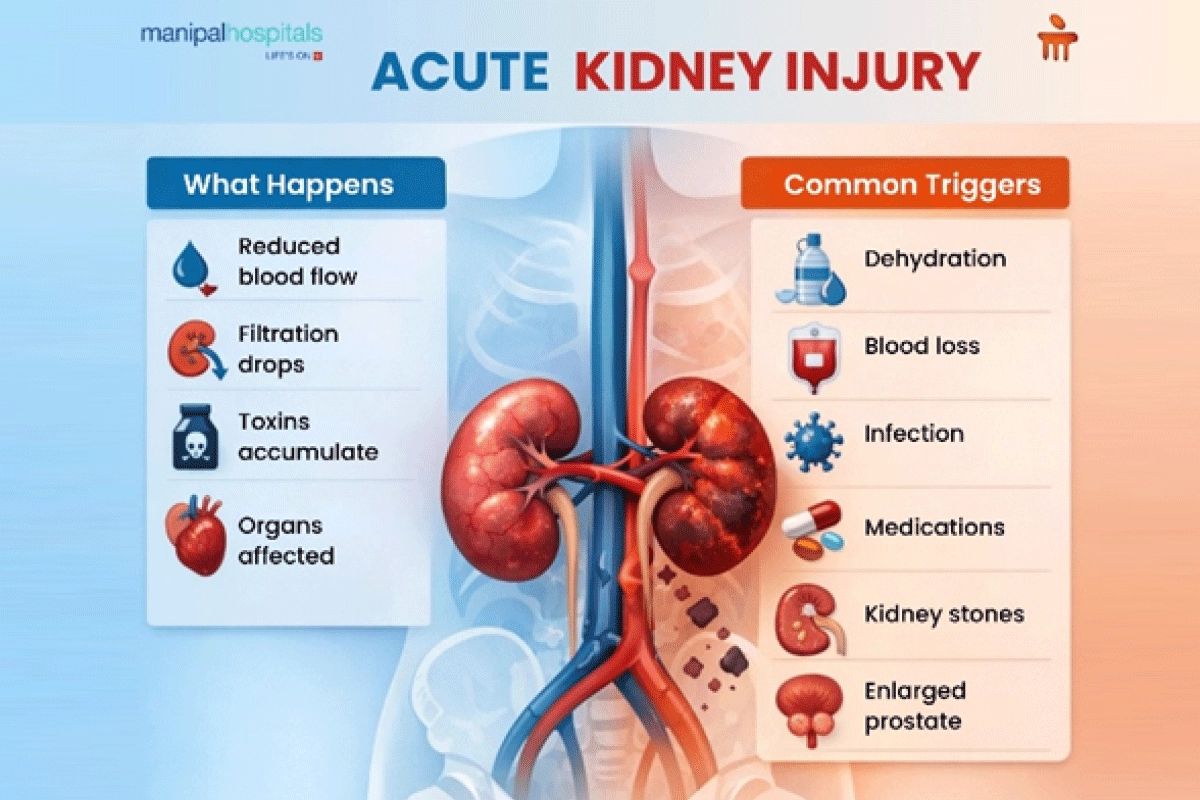
On the other hand, AKI happens quickly and can often be reversed with the right treatment. AKI is defined by a rise in serum creatinine and reduced urine output. The following things happen in AKI:
Blood flow or kidney function drops
Waste builds up in the blood
Fluid accumulates
Organs get affected
Did you know that AKI affects up to 20% of hospitalised patients worldwide, making early detection extremely important?
Warning Signs You Should Not Ignore
Recognising the signs of acute kidney injury early can help prevent complications.
Some common signs are:
Less urine output
Swelling in the face, legs, or ankles
Tiredness or weakness
Nausea and vomiting
Breathlessness
Being confused or sleepy
Signs of severe acute kidney injury:
Chest pain (because of fluid overload affecting the heart and lungs' functioning)
Irregular heartbeat (electrolyte imbalance disturbing the heart’s rhythm)
Seizures in advanced cases (where toxins affect the nervous system)
Occasionally, the symptoms of acute renal failure are mild at first, which makes it difficult to identify them early.
Common Mistakes Patients Make
Delays in recognition and treatment often arise from the following avoidable errors:
Ignoring reduced urine output, assuming it will resolve spontaneously.
Taking over‑the‑counter non‑steroidal anti‑inflammatory drugs (NSAIDs) without medical advice, which can worsen kidney injury.
Inadequate fluid intake during illness, fever, or diarrhoea.
Avoiding these mistakes is a key step toward early acute kidney injury treatment.
What Causes Acute Kidney Injury
Knowing what causes AKI can help you avoid it and treat it early. Some common causes are:
1. Prerenal Causes
Prerenal AKI occurs when blood flow to the kidneys is insufficient. When blood volume or pressure drops, filtration decreases.
Common pre-renal causes include severe dehydration from vomiting, diarrhoea, or excessive sweating; significant blood loss from trauma or surgery; heart failure with reduced cardiac output; and sepsis, which causes widespread vasodilation and low blood pressure. Prerenal AKI is typically reversible if normal blood flow is restored promptly with intravenous fluids or blood transfusions.
2. Intrinsic (Intrarenal) Causes
Intrinsic AKI results from direct damage to the kidney tissue itself. The most common form is acute tubular necrosis, where the renal tubules are injured by prolonged lack of oxygen (ischaemia) or by exposure to toxic substances (nephrotoxins).
Many medications cause intrinsic AKI, including nonsteroidal anti-inflammatory drugs (ibuprofen, naproxen, and diclofenac), certain antibiotics (aminoglycosides and vancomycin), intravenous contrast dyes used in radiographic imaging, and some chemotherapy agents.
Other intrinsic causes include glomerulonephritis (inflammation of the kidney’s filtering units), acute interstitial nephritis (inflammation of the kidney tissue between the tubules, often due to allergic drug reactions or infections), and autoimmune diseases such as lupus nephritis.
Less common causes include rhabdomyolysis (breakdown of muscle tissue, releasing toxic proteins into the bloodstream) and tumour lysis syndrome (rapid destruction of cancer cells, releasing uric acid and other toxins).
3. Postrenal Causes
Postrenal AKI occurs when the flow of urine is obstructed after it has been produced. Obstruction can happen at any point in the urinary tract, including the ureters (tubes connecting the kidneys to the bladder), the bladder itself, or the urethra. Common causes include kidney stones that block both ureters, an enlarged prostate gland (benign prostatic hyperplasia) in older men, tumours of the bladder, prostate, or cervix, blood clots, and urethral strictures. The obstruction creates back‑pressure that damages the kidneys for hours to days.
Who Is at Risk?
Certain individuals are more vulnerable:
Elderly patients
People with diabetes or hypertension
Hospitalised or ICU patients
Those taking nephrotoxic drugs
Patients with existing kidney disease
Understanding risk factors helps guide early AKI treatment.
How Is Acute Kidney Injury Diagnosed?
To confirm the condition, doctors perform many tests, such as:
Serum creatinine and blood urea nitrogen (BUN), repeated measurements to document the rate of rise.
Urine output monitoring, hourly or daily measurement in hospitalised patients.
Urinalysis and urine electrolytes help distinguish prerenal from intrinsic AKI.
Renal ultrasound or CT scan rules out obstruction or structural abnormalities.
Blood tests for electrolytes, acid‑base status, and complete blood count.
These tests help figure out how bad the problem is and how to treat the disease.
Acute Kidney Injury Treatment (Emergency Care)
The goal of treating AKI is to find and fix the cause and keep the patient stable.
Steps for emergency treatment:
Fluid Management: IV fluids to help with dehydration, and diuretics for too much water
Correcting Electrolyte Imbalance: Managing potassium and sodium levels
Stopping Harmful Medications: Avoid drugs that worsen kidney damage
Quick treatment for acute renal failure can stop permanent damage.
Doctors classify how severe Acute Kidney Injury (AKI) is using the KDIGO staging system:
This staging helps doctors understand how much the kidneys are affected by looking at changes in blood creatinine levels (a waste product) and how much urine the body is producing.
Stage
What happens to blood creatinine (kidney waste level)
What happens to urine output
Stage 1 (Mild)
Slight rise: increase of ≥0.3 mg/dL within 2 days, or 1.5–1.9 times higher than normal
Urine drops to less than 0.5 mL per kg per hour for 6–12 hours
Stage 2 (Moderate)
Moderate rise: 2.0–2.9 times higher than normal
Urine drops to less than 0.5 mL per kg per hour for 12 hours or more
Stage 3 (Severe)
Severe rise: 3 times higher than normal, or ≥4.0 mg/dL, or dialysis is needed
Very low urine (less than 0.3 mL per kg per hour for 24 hours or no urine for 12 hours)
Acute Kidney Injury Treatment Options
Depending on how severe it is, treatment options may include the following:
Vasopressor support: Medications to maintain adequate blood pressure in septic or cardiogenic shock.
Antibiotic therapy: For underlying infections such as sepsis or pyelonephritis.
Nutritional support: Specialised renal diets with controlled protein, sodium, potassium, and phosphate.
Strict fluid and electrolyte monitoring: Daily weights, input/output records, and serial blood tests.
Timely treatment of AKI greatly improves results.
Complications of Acute Kidney Injury (AKI)
If Acute Kidney Injury (AKI) is not treated promptly or effectively, it can lead to several serious complications. These occur because the kidneys are no longer able to properly filter waste, balance fluids, or regulate essential minerals in the body.
Complication
What It Means
Possible Symptoms / Risks
Hyperkalemia (High Potassium Levels)
The kidneys cannot remove excess potassium from the blood
Irregular heartbeat (which can be dangerous), muscle weakness, and in severe cases, paralysis
Pulmonary Oedema (Fluid in the Lungs)
Extra fluid builds up in the lungs due to poor kidney function
Shortness of breath, difficulty breathing, feeling breathless especially when lying down
Metabolic Acidosis (Acid Build-up)
The body cannot maintain a healthy acid balance
Rapid breathing, confusion, fatigue, nausea, and overall weakness
Progression to Chronic Kidney Disease (CKD)
Long-term damage to the kidneys if AKI does not fully recover
Gradual loss of kidney function, need for ongoing treatment, and in severe cases, dialysis
Recovery from Acute Kidney Injury
One of the most important things for patients to worry about is getting better after an acute kidney injury. Recovery phases are as follows:
Phase
What Happens
Care Tips
Initial phase
Reduced kidney function
Hospital monitoring
Stabilisation
Gradual improvement
Fluid and medication control
Recovery phase
Kidney function returns
Follow diet and lifestyle advice
Long-term
Normal or partial recovery
Regular check-ups
Key points about AKI recovery:
Approximately 60–70% of patients with prerenal or mild intrinsic AKI recover full kidney function.
Recovery may take days to weeks; older patients and those with pre‑existing renal disease recover more slowly.
Some patients develop chronic kidney disease or end‑stage renal disease, requiring lifelong monitoring.
Structured follow‑up care reduces the risk of long‑term complications.
Patients who receive early acute kidney injury treatment have the best prospects for complete acute kidney injury recovery.
How to Prevent Acute Kidney Injury
Prevention is always preferable to treatment. The following strategies reduce the risk of AKI:
Maintain adequate hydration, especially during illness, hot weather, or before contrast procedures.
Avoid unnecessary NSAIDs (ibuprofen, naproxen, diclofenac) and certain antibiotics without medical supervision.
Optimise management of diabetes, hypertension, and pre‑existing kidney disease.
Seek early medical care for infections, diarrhoea, vomiting, or decreased urine output.
If contrast dye is essential (e.g., CT angiography), ensure periprocedural hydration and use low‑ or iso‑osmolar contrast agents.
Taking steps to prevent acute renal failure lowers the risk of symptoms and complications.
When Should You Seek Emergency Care?
If you observe any of the following symptoms, seek immediate medical assistance:
Sudden decrease in urine
Swelling or breathing difficulty
Persistent vomiting
Confusion or severe weakness
These may be signs of serious acute renal failure that need immediate treatment for acute kidney injury
Conclusion
Acute kidney injury is a serious condition, but with timely diagnosis and the right care, it can often be treated effectively. Recognising early symptoms, understanding the underlying causes, and seeking immediate medical attention can make a significant difference in recovery outcomes. While AKI can feel overwhelming, early intervention and expert care can help many patients regain normal kidney function and return to a healthier, more confident life.
For international patients, Manipal Hospitals Global offers comprehensive medical tourism support, including treatment planning before travel, assistance with visas and accommodation, and coordinated care throughout the hospital stay. Patients can expect clear communication, structured care pathways, and continuous support from admission to recovery.
To explore more, reach out to our Nephrology Department, for more detailed AKI treatment options, our International Patient Services are available for a seamless treatment journey.