Brain Health Before 40: Tips, Exercises & Checklist to Improve Brain Function
Reviewed by: Neurology Department
Posted on May 11, 2025
10 Min Read
Your thirties are a critical period for your brain. Sure, you may feel sharp as a tack and think you can manage anything life sends your way. But during your 40s is when your brain starts shifting from peak function to gradual ageing and neurological conditions start to showcase symptoms. The good news? It's also the best time to take brain health tips seriously, which will keep your mind sharp for decades to come.
The choices we make daily, what we eat, how much we sleep, how stressed we are, and how active we stay, can influence our cognitive health more than we realise. So, the habits you build now will determine how well your cognitive abilities hold up as you age.
To unlock the most powerful, scientifically validated defense against cognitive decline, commit to 150 minutes of weekly moderate aerobic activity paired with a Mediterranean eating pattern. Aerobic movement actively stimulates the growth of the brain's memory centers, while nutrient-dense foods protect those newly formed neural networks from damage.
Synopsis
Strategic Steps to Elevate Mental Performance
Life Pillar
Your Action Plan
Why It Works
Movement
Complete 30 minutes of brisk exercise (like cycling, running, or swimming) 5 days a week.
Drives essential oxygen and blood flow to the brain, triggering cellular repair and physically expanding the hippocampus.
Mental Novelty
Spend 15 to 20 minutes a day tackling a challenging, unfamiliar skill (e.g., learning a new instrument or language).
Forces your brain to build entirely new neural pathways, expanding your cognitive reserve through neuroplasticity.
Sleep Quality
Secure 7 to 8 hours of deep, continuous sleep without waking up in the middle of the night.
Activates your brain's waste-clearance system to wash away cognitive debris while locking in new memories.
Nutrition
Replace processed options with leafy greens, wild-caught fish, extra virgin olive oil, and berries.
Supplies antioxidant and anti-inflammatory compounds that shield brain cells from oxidative stress and aging.
Retrieval Practice
Use spaced self-testing and active recall instead of passively highlighting or re-reading text.
Strengthens the synaptic connections of newly learned facts, shifting knowledge firmly into long-term retention.
This brain health checklist is designed for people in their 30s who want to take preventive steps to improve memory, focus, and long-term brain vitality. If you're someone who spends long hours on screens, often skips meals or sleep, or feels mentally exhausted, this brain health guide is especially for you.
Understanding Your Brain's Journey Through Your Thirties
Your brain is at its maximum processing capacity in your twenties, but it doesn't simply decline after that. Instead, it begins a gradual process of change that you can significantly influence through your lifestyle choices.
Your brain is still very flexible and can create new neural connections in your thirties, making this the perfect decade to invest in long-term brain wellness.
Contemporary lifestyles pose special challenges to brain health. Extended working hours, being always connected, inconsistent food consumption, and elevated stress levels are the norm. These all add up and affect cognitive functions in ways that you may not necessarily be aware of. You may develop dangerous conditions like Alzheimer’s disease later in life.
The Hidden Brain Health Challenges of Modern Living
The Sedentary Trap
Exercise gets blood pumping to the brain, which brings oxygen and nutrients necessary for proper functioning. When you sit for too long, your brain misses out on this critical circulation boost.
Regular exercise also triggers the release of brain-derived neurotrophic factor (BDNF), a protein that promotes the growth and survival of brain cells. Even modest exercise, such as a 30-minute walk, can really tune up your thinking and safeguard against future decline. These simple brain development tips form the foundation of cognitive wellness.
Sleep Disruption and Its Cognitive Cost
Your brain uses sleep to clear toxins that accumulate during waking hours. Inconsistent sleep schedules, common in regions with extreme temperatures where people rely heavily on air conditioning, disrupt natural circadian rhythms.
Poor sleep affects memory formation and daily focus. Getting seven to eight hours of quality sleep consistently is one of the best ways to keep brain healthy and functioning optimally.
The Stress Factor
Chronic stress releases cortisol, which harms brain cells if it's excessively high over long periods. The stressful work environment and hectic pace of modern life most people lead contribute to chronic stress situations.
Controlling stress preserves the physical structure and function of your brain. This becomes ever more critical as workloads usually increase in your thirties.
Your Comprehensive Brain Health Checklist
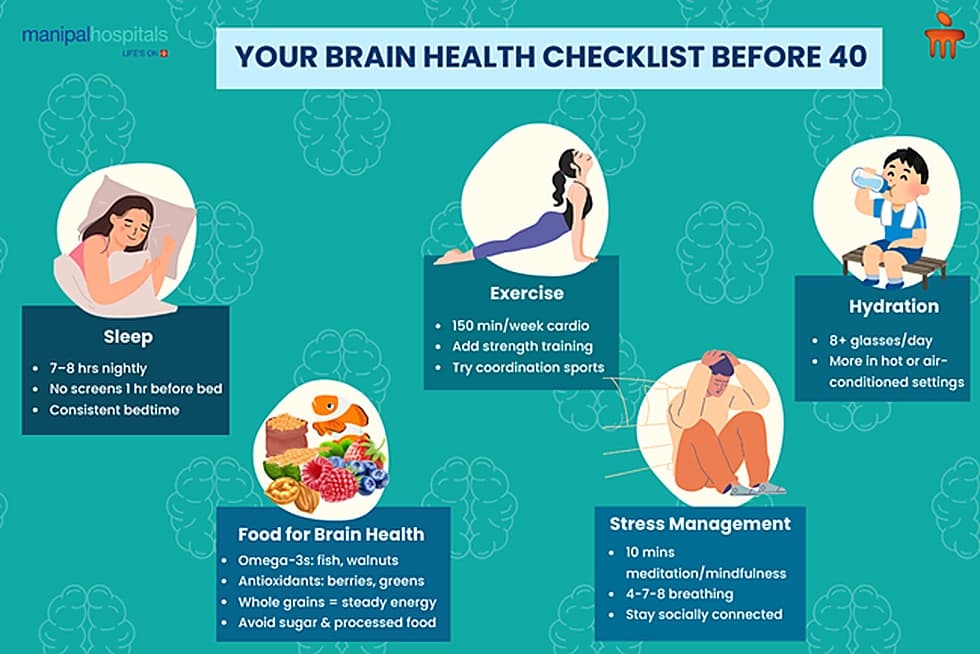
Optimize your daily and weekly habits by using this quick-reference guide to ensure your brain receives the precise fuel, recovery, and stimulation it needs to perform at its peak.
Brain Health Pillar
Key Action Steps
Cognitive Benefit
Nutrition & Hydration
• Eat Omega-3 rich foods (fish, walnuts) 3 times a week.
• Eat berries and leafy greens daily for antioxidants.
• Choose complex carbohydrates for steady glucose delivery.
• Drink at least 8 glasses of water daily to maintain focus.
• Practice strict food safety and maintain meal consistency.
Prevents cellular damage, maintains the structural integrity of brain cells, and avoids dehydration-induced brain fog.
Physical Activity
• Complete 150 minutes of moderate cardio weekly.
• Add strength training 2 times a week.
• Practice coordination exercises (dancing, sports).
• Have an indoor workout backup plan for bad weather.
Stimulates the growth of new brain cells, expands the hippocampus (memory center), and sharpens executive function.
Sleep & Digital Wellness
• Go to bed and wake up at the same time every day.
• Turn off screens 1 hour before sleeping.
• Keep your bedroom cool, dark, and quiet.
• Take regular screen breaks throughout the workday.
Activates the brain's glymphatic "waste clearance" system to sweep away toxins and consolidate daily memories.
Stress Management
• Practice meditation or mindfulness for 10 minutes daily.
• Use the 4-7-8 breathing technique for acute stress.
• Maintain frequent social connections with others.
• Engage in comforting cultural or communal rituals.
Lowers chronic cortisol levels to prevent the physical shrinking of memory centers while actively building gray matter.
Brain Exercises to Improve Memory and Brain Function
To build a resilient mind, it is crucial to understand that physical exercise and cognitive exercise serve two entirely different, yet highly complementary, functions for your brain. Think of physical exercise as the utility work that builds and maintains the brain's physical infrastructure, while cognitive exercise is the active training that programs the software running on it.
Workout Type
Biological Mechanism
Ultimate Cognitive Outcome
Physical Exercise (The Infrastructure)
Increases cerebral blood flow, reduces systemic inflammation, and triggers the release of BDNF (Brain-Derived Neurotrophic Factor) to grow new brain cells.
Physically expands the hippocampus (the memory center) and improves basic processing speed.
Cognitive Exercise (The Software)
Promotes neuroplasticity—the brain's ability to reorganize itself by forming and strengthening synaptic connections.
Builds cognitive reserve, allowing the brain to actively bypass damaged areas and preserve memory, attention, and reasoning.
Recognising Early Warning Signs
Your brain sends subtle signals when not functioning optimally. Being aware of these early indicators helps you take required action before minor issues become major problems:
Memory lapses beyond normal forgetfulness, such as repeatedly forgetting recent conversations or important appointments.
Frequent headaches can signal dehydration, poor sleep, or high stress levels. Persistent or worsening headaches warrant attention.
Mood changes like increased irritability, anxiety, or depression sometimes reflect underlying brain health issues.
Difficulty concentrating or mental fog throughout the day might indicate inadequate nutrition, sleep, or exercise.
Sleep disturbances include trouble falling asleep, staying asleep, or feeling unrefreshed after sleep.
Heat-related cognitive symptoms such as confusion, difficulty thinking clearly, or unusual fatigue during hot weather may indicate heat stress affecting brain function.
When to See a Doctor About Memory or Brain Health
Not all forgetfulness points to a serious neurological issue. In our fast-paced lives, the brain often experiences temporary "processing delays" caused by stress, fatigue, or simple overload. Knowing how to differentiate between lifestyle-induced cognitive fog and symptoms that warrant a medical evaluation is crucial for peace of mind and timely care.
Temporary Cognitive Glitches (Usually tied to stress, sleep, or aging)
Warning Signs to Discuss with a Doctor (Persistent or progressive symptoms)
Briefly forgetting where you left your keys, wallet, or parked car.
Losing items frequently and finding them in highly unusual places (e.g., putting your keys in the freezer).
Forgetting the name of an acquaintance, but remembering it later in the day.
Forgetting the names of close family members or close friends, or struggling to recognize them.
Occasionally struggling to find the exact word you want to use in a conversation.
Experiencing frequent pauses in speech, substituting inappropriate words, or repeating the same question minutes later.
Getting temporarily distracted and walking into a room without remembering why you entered.
Getting lost in familiar environments (e.g., struggling to find your way home on a route you drive daily).
Experiencing minor "brain fog" or slow decision-making after a poor night's sleep or during a highly stressful week.
Showing noticeable lapses in judgment, experiencing sudden personality shifts, or struggling to complete basic daily tasks (like managing bills or following a simple recipe).
The Importance of Professional Brain Health Monitoring
Just as you wouldn't ignore regular check-ups for your heart or other organs, your brain deserves the same attention. Regular neurological evaluations become particularly important with risk factors like a family history of cognitive decline, high blood pressure, diabetes, or other conditions affecting brain health.
These assessments detect subtle cognitive changes before they become noticeable in daily life. Early detection allows for interventions that can slow or reverse certain types of decline.
Consider scheduling baseline cognitive assessments in your thirties, especially with concerns about memory, concentration, or other cognitive functions. This creates reference points for future comparisons.
Moving Forward: Your Brain's Best Years Ahead
Your thirties represent a unique opportunity to invest in long-term cognitive health. The brain health tips outlined here enhance current mental performance while building resilience against age-related changes.
If you've noticed warning signs or have risk factors for brain health issues, seek professional guidance promptly from healthcare organisations like Manipal Hospitals Global. Our Neurologists and healthcare providers can develop personalised plans addressing specific needs and risk factors. Don't hesitate to discuss brain health concerns during routine medical appointments or seek specialised neurological consultations when indicated.
About Manipal hospitals: As a pioneer in healthcare, Manipal Hospitals is among the top healthcare providers in India serving over 250K+ patients annually. Its focus is to develop an affordable, high quality healthcare framework through its multispecialty and tertiary care delivery spectrum and further extend it to out of hospital care. With the completion of acquisition of AMRI Hospitals, the integrated network will have a pan-India footprint of 49 hospitals across 24 cities with 12,600+ beds, and a talented pool of over 11,000 doctors and an employee strength of over 34,000. Manipal Hospitals provides comprehensive curative and preventive care for a multitude of patients from around the globe. Manipal Hospitals is NABH, AAHRPP accredited and most of the hospitals in its network are NABL, ER, Blood Bank accredited and recognized for Nursing Excellence. Manipal Hospitals has also been recognised the most respected and patient recommended hospital in India through various consumer surveys.