Hair Transplant Surgery: Complete Guide on Procedure, Results, and Recovery for Patients Abroad
Reviewed by: Plastic Surgery Department
Posted on Apr 27, 2026
7 Min Read

Loading...

98, HAL Old Airport Road, Kodihalli, Bengaluru, Karnataka 560017
Accreditations


Copyright © 2025 Manipal Hospitals - All Rights Reserved
Reviewed by: Plastic Surgery Department
Posted on Apr 27, 2026
7 Min ReadFor many, hair loss is more than a change in appearance; it is a quiet shift in self-confidence that impacts daily life and global interactions. While the first signs of thinning may feel daunting, modern hair restoration has evolved into a sophisticated blend of medical mastery and aesthetic artistry. Today, reclaiming your self-image often means looking beyond borders to find the perfect intersection of world-class technology, surgical expertise, and cost-effective care.
Choosing to travel abroad for hair transplant surgery is a major decision, and navigating that journey requires a trusted partner in global excellence. Whether you are seeking a permanent solution to thinning or a complete restoration, this guide provides a comprehensive roadmap, explaining the clinical procedure, the recovery experience, and why international patients are choosing the transformative results offered by world-class medical hospitality.
There are many reasons why hair loss can happen, but the most common one is genetic, called androgenetic alopecia or pattern baldness. Hormones, aging, stress, nutrient deficiencies, and certain medical conditions can also worsen hair loss.
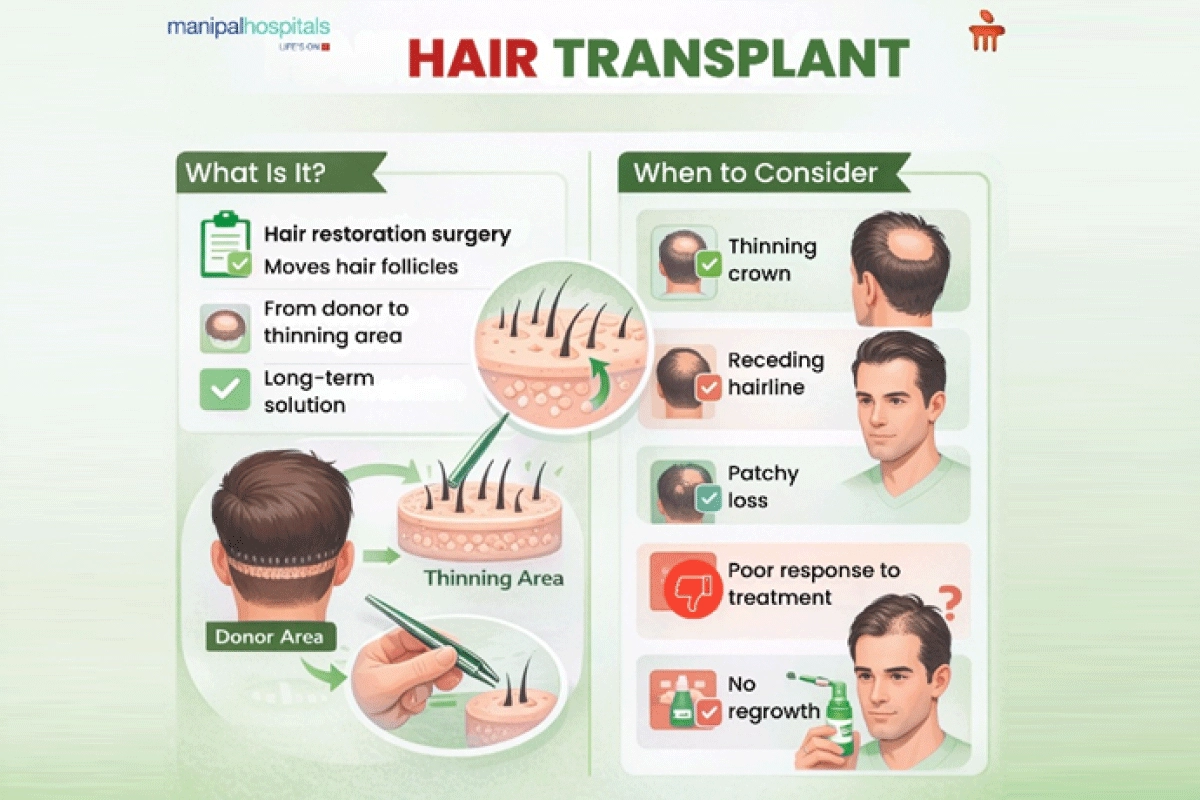
As hair follicles get smaller over time, they make thinner, shorter strands until growth stops altogether. That’s usually the point where many people start considering a hair transplant. It works by moving healthy follicles to areas that are thinning or bald. Before picking the right hair restoration treatment, you need to know what caused the problem in the first place.
You don't always need surgery to fix hair loss. But some signs point to the need for a more permanent fix, like hair transplant surgery:
If these patterns sound familiar, talking to a hair transplant specialist can help you figure out what to do next.
There are several benefits to modern hair restoration treatment:
For people who are thinking about getting surgery to treat hair loss, these benefits make it a good long-term investment.
Understanding Hair Transplant Surgery
At its most basic level, hair transplant surgery involves taking hair follicles from a donor area (usually the back of the head) and putting them in places where hair is thinning or missing. A hair transplant does not create new hair; it redistributes what you already have. This is why donor hair quality is critical.
Donor hairs are usually more resistant to hair loss, so they keep growing naturally even after they are moved. This means that hair restoration treatment is a long-term solution, not a quick fix.
There are two main ways to perform a modern hair transplant:
1. Follicular Unit Extraction (FUE)
The FUE hair transplant procedure involves removing individual hair follicles and placing them in thinning areas. It offers minimal scarring, faster healing, and natural-looking results.
2. Follicular Unit Transplantation (FUT)
This method removes a strip of scalp to create grafts. It is effective but may leave a scar and take longer to heal after a hair transplant.
Today, many people prefer the best hair transplant method, usually FUE, as it is less invasive and easier to recover from.
Choosing the right hair transplant method can be confusing; this comparison makes it easier to understand your options.
Technique | Procedure Type | Best For | Pros | Cons |
FUE Hair Transplant Procedure | Individual follicle extraction | Most patients | Minimal scarring, faster healing | Slightly longer procedure time |
FUT Method | Strip-based extraction | Large graft requirement | High graft yield | Linear scar, longer recovery |
Hair Loss Treatment Surgery | Surgical restoration | Advanced hair loss | Lasting results | Requires a skilled surgeon |
Hair Restoration Treatment | Combined approach | Early to moderate loss | Holistic care | May need multiple sessions |
Best Hair Transplant Technique | Advanced FUE variants | Natural results | Minimal downtime | Cost varies |
Most of the time, a hair transplant is done with local anaesthesia and can take a few hours, depending on how many grafts are needed. So how exactly does the procedure work?
The following steps are included:
Recovery plays an important role in final results. After hair transplant surgery, the following things will happen:
With the FUE hair transplant method, the hair transplant recovery time is usually shorter, so patients can get back to their normal activities quickly.
In recent years, a lot more people have travelled for medical treatment to restore their hair. Many patients choose international centres for the following reasons:
Overseas centres often combine new ideas with low prices for people who want the best hair transplant method.
Hair loss may start gradually, but its impact on confidence and daily life can be significant. The good news is that modern hair restoration treatments offer natural-looking, long-lasting results. With advanced techniques such as the FUE hair transplant procedure, patients today have access to safer, more precise, and highly effective solutions.
If you are considering treatment abroad, Manipal Hospitals Global provides comprehensive support at every stage of your journey. Hair transplant procedures are performed by experienced specialists within the plastic surgery department, ensuring both medical precision and aesthetic outcomes. From expert evaluation by experienced specialists to video consultations and second-opinion services before travel, patients can make well-informed decisions with confidence. With personalised treatment planning, advanced surgical expertise, and dedicated international patient services, you can move forward with the best hair transplant technique suited to your needs and achieve reliable, natural outcomes.

Not sure what you’re looking for?
Not sure what you’re looking for?
Get in touch with our representatives for
help!
Get in touch with our
representatives for help!