
Understanding Memory Loss: What’s Normal and When to Seek Medical Help
Reviewed by: Neurology Department
Posted on Dec 24, 2025
4 Min Read

Memory loss does not look the same for everyone. Some people notice small lapses that come and go. Others feel their memory slipping more often, slowly affecting confidence and routine. The difference between normal forgetfulness and a medical concern is not always obvious.
This blog explains what memory loss really means, outlines common memory loss causes, discusses conditions linked to memory decline, and clarifies when medical advice becomes important. Clear information helps remove fear and supports better decisions.
Synopsis
- What Do You Mean by Memory Loss?
- Causes of Memory Loss:
- Reversible Causes vs Progressive Causes of Memory Loss
- Reversible Causes of Memory Loss
- Progressive Causes of Memory Loss
- Depression and Memory: Understanding “Pseudo-Dementia”
- When Should You Seek Medical Help?
- Lifestyle Measures to Support Memory
- Comparison: Normal Memory Changes vs Memory Loss Diseases
- Conclusion
What Do You Mean by Memory Loss?
Memory loss refers to difficulty remembering information or learning new things. It may appear suddenly or develop gradually. In some cases, it stays mild. In others, it progresses and begins to affect daily life.
Short-term memory involves recent events. This includes remembering where the phone was kept, what was discussed earlier in the day, or an appointment scheduled for tomorrow.
Long-term memory relates to older experiences. Personal history, learned skills, and familiar routines fall into this category.
Occasional forgetfulness is common. Forgetting a name or misplacing items occasionally does not usually signal a disease. Concern grows when memory problems happen often, feel confusing, or interfere with familiar tasks.
Many people quietly wonder, why is my memory so bad, especially when these changes feel out of character? Knowing what is typical and what is not helps reduce worry and encourages timely action.
Causes of Memory Loss:
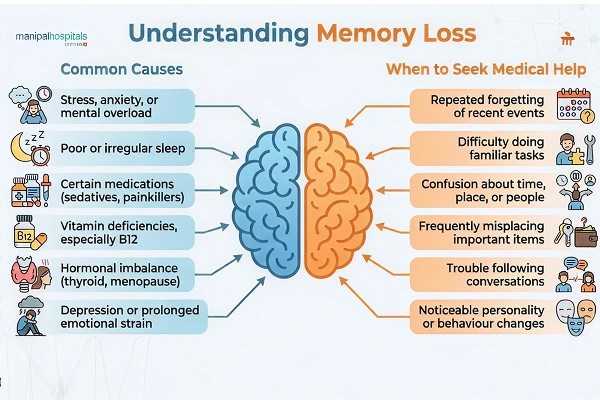
There are many possible memory loss causes, and not all are serious. Some are linked to daily habits or temporary health issues.
- Stress and Anxiety: Ongoing stress can make concentration difficult. When focus drops, memory often follows.
- Sleep Problems: Poor sleep affects how the brain stores information. Even a few restless nights can make memory feel unreliable.
- Medications: Certain medicines, including h2 pain relief or sedatives, may affect alertness and recall.
- Vitamin Deficiency: Low vitamin B12 or folate levels can interfere with brain function and memory.
- Hormonal Changes: Thyroid imbalance or menopause can influence attention and recall.
- Neurological Conditions: In some cases, memory problems are linked to memory loss diseases such as Alzheimer’s or other dementias.
Many short-term memory loss causes relate to stress, fatigue, or medication effects. When memory issues persist or gradually worsen, medical evaluation helps rule out underlying disease.
Reversible Causes vs Progressive Causes of Memory Loss
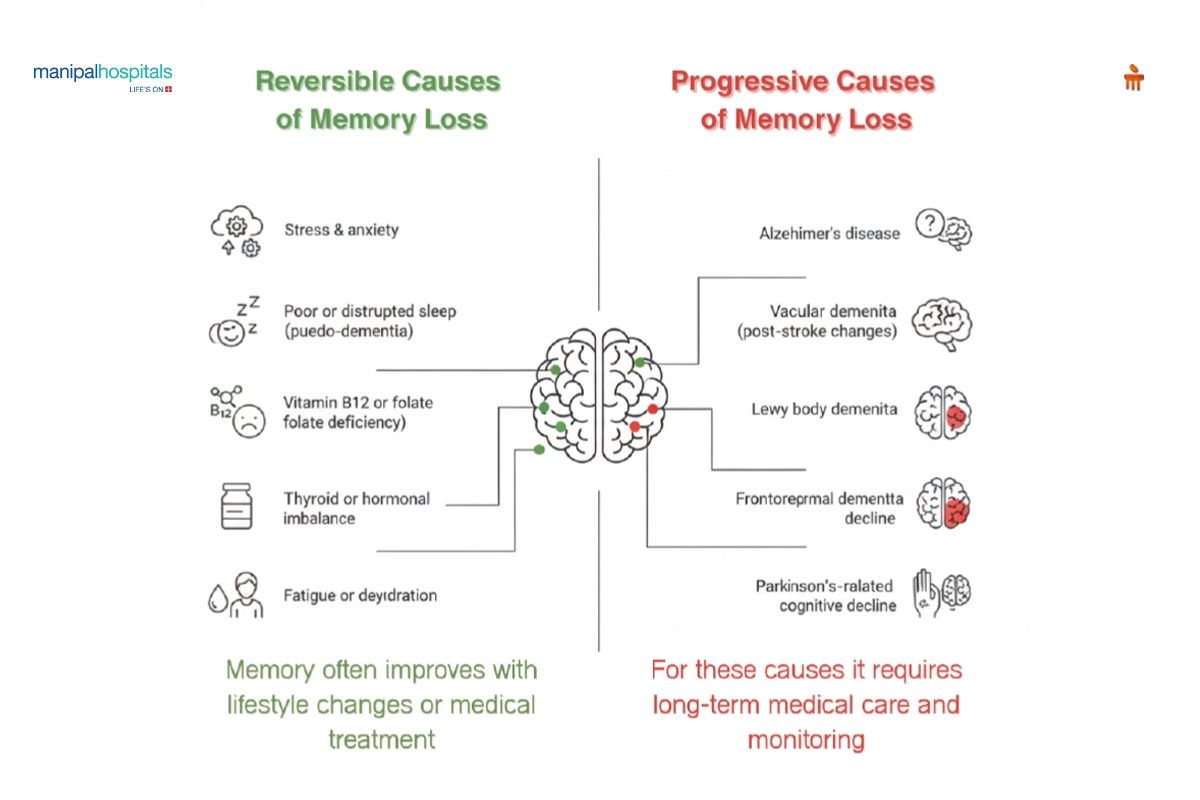
Not all memory loss follows the same path. Understanding whether memory changes are reversible or progressive can ease anxiety and guide timely action.
Reversible Causes of Memory Loss
These causes are often temporary and may improve once the underlying issue is identified and treated.
- Stress and Anxiety: High stress levels affect focus and concentration, making it harder to form or recall memories. When stress reduces, memory often improves.
- Poor Sleep or Sleep Disorders: Inadequate or disturbed sleep interferes with how the brain stores information. Restoring healthy sleep patterns can significantly improve memory.
- Depression and Emotional Health: Depression can cause slowed thinking, poor attention, and forgetfulness, sometimes referred to as “pseudo-dementia.” Memory improves when depression is treated.
- Vitamin Deficiencies: Low levels of vitamin B12, folate, or vitamin D can affect brain function. Correcting deficiencies often restores memory.
- Medication Side Effects: Certain medications, including sedatives, painkillers, or anti-anxiety drugs, may temporarily affect memory.
- Hormonal Imbalances: Thyroid disorders or menopause-related changes can cause memory lapses that improve with treatment.
In many people, addressing these factors leads to noticeable improvement in memory and mental clarity.
Progressive Causes of Memory Loss
Progressive causes tend to worsen gradually over time and usually require long-term medical care and monitoring.
- Alzheimer’s Disease: Characterised by steadily worsening memory, confusion, and difficulty managing daily tasks.
- Vascular Dementia: Memory and thinking problems caused by reduced blood flow to the brain, often linked to strokes or chronic vascular disease.
- Lewy Body Dementia: Causes memory problems along with movement difficulties, sleep disturbances, and changes in alertness.
- Frontotemporal Dementia: Often begins with personality, behaviour, or language changes before memory loss becomes prominent.
- Other Neurological Conditions: Parkinson’s disease, multiple sclerosis, and brain injuries can also lead to progressive cognitive decline.
Early identification of progressive memory loss allows better planning, symptom management, and support for patients and families.
Depression and Memory: Understanding “Pseudo-Dementia”
Depression can significantly affect memory, attention, and decision-making. In some individuals, memory problems caused by depression may closely resemble dementia, a condition often called pseudo-dementia.
People with depression-related memory issues may:
- Feel mentally slowed or unable to concentrate
- Struggle to recall information but remember it later with prompts
- Be highly aware of and distressed by their memory problems
Unlike neurodegenerative diseases, memory difficulties linked to depression often improve with appropriate mental health treatment, counselling, and support.
When Should You Seek Medical Help?
Not every memory lapse needs medical attention. Some patterns, however, should not be ignored. A medical review is advisable if there is:
- Frequent forgetting of recent events, even after reminders
- Difficulty completing familiar tasks at home or work
- Confusion about time, place, or surroundings
- Repeated misplacement of important items
- Trouble following conversations or instructions
Early assessment helps clarify whether memory changes are linked to lifestyle factors or an underlying memory loss disease. Routine screening, particularly after age 60, can also help detect concerns early.
Lifestyle Measures to Support Memory
Memory health is closely tied to daily routines. Simple, consistent habits can support brain function over time.
- Mental Engagement: Reading, puzzles, creative activities, or learning new skills help keep the brain active.
- Regular Movement: Physical activity improves blood flow to the brain and supports thinking and recall.
- Balanced Eating: A diet rich in fruits, vegetables, whole grains, and healthy fats supports overall brain health.
- Good Sleep: Seven to nine hours of quality sleep allows the brain to process and store memories properly.
- Social Connection: Spending time with others helps reduce stress and keeps the mind engaged.
- Stress Management: Relaxation techniques such as meditation or yoga can reduce stress-related forgetfulness.
These habits may not stop every memory problem, but they often improve clarity and confidence in daily life.
Comparison: Normal Memory Changes vs Memory Loss Diseases
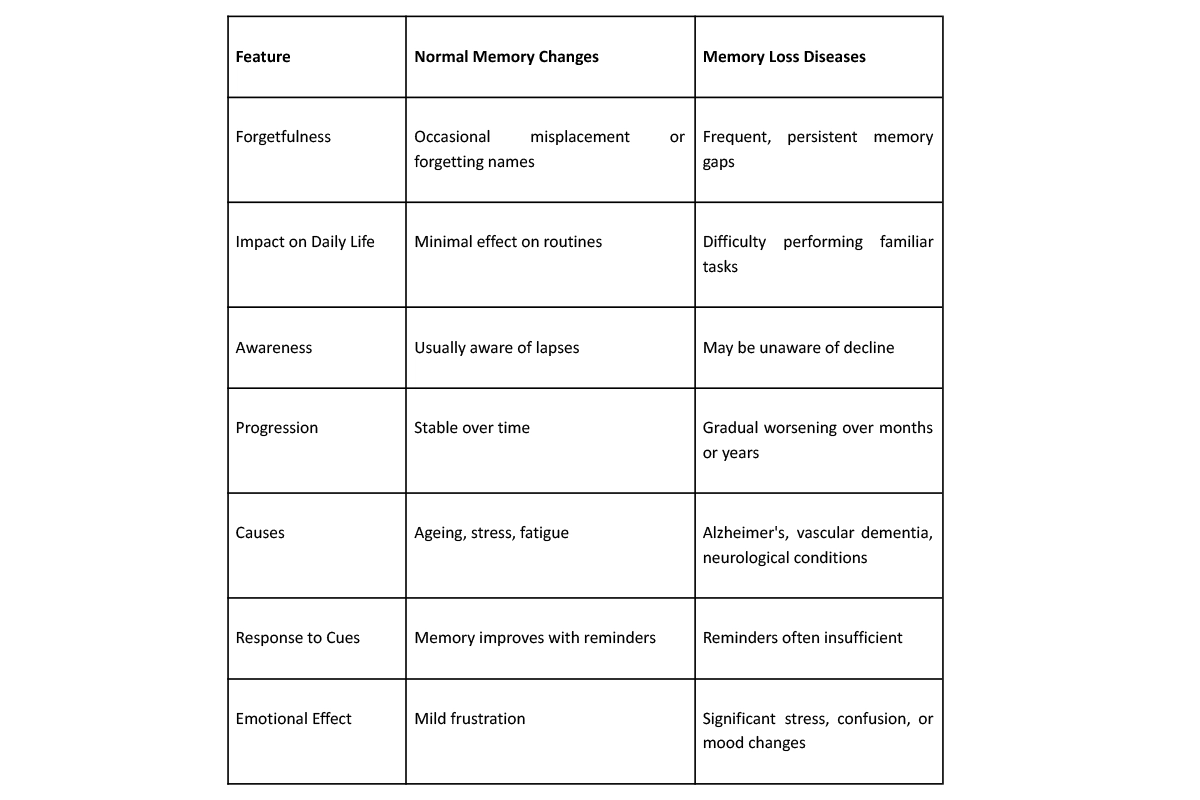
This table helps differentiate everyday forgetfulness from more serious memory loss diseases, guiding timely medical consultation.
Conclusion
Some forgetfulness is part of normal aging. Persistent or worsening memory loss should not be dismissed. Understanding memory loss causes, recognising concerning signs, and supporting brain health through everyday habits can make a meaningful difference.
Early medical guidance provides clarity, reassurance, and timely care for both patients and families.
At Manipal Hospitals Global, the Department of Neurology delivers comprehensive, compassionate, and evidence-based care for a wide spectrum of neurological conditions. Backed by experienced neurologists, advanced diagnostic technology, and a multidisciplinary care approach, the team focuses on early diagnosis, personalised treatment, and long-term support. Whether addressing common concerns like memory loss or managing complex neurological disorders, Manipal Hospitals Global remains committed to improving brain health, restoring function, and enhancing quality of life for patients across the world.
Share this Article


Not sure what you’re looking for?
Not sure what you’re looking for?
Get in touch with our representatives for
help!
Get in touch with our
representatives for help!



