
World AIDS Day: Advances in HIV Care, Symptoms, Testing and Early Diagnosis
Reviewed by: Manipal Hospitals Global
Posted on Dec 02, 2025
9 Min Read

Synopsis
A Global Health View on HIV Understanding
The human immunodeficiency virus (HIV) attacks the immune system, specifically the CD4 cells (T-cells), which help the body fight off infections. Without treatment, HIV slowly weakens the immune system, making it easier for opportunistic infections and diseases like tuberculosis, pneumonia, and some cancers to take hold.
If HIV is not treated and becomes worse, it can turn into AIDS (Acquired Immunodeficiency Syndrome). Most people with HIV, on the other hand, live long, healthy, and productive lives if they are diagnosed early and receive regular antiretroviral therapy (ART).
UNAIDS says that more than 39 million people around the world are living with HIV. Millions more are still at risk because they don't know enough about it, they are ashamed of it, and they can't get tested easily. That is why World AIDS Day is still important for raising awareness and getting people to get tested early.
HIV Infection First Signs: What to Look Out For

One of the greatest challenges in HIV control is that early symptoms are often mild, vague, or mistaken for common viral illnesses. Many people are unaware they have contracted HIV until months or even years later.
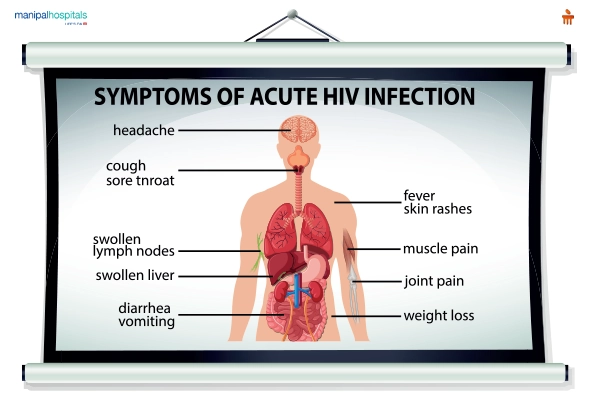
The first signs of HIV infection typically appear 2–4 weeks after exposure and are medically referred to as acute retroviral syndrome (ARS) or primary HIV infection.
Common first signs include:
- Fever
- Fatigue or feeling unusually tired
- Sore throat
- Swollen lymph nodes
- Skin rash
- Headache
- Muscle aches and joint pain
- Night sweats
These symptoms can last from a few days to a few weeks. It is important to understand that not everyone experiences noticeable symptoms, which is why HIV testing is crucial after potential exposure.
HIV Symptoms in Men and Women: Understanding the Differences
HIV affects all genders, but some symptoms may manifest differently in men and women. Recognising these variations encourages individuals to seek timely testing and care.
HIV Symptoms in Men
Men may experience general symptoms such as:
- Persistent fatigue
- Fever and chills
- Unexplained weight loss
- Night sweats
- Frequent infections
Men may also notice:
- Sores or lesions on the genital area
- Reduced libido or hormonal disturbances
- Swollen testicles in advanced stages
HIV Symptoms in Women
Women often experience:
- Recurrent vaginal yeast infections
- Pelvic inflammatory disease (PID)
- Menstrual irregularities
- Unusual vaginal discharge
- More severe and frequent urinary tract infections
In both men and women, persistent diarrhoea, chronic cough, and prolonged fever may indicate advanced HIV infection.
Understanding these gender-specific features is important, but relying only on symptoms is not enough. HIV testing is the only way to confirm infection.
Why Early HIV Diagnosis Matters
1. Early treatment saves lives
Modern antiretroviral therapy (ART) can suppress the virus to undetectable levels, allowing the immune system to recover and preventing progression to AIDS. Studies show that individuals diagnosed early have:
- Longer life expectancy
- Fewer complications
- Improved overall health
2. Early diagnosis prevents transmission
When HIV becomes undetectable, it becomes untransmittable. This is known as the U=U principle (Undetectable = Untransmittable), validated by international research. Early treatment reduces the risk of transmitting HIV during sexual contact, pregnancy, childbirth, and breastfeeding.
3. Prevents opportunistic infections
Without treatment, HIV leads to infections such as tuberculosis (TB), pneumocystis pneumonia, and certain cancers. Early diagnosis ensures timely preventive care.
4. Reduces healthcare costs
Late-stage HIV care is far more expensive and complex. Early diagnosis lowers long-term costs for individuals and health systems.
5. Improves quality of life
People who begin treatment early typically maintain normal daily functioning, leading fulfilling personal, social, and professional lives.
HIV Testing: Your Most Important Step
HIV testing is simple, confidential, and highly accurate. International guidelines encourage regular testing for anyone who is sexually active or at risk.
Types of HIV Tests
1. Rapid Antibody Tests
- Results in 20 minutes
- Detect antibodies produced by the immune system
- Suitable for community screening
2. Antigen/Antibody Combination Tests (4th Generation Tests)
- Detect both HIV antibodies and p24 antigen
- Can confirm infection earlier (within 2–4 weeks)
- Widely used in hospitals and clinics
3. Nucleic Acid Tests (NAT)
- Detect HIV’s genetic material
- Highly sensitive, used for early detection or high-risk cases
- Essential for early infant diagnosis
When should someone get tested?
- After unprotected sexual contact
- After sharing needles or sharp objects
- If diagnosed with another sexually transmitted infection (STI)
- During pregnancy
- After exposure to infected blood
- As part of routine yearly health screening (recommended internationally)
Early testing empowers individuals to start treatment immediately if positive, or to access preventive tools such as PrEP (pre-exposure prophylaxis) and PEP (post-exposure prophylaxis) if negative.
Advances in HIV Care: A New Era of Hope
HIV care has advanced dramatically, shifting from complex, multiple-pill regimens to single-tablet therapies with minimal side effects. New global initiatives and WHO-endorsed protocols have improved access and outcomes for millions of patients worldwide.
1. Modern Antiretroviral Therapy (ART)
- Requires one pill a day in many cases
- Suppresses viral load within months
- Allows people to lead a normal lifespan
Newer ART drugs are safer, more effective, and have fewer side-effects compared to older generations.
2. Long-acting Injectable Treatments
Recent innovations include long-acting injections that can be taken once every 1–2 months, improving adherence for individuals who struggle with daily tablets.
3. Prevention Tools (PrEP and PEP)
- PrEP reduces HIV risk by up to 99% when taken correctly
- PEP prevents infection when taken within 72 hours of exposure
These tools are transforming prevention strategies worldwide.
4. HIV and Pregnancy Care
Advancements ensure that mother-to-child transmission can be reduced to below 1% with early testing and treatment during pregnancy.
5. HIV Cure Research
Although no permanent cure exists yet, research into:
- Gene editing (CRISPR)
- Immune-based therapies
- Functional cure strategies
continues to bring hope for the future.
Global Progress: Where We Stand Today
- Over 30 million people worldwide now receive ART.
- Many countries have reduced mother-to-child transmission by more than 95%.
- Awareness campaigns through World AIDS Day have improved global testing rates.
- Stigma reduction efforts are helping more people seek timely care.
Despite progress, delayed diagnosis remains common. This is why education, accessible testing, and global awareness must continue.
World AIDS Day is a powerful reminder that even though HIV treatment has come a long way, our work isn’t finished yet. Paying attention to HIV symptoms, knowing the early signs, and encouraging regular HIV testing can make a life-changing difference for individuals, families, and communities around the world.
An early diagnosis opens the door to better health, longer life, and greater peace of mind. With modern treatments, people living with HIV can lead healthy, fulfilling lives—especially when they start care early and stay committed to their treatment plan.
For international patients seeking reliable, compassionate, and advanced HIV care, Manipal Hospitals Global provides world-class diagnostics, experienced infectious-disease specialists, and personalized treatment programmes designed with each patient’s unique needs in mind.
Share this Article

Not sure what you’re looking for?
Not sure what you’re looking for?
Get in touch with our representatives for
help!
Get in touch with our
representatives for help!



