
Unexplained Weight Gain: Hormonal Triggers, Clinical Diagnosis, and Management
Reviewed by: Manipal Hospitals Global
Posted on Oct 21, 2026
10 Min Read
Synopsis
How Hormones Affect Your Weight
Hormones are chemical messengers produced by your endocrine glands. They travel through your bloodstream to tell your organs how to function, and one of their main jobs is to control your resting metabolism. This is the baseline amount of energy your body burns every day just to keep your heart beating, your lungs breathing, and your cells alive.
When an underlying health problem disrupts these hormones, your metabolism can slow down considerably. Your body stops burning energy at its normal rate and starts storing more of it as fat. When this happens, you can experience weight gain without eating much, because even a modest portion of food is more than your slowed metabolism can use.
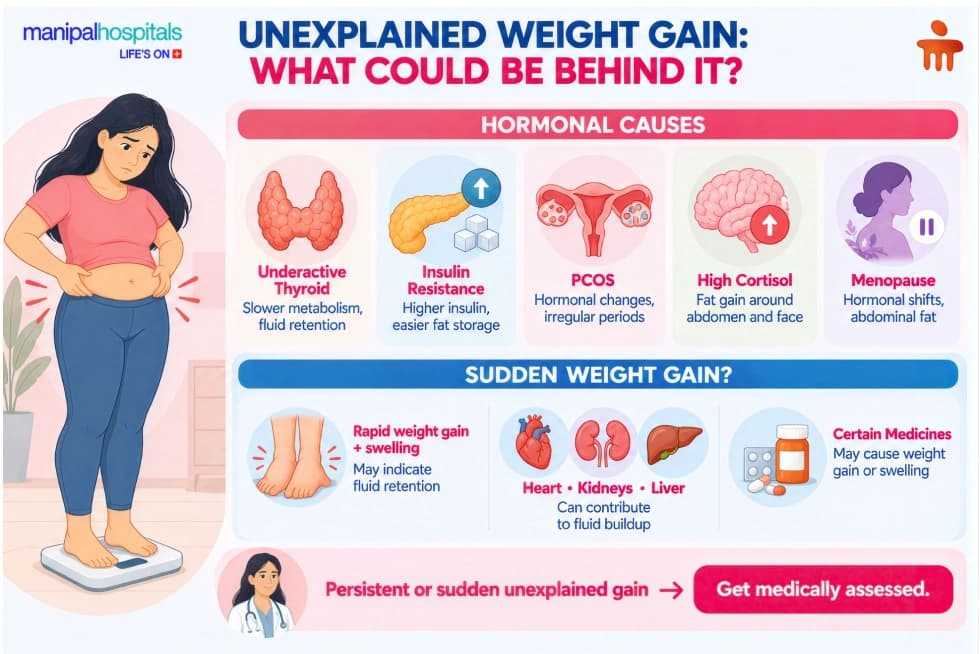
Common Hormonal Causes of Unexplained Weight Gain
Several endocrine conditions can change how your body processes energy and lead to unexpected weight changes:
- An Underactive Thyroid (Hypothyroidism): Your thyroid gland produces hormones that control how fast your cells work. If your thyroid becomes underactive and does not make enough of these hormones, your entire metabolism slows down. Thyroid weight gain is usually a mix of extra body fat and retained fluid and salt. People with an underactive thyroid often notice that they feel exhausted all the time, feel cold when others are comfortable, have dry skin, and struggle with constipation.
- Insulin Resistance: Insulin helps your cells absorb sugar from your blood to use for energy. If your cells stop responding to insulin properly, your pancreas produces more and more of it to keep your blood sugar steady. High levels of insulin in your blood encourage your body to store fat, especially around your waist, and make it very hard to lose weight. You might also notice intense cravings for sweet foods and feel very tired after meals.
- Polycystic Ovary Syndrome (PCOS): PCOS is a common condition in women that involves an imbalance of reproductive hormones. Most women with PCOS also have insulin resistance. This combination makes the body store fat around the abdomen, while also causing irregular periods, acne, and excess facial or body hair.
- High Cortisol Levels (Cushing’s Syndrome): Cortisol is your body's primary stress hormone. If cortisol levels stay too high for a long time, either from taking steroid medications or from a small tumour on your pituitary or adrenal gland, it changes where your body stores fat. Weight tends to build up around your stomach, chest, and face, while your arms and legs become thinner.
- Menopause and Perimenopause: As women go through menopause, levels of the hormone oestrogen drop. This hormonal shift slows down the resting metabolic rate and causes the body to store fat around the abdomen rather than on the hips and thighs.
Hormonal Causes at a Glance
Condition | Common Symptoms | Key Tests |
Hypothyroidism | Weight gain, tiredness, feeling cold, dry skin | TSH and Free T4 blood tests |
Insulin Resistance | Weight gain around the waist, tiredness after eating | Fasting blood glucose, HbA1c, fasting insulin |
PCOS | Irregular periods, acne, excess hair growth | Hormone blood tests, pelvic ultrasound |
Cushing’s Syndrome | Rounded face, weight gain on the belly, weak muscles | Cortisol blood, urine, or saliva tests |
Menopause | Shift in fat to the abdomen, hot flushes, poor sleep | Clinical assessment based on age and symptoms; FSH and oestrogen blood tests may be considered when indicated. |
Sudden Weight Gain Causes: Is It Fat or Fluid?
True body fat takes time to accumulate. If you notice that you have gained two or three kilograms in just a few days, that change may be caused by fluid retention rather than body fat.
When investigating sudden weight gain causes, doctors look closely at the vital organs that control your body's fluid balance:
- Heart Problems: If your heart is not pumping blood as well as it should, blood flow slows down, and your kidneys hold on to extra fluid. This fluid builds up in your legs, ankles, and abdomen, causing rapid weight gain and breathlessness when you lie down.
- Kidney Disease: Your kidneys filter waste and excess water from your blood. If they are inflamed or damaged, they cannot remove fluid properly, which leads to sudden swelling in your feet, ankles, and around your eyes.
- Liver Disease: Advanced liver damage reduces the proteins that keep fluid inside your blood vessels, allowing liquid to pool in your abdomen and legs.
- Prescription Medications: A sudden rise in weight can also be a side effect of certain medicines. Common culprits include steroid tablets, certain antidepressants, blood pressure medications like beta-blockers, and some diabetes drugs.
How Doctors Find the Root Cause
Finding out why your weight has changed starts with a thorough medical assessment rather than guesswork:
- A Detailed Conversation: Your doctor will ask when the weight gain started, what your diet looks like, how well you sleep, and which medications you take.
- A Physical Examination: The doctor will check your blood pressure, feel your thyroid gland, look for signs of fluid swelling in your legs, and examine your skin for changes like darkening or bruising.
- Targeted Blood Tests: Simple blood tests can quickly check your thyroid levels, blood sugar, kidney health, liver function, and hormone levels.
- Scans if Needed: If your symptoms suggest PCOS or an adrenal issue, your doctor may arrange an ultrasound of your pelvis or a scan of your glands to get a clearer picture.
Medical Treatment and Management
Treating hormonal weight gain means treating the underlying health problem. Simply cutting calories rarely works because it does not fix the hormonal imbalance that caused the weight gain in the first place:
- Correcting Thyroid Levels: If you have an underactive thyroid, taking a daily thyroid hormone tablet restores your hormone levels. Once your levels are back to normal, your metabolism speeds up again, and your body naturally clears the retained fluid and salt.
- Improving Insulin Sensitivity: For insulin resistance or PCOS, lifestyle adjustments paired with medications like metformin help your cells respond to insulin again. This lowers your insulin levels and makes it easier for your body to burn stored fat.
- Reviewing Medications: If a prescription drug is causing you to gain weight or hold on to fluid, your doctor can often switch you to an alternative medication that does not have the same side effect.
- Treating Fluid Retention: If your weight gain is caused by a heart, kidney, or liver condition, your doctor will prescribe targeted treatments, such as water tablets (diuretics), to help your body safely flush out the excess fluid.
- Practical Nutritional Support: Working with a clinical dietitian helps you build meals that keep your blood sugar steady and protect your muscle mass, without the extreme calorie cutting that can slow your metabolism down further.
Conclusion
Experiencing unexpected weight gain when your daily habits have not changed is a sign that something inside your body needs attention. When your hormones or fluid systems are out of balance, your body changes how it burns energy and stores fat, and diet alone cannot fix that. Getting a proper medical evaluation is the best way to uncover what is really going on.
Comprehensive Care for Unexplained Weight Gain at Manipal Hospitals Global
Unexplained weight gain can sometimes indicate an underlying hormonal imbalance or medical condition rather than changes in diet or physical activity alone. At Manipal Hospitals Global, patients can access comprehensive medical evaluation to identify the potential causes of unexpected weight changes, including thyroid disorders, insulin resistance, Polycystic Ovary Syndrome (PCOS), and conditions affecting heart, kidney, or liver function. A thorough assessment, supported by appropriate diagnostic tests, helps determine the underlying cause and guide treatment.
With a multidisciplinary approach involving endocrinologists, internal medicine specialists, and clinical dietitians, Manipal Hospitals Global focuses on personalised treatment and long-term health management. From addressing hormonal imbalances and medication-related weight changes to providing nutritional guidance and managing fluid retention, the care team works towards developing an individualised treatment plan based on each patient's needs. Timely medical consultation can help identify potential health concerns and support better overall well-being.
Share this Article


Not sure what you’re looking for?
Not sure what you’re looking for?
Get in touch with our representatives for
help!
Get in touch with our
representatives for help!



