Functional Endoscopic Sinus Surgery (FESS): Procedure, Benefits, and Long-Term Recovery
Reviewed by: Ear Nose Throat Department
Posted on Nov 19, 2026
10 Min Read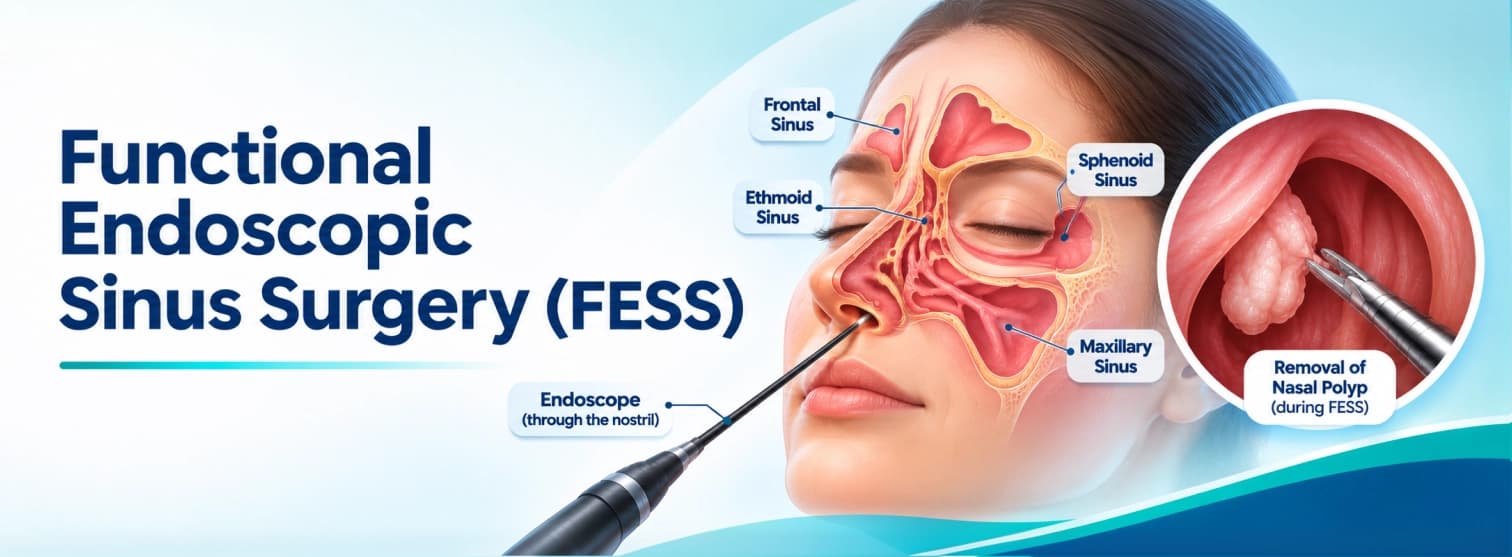
Synopsis
What Is Functional Endoscopic Sinus Surgery?
If your ENT specialist has suggested an operation, you might naturally wonder: what is functional endoscopic sinus surgery? Your facial bones contain four pairs of hollow air spaces: the maxillary sinuses (behind the cheeks), frontal sinuses (in the forehead), ethmoid sinuses (between the eyes), and sphenoid sinuses (deep behind the nasal cavity). Each sinus produces a thin layer of mucus that traps dust and bacteria. Microscopic hair-like structures, known as cilia, sweep this mucus out through tiny drainage openings into the nasal cavity, an area called the ostiomeatal complex.
If this narrow drainage channel becomes swollen shut due to infection, nasal polyps, or a deviated septum, mucus pools inside the sinuses. Bacteria multiply in the trapped fluid, leading to chronic sinus disease.
Functional endoscopic sinus surgery (FESS) is a minimally invasive surgical procedure that reopens these natural drainage passages. Rather than cutting through the face or mouth, an ENT surgeon works entirely through the nostrils using high-definition cameras and miniature precision tools.
The surgery is called "functional" because it does not simply strip away diseased lining. Instead, it carefully clears specific bone and tissue blockages, allowing the sinuses' own natural mucosal lining and cilia to recover and drain on their own.
When Is FESS Surgery Recommended?
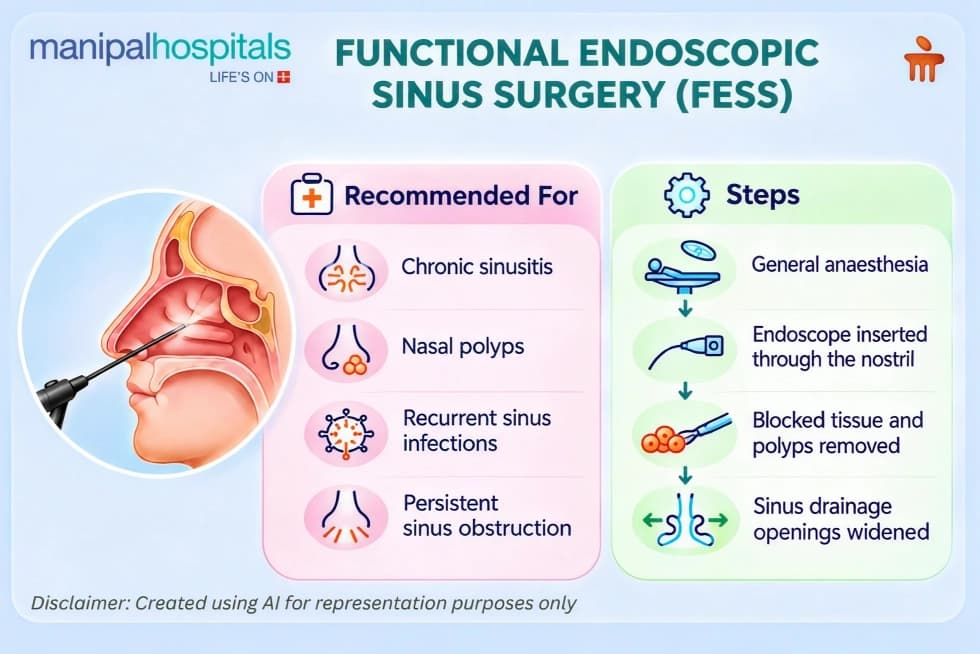
An ENT surgeon typically considers FESS surgery when symptoms last longer than twelve consecutive weeks and do not respond to complete medical treatment.
Common indications include:
- Chronic Rhinosinusitis (CRS): Ongoing inflammation of the sinus passages lasting months despite repeated courses of antibiotics, oral steroids, and nasal sprays.
- Nasal Polyps: Soft, painless, non-cancerous growths on the lining of the nasal passages that block airflow and reduce the sense of smell.
- Recurrent Acute Sinusitis: Experiencing four or more distinct sinus infections within a single year.
- Fungal Sinusitis: Fungal balls or allergic fungal mucin collecting in the sinus cavities, which require physical evacuation.
- Anatomical Obstructions: Structural issues like enlarged turbinates, concha bullosa, or a severely deviated nasal septum that physically narrow the sinus doorways.
Before recommending surgery, doctors always arrange a high-resolution computed tomography (HRCT) scan of the paranasal sinuses. This scan acts as a detailed three-dimensional anatomical map, showing the surgeon exactly which sinus cavities are blocked.
The Sinus Surgery Procedure: Step-by-Step
Understanding the details of the sinus surgery procedure helps demystify what happens on the day of the operation:
- Anaesthesia: The operation is typically performed under general anaesthesia so you are completely asleep and feel no pain. In select straightforward cases, it can be carried out under local anaesthesia with intravenous sedation.
- Access via the Nostrils: The surgeon inserts a slender, rigid endoscope (a thin optical rod with a high-definition light and camera) into the nostril. There are zero external incisions, meaning there is no visible facial scarring or bruising under the eyes.
- Clearing Obstructing Tissue: Guided by magnified live video on an operating monitor, the surgeon uses micro-instruments and powered microdebriders to gently shave away swollen tissue, remove nasal polyps, and widen the narrow drainage openings (ostia).
- Addressing Concurrent Structural Issues: If your nasal septum is significantly bent, the surgeon may perform a septoplasty at the same time to straighten the central cartilage and improve surgical access.
- Dressing and Spacers: Once drainage is restored, the surgeon usually places dissolvable haemostatic gel or soft, temporary foam spacers inside the nasal passage. These spacers keep the newly opened areas from sticking together while healing and prevent postoperative oozing.
The entire operation typically takes between 60 and 120 minutes, depending on whether one sinus or all four pairs require attention.
Traditional Sinus Surgery vs Modern FESS
Decades ago, sinus operations were invasive procedures requiring incisions under the upper lip or through the facial skin. Modern endoscopic sinus surgery offers a radically different patient experience:
Feature | Traditional Open Sinus Surgery | Modern FESS |
| Surgical Approach | External incisions through facial skin or gum line | Completely internal via the nostrils using an endoscope |
| Tissue Preservation | Stripped large areas of normal sinus mucosa | Preserves healthy mucosal tissue and functional cilia |
| Facial Bruising & Swelling | Common, often visible around eyes and cheeks | Rare, minimal external signs of surgery |
| Hospital Stay | Often requires 2 to 4 days of admission | Usually day-care or an overnight 24-hour stay |
| Initial Downtime | 3 to 4 weeks of restricted activity | 1 to 2 weeks for desk work and light daily routines |
| Long-Term Drainage | Relied on unnatural gravity drainage holes | Restores normal, natural mucociliary clearance routes |
Potential Sinus Surgery Risks and Complications
FESS is a very safe and routine operation, but like any surgical procedure involving delicate structures, it carries potential considerations. Because the sinuses sit directly adjacent to the eyes and beneath the floor of the brain, careful surgical technique is essential.
Common, minor sinus surgery risks include:
- Mild Bleeding and Oozing: Light spotting or pinkish nasal discharge is normal for the first three to five days.
- Nasal Congestion: Feeling stuffy for the first week or two due to internal mucosal swelling and dissolvable packing.
- Synechiae (Adhesions): Small bands of scar tissue forming between adjacent nasal walls, which can usually be divided quickly in the clinic during a routine follow-up check.
Rare but serious risks:
- Orbital Injury: Very rarely, the thin sheet of bone separating the ethmoid sinuses from the eye socket (lamina papyracea) can be bruised, causing temporary bruising around the eye or double vision.
- Cerebrospinal Fluid (CSF) Leak: A minute crack in the thin bone of the skull base, which sits above the sinuses, can cause clear brain fluid to leak into the nose. When this occurs, surgeons repair it immediately during the same procedure.
Experienced ENT surgeons routinely use high-definition camera systems and real-time intraoperative electromagnetic navigation systems (similar to a GPS for facial anatomy) to keep these major complication rates well below 1%.
Recovery After Sinus Surgery: What to Expect
Knowing the recovery timeline helps you plan time off work and prepare your home routine.
Your overall FESS recovery time divides into two distinct stages: returning to daily tasks, and full internal tissue healing. Most patients are back at work within 1 to 2 weeks, but full internal mucosal healing and cilia restoration take 2 to 3 months.
Here is what the recovery after sinus surgery typically looks like week by week:
Days 1 to 3: The Immediate Postoperative Phase
- You will feel stuffy, much like having a heavy head cold.
- Breathe through your mouth if you have temporary spacers in place.
- Sleep with your head elevated on two pillows to reduce swelling and facial pressure.
- Avoid blowing your nose entirely, as blowing can force air into healing tissues. Gently dab your nostrils with a clean tissue instead.
Days 4 to 14: Starting Saline Rinses and Resuming Work
- Your surgeon will instruct you to start high-volume, low-pressure nasal saline irrigations using pre-boiled or distilled water. These saline washes gently flush away blood crusts, mucus, and dissolvable pack residue.
- You will attend your first follow-up clinic visit for "nasal toilet" (gentle in-office suctioning to clean the passages and ensure the sinuses are draining).
- Most desk workers return to the office between day 7 and day 10. Avoid heavy lifting, gym workouts, bending forward, and vigorous straining for a full two weeks.
Weeks 3 to 8: Return of Sense of Smell and Clear Airflow
- Nasal breathing improves noticeably as internal swelling recedes.
- If you suffer from polyps or chronic congestion, your sense of smell and taste will gradually begin returning.
- Continue using prescribed nasal steroid sprays, as these ensure the newly opened sinus tissue does not become inflamed again.
Conclusion
Functional endoscopic sinus surgery is a strong and minimally invasive approach in treating chronic sinus disease caused by structural obstruction. It clears blocked pathways and preserves the sinuses' normal drainage mechanism, offering lasting relief from chronic congestion, headaches, and pressure. With regular saline irrigations and post-op checkups, delicate mucosa heals cleanly so that you can breathe freely and comfortably again. For patients seeking world-class rhinology care, image-guided endoscopic navigation, and dedicated overseas assistance, consult the ENT specialists at Manipal Hospitals Global.
Share this Article


Not sure what you’re looking for?
Not sure what you’re looking for?
Get in touch with our representatives for
help!
Get in touch with our
representatives for help!