Adjustable Gastric Banding: Eligibility, Procedure, Long-Term Risks, and Recovery
Reviewed by: Bariatric Surgery Department
Posted on Nov 19, 2026
10 Min Read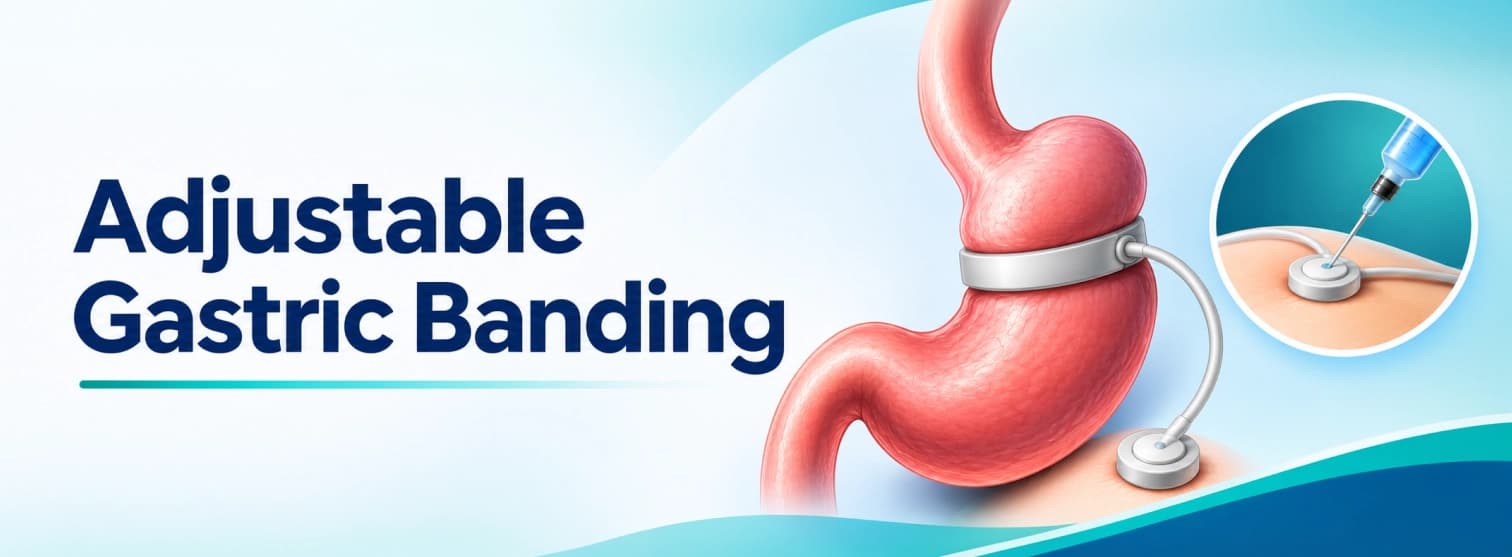
Synopsis
What Is Adjustable Gastric Banding?
Adjustable gastric banding is a restrictive bariatric operation performed using keyhole (laparoscopic) techniques. The surgeon places a hollow, flexible silicone ring around the very top section of the stomach. Once fastened, this ring creates a small upper stomach pouch that holds roughly 15 to 30 millilitres of food, leaving the larger remainder of the stomach below the band.
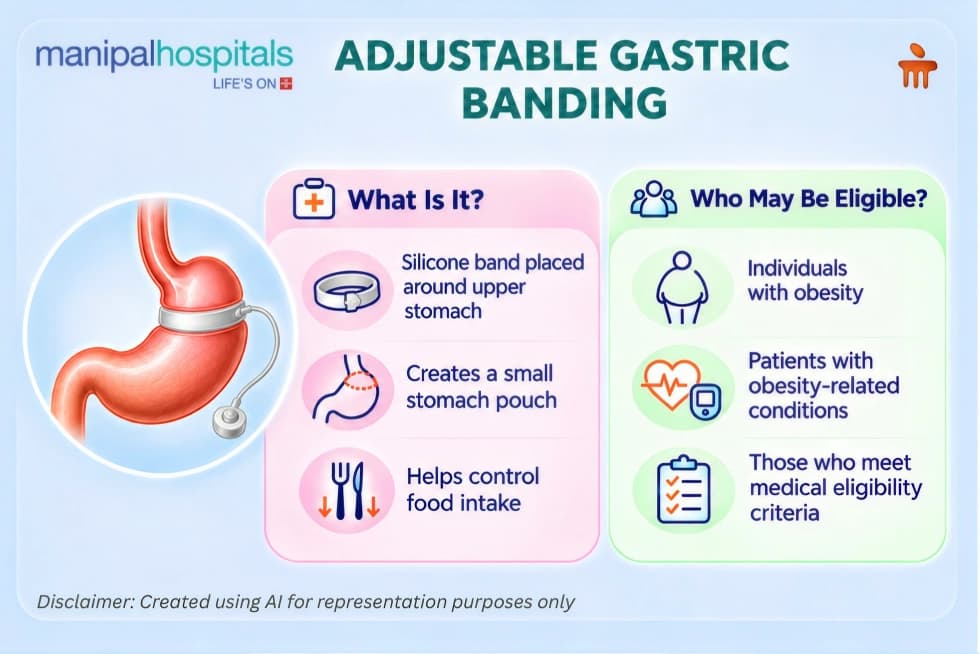
The inner surface of the silicone ring contains an inflatable balloon connected by a thin plastic tube to an access port anchored beneath the skin of the abdomen. Weeks after surgery, an experienced doctor can tighten or loosen the band by injecting or withdrawing small amounts of sterile saline solution through this port using a fine needle.
When the band is inflated:
- Food enters the tiny upper pouch and fills it quickly.
- The physical stretch of the upper pouch wall stimulates vagal nerve endings, sending signals to the brain that you are full after eating only a few mouthfuls.
- Food then trickles slowly through the narrow opening created by the band into the lower stomach, where normal digestion and nutrient absorption continue unchanged.
Because the intestines are not bypassed, the surgery does not cause nutritional malabsorption, and the digestive anatomy remains intact.
Who Is Eligible? Indian Clinical Criteria
Because South Asian populations tend to carry higher amounts of visceral fat around internal organs even at lower body weights, the eligibility rules in India reflect these unique cardiometabolic risks.
To qualify for adjustable gastric band surgery in India, a patient must generally meet the following medical parameters:
- BMI Criteria: A BMI of 37.5 kg/m² or higher without associated illnesses, or a BMI of 32.5 kg/m² or higher accompanied by significant obesity-related health conditions (such as type 2 diabetes, high blood pressure, obstructive sleep apnoea, or joint disease). Under updated consensus guidelines, patients with a BMI of 35 or 30 with two or more comorbidities may also be evaluated.
- Documented Lifestyle Attempts: A history of multiple unsuccessful attempts at medically supervised weight reduction through diet, exercise, and lifestyle modifications.
- Commitment to Lifelong Follow-Ups: Unlike procedures that are complete once the surgical incisions heal, a gastric band requires frequent outpatient clinic visits for saline adjustments, barium swallow tests, and nutritional reviews.
- Psychological Readiness: Absence of untreated major depression, active substance dependency, or eating disorders (such as binge eating disorder or sweet eating syndrome, which cause gastric bands to fail).
The Surgical Procedure: How It Is Performed
The surgical placement of the band is relatively straightforward and is performed under general anaesthesia:
- Laparoscopic Access: The surgical team makes four or five tiny incisions across the upper abdomen. A laparoscope (miniature video camera) and specialised instruments are inserted through plastic ports.
- Creating the Tunnel: The surgeon creates a small, precise tunnel behind the upper stomach, just below the junction where the food pipe (oesophagus) meets the stomach.
- Band Placement: The silicone band is passed through this tunnel, wrapped around the stomach, and buckled into place. To reduce the risk of the band shifting out of position, the surgeon places several permanent sutures between the stomach wall below the band and the stomach wall above it (known as gastro-gastric plication).
- Anchoring the Port: The connecting tube is drawn through the abdominal wall and connected to the titanium or plastic injection port. This port is stitched securely to the strong fibrous layer (fascia) overlying the abdominal muscles.
The operation takes between 40 and 60 minutes. Most patients are discharged home within 24 hours of surgery.
Comparing Weight Loss Surgery Options
To understand why adjustable banding is used far less frequently today, it helps to compare it directly against the two primary operations performed worldwide:
Parameter | Adjustable Gastric Band (LAGB) | Sleeve Gastrectomy | Roux-en-Y Gastric Bypass (RYGB) |
Surgical Approach | Implantable silicone device; no cutting of organs | Removes roughly 75% to 80% of the stomach permanently | Creates a tiny stomach pouch and reroutes the small bowel |
Primary Mechanism | Purely mechanical restriction | Restriction plus removal of hunger hormone (ghrelin) | Restriction plus metabolic shifts and mild malabsorption |
Average 5-Year Excess Weight Loss | 35% to 45% | 55% to 65% | 65% to 75% |
Diabetes Remission Rate | Low to moderate (30% to 45%) | High (60% to 75%) | Very high (75% to 85%) |
Reversibility | Fully reversible by removing the band | Irreversible (stomach tissue is removed) | Technically reversible, but surgically complex |
Long-Term Hardware Issues | High (band slip, erosion, port failure) | None (no foreign bodies implanted) | None (no foreign bodies implanted) |
Long-Term Reoperation Rate | Very high (up to 30% to 50% over 10-15 years) | Low (roughly 5% to 10%) | Low to moderate (roughly 5% to 10%) |
Gastric Band Surgery Risks and Long-Term Problems
While early operative risks are low, long-term mechanical complications are common with an implanted device. Key gastric band surgery risks include:
- Band Slippage: The stomach slides through the ring, or the band shifts out of place, causing sudden blockages, acute reflux, and vomiting that often require emergency surgery to correct.
- Band Erosion: In 1% to 3% of patients, the silicone ring gradually wears through the stomach wall into the stomach cavity, eliminating restriction and requiring removal.
- Port and Tubing Faults: The subcutaneous injection port can flip, or the connecting tube can crack or detach. This causes saline to leak out, removing all portion control until surgically repaired.
- Oesophageal Dilation: A band that is kept too tight forces the food pipe to push against high resistance. Over time, the oesophagus stretches and weakens, causing chronic heartburn, regurgitation, and swallowing difficulties.
- High Removal Rates: Studies show 30% to 50% of patients have their band removed within 10 to 15 years due to complications or poor weight loss, with many converting to a sleeve gastrectomy or gastric bypass.
Recovery and Postoperative Diet
Following surgery, the stomach needs time to adapt to the band through progressive dietary stages:
- Weeks 1 to 2: Clear and full liquids (broths, skimmed milk, thin protein shakes).
- Weeks 3 to 4: Smooth puréed meals (mashed lentils, soft scrambled eggs, blended vegetables).
- Weeks 5 to 6: Soft solids (steamed fish, soft paneer, well-cooked vegetables).
- Week 7 Onwards: Regular solid foods eaten in small, controlled portions.
How Band Adjustments Work
The band is left empty during surgery to allow tissue swelling to subside. Four to six weeks later, the first adjustment (or fill) takes place in the clinic. A doctor uses a fine needle to inject 0.5 to 2 millilitres of sterile saline into the port under the skin. The target is steady weight loss of 0.5 to 1 kilogram per week without causing pain, reflux, or vomiting, which usually takes three to five clinic visits in the first year to fine-tune.
Essential Everyday Eating Habits
- Chew thoroughly: Swallowing large or unchewed pieces of food can block the band opening, causing immediate chest pressure and regurgitation.
- Separate eating and drinking: Stop drinking liquids 15 minutes before meals and wait 30 to 45 minutes after eating. Drinking with food washes meals through the pouch too quickly, cancelling out fullness.
- Cut out soft calories: The band restricts solid food, not liquids. Consuming milkshakes, ice cream, and sugary drinks bypasses the band entirely and leads to weight regain.
Conclusion
Adjustable gastric banding represents a unique chapter in metabolic surgery, offering a reversible, non-anatomical approach for individuals seeking medical weight management. Choosing the right path requires evaluating your medical profile, your long-term health risks, and your willingness to commit to permanent lifestyle adjustments. For individuals exploring personalised metabolic care, band revisions, or comprehensive weight loss surgery options, consulting the multidisciplinary team at Manipal Hospitals Global ensures access to accredited bariatric surgeons.
Share this Article


Not sure what you’re looking for?
Not sure what you’re looking for?
Get in touch with our representatives for
help!
Get in touch with our
representatives for help!