Robotic Prostate Surgery: Benefits and Recovery for Global Patients
Reviewed by: Urology Department
Posted on Apr 27, 2026
8 Min Read

Loading...

98, HAL Old Airport Road, Kodihalli, Bengaluru, Karnataka 560017
Accreditations


Copyright © 2025 Manipal Hospitals - All Rights Reserved
Reviewed by: Urology Department
Posted on Apr 27, 2026
8 Min ReadProstate cancer is one of the most common cancers affecting men worldwide. Fortunately, medical technology has advanced significantly, making treatment safer and more effective. One of the most important innovations in modern urology is robotic prostate surgery, a highly precise and minimally invasive approach to treating prostate cancer.
For international patients seeking advanced treatment abroad, prostate cancer treatment surgery using robotic technology offers excellent outcomes with faster recovery and fewer complications. This blog explains the procedure, its benefits, recovery process, and why global patients increasingly choose minimally invasive prostate surgery for effective cancer treatment.
Robotic prostate surgery is an advanced surgical technique used to remove the prostate gland, usually to treat prostate cancer. The surgery is commonly referred to as a robotic prostatectomy procedure, where surgeons use robotic arms and specialised instruments to perform delicate surgical movements with exceptional accuracy.
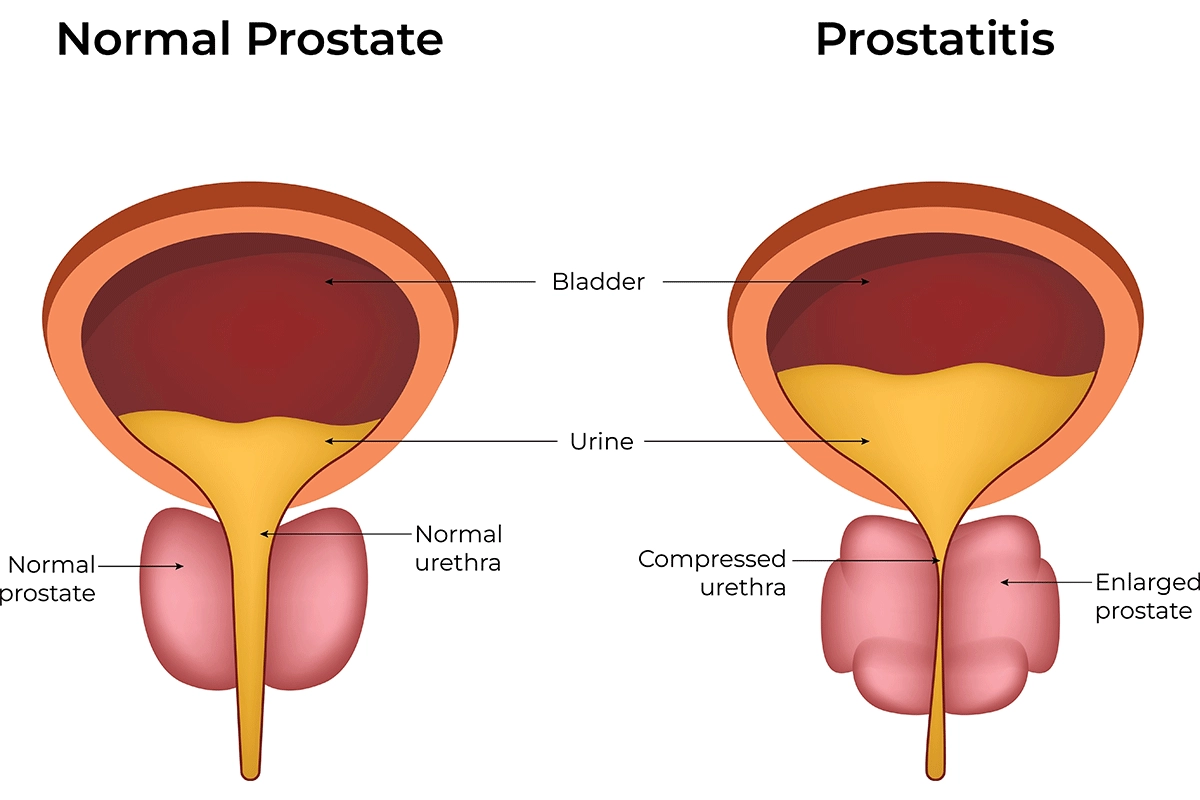
The procedure is primarily performed for patients diagnosed with localised prostate cancer, where the cancer is confined to the prostate gland. In some cases, it may also be used for severe prostate enlargement or other prostate-related conditions.
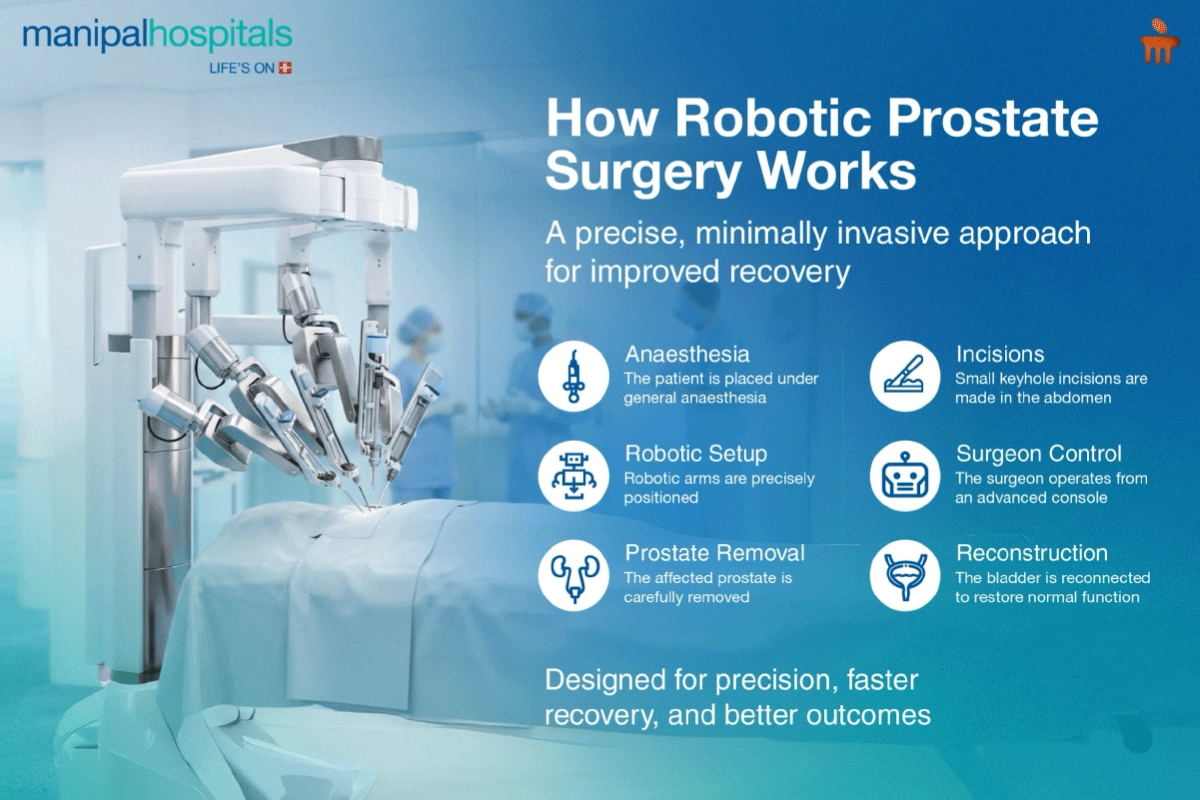
During the robotic prostatectomy procedure, the surgeon operates from a console that controls robotic instruments inserted through small incisions in the abdomen. A high-definition 3D camera provides a magnified view of the surgical area, allowing surgeons to clearly see nerves, blood vessels, and surrounding tissues.
Compared with traditional open surgery, minimally invasive prostate surgery causes less trauma to the body, resulting in reduced pain and quicker recovery.
Doctors commonly recommend prostate cancer surgery when cancer is localised and has not spread beyond the prostate gland. Robotic techniques are especially beneficial in these situations because they allow surgeons to remove the prostate while preserving nearby structures.
Conditions treated with robotic surgery include:
For many patients, prostate cancer treatment surgery offers a potential cure, particularly when the disease is detected early.
The robotic prostatectomy procedure is performed under general anaesthesia and typically takes between two and four hours.
The surgical steps generally include:
1. Anaesthesia Administration
The patient is placed under general anaesthesia to ensure comfort during the procedure.
2. Small Incisions
The surgeon creates several small incisions in the abdomen.
3. Insertion of Robotic Instruments
Specialised robotic arms and a high-definition camera are inserted through these incisions.
4. Prostate Removal
The surgeon carefully removes the prostate gland while protecting surrounding nerves and blood vessels.
5. Reconstruction of the Urinary System
After the prostate is removed, the bladder is reconnected to the urethra.
6. Catheter Placement
A temporary catheter is inserted to help drain urine while healing occurs.
Because the surgery uses small incisions, it is considered minimally invasive prostate surgery, which significantly reduces surgical trauma compared with open surgery.
One of the biggest advantages of minimally invasive prostate surgery is that it requires only small incisions instead of a large surgical cut. This results in less pain, minimal scarring, and faster healing.
Patients often experience a smoother recovery and shorter hospital stay.
Robotic systems provide surgeons with magnified 3D visualisation and instruments capable of extremely precise movements. This allows surgeons to remove cancerous tissue while preserving critical nerves responsible for bladder control and sexual function.
Precision is one of the key reasons why robotic prostate surgery has become the preferred approach for many prostate cancer specialists.
Traditional prostate cancer surgery often involves significant blood loss. Robotic procedures, however, greatly minimise bleeding due to smaller incisions and improved surgical control.
This reduces the need for blood transfusions and improves patient safety.
Patients undergoing robotic prostatectomy procedures usually remain in the hospital for only one to three days. Many patients are able to walk within hours after surgery.
Shorter hospitalisation is particularly beneficial for international patients travelling for prostate cancer treatment surgery.
One of the most significant advantages is a faster recovery after prostate removal surgery. Because the procedure is minimally invasive, patients typically return to daily activities within four to six weeks.
Compared with open surgery, recovery time is considerably shorter, making it ideal for global patients.
While every surgery carries risks, minimally invasive prostate surgery generally results in fewer prostate surgery complications.
Possible complications may include infection, bleeding, or urinary issues, but the robotic approach helps reduce these risks significantly.
Many patients worry about urinary control and sexual function after prostate cancer surgery. Robotic surgery helps surgeons preserve nerves around the prostate, improving the chances of maintaining bladder control and sexual health.
Although recovery varies between individuals, many patients regain normal function over time.
The process of prostate removal surgery recovery typically occurs in several stages.
After robotic prostate surgery, patients are monitored in the hospital. Doctors encourage early walking to improve circulation and prevent blood clots.
A urinary catheter is placed temporarily to assist with urination.
During the first week of prostate removal surgery recovery, patients may experience mild swelling or discomfort.
Key recovery guidelines include:
The catheter is usually removed after seven to ten days.
Patients gradually increase their physical activity during this stage of prostate removal surgery recovery.
Most individuals can perform light daily tasks, though strenuous activities should still be avoided.
By this time, many patients can resume normal routines, including work. Energy levels improve and surgical wounds continue healing.
Full recovery after a robotic prostatectomy procedure typically takes between one and three months.
Although robotic procedures are generally safe, some prostate surgery complications may occur.
Possible side effects include:
Doctors may recommend pelvic floor exercises and rehabilitation programmes to support recovery.
International patients increasingly travel abroad for prostate cancer treatment surgery due to access to advanced technology and experienced surgeons.
Reasons global patients prefer robotic surgery include:
These factors make robotic prostate surgery an excellent option for patients seeking high-quality care abroad.
Before undergoing prostate cancer surgery, doctors conduct several diagnostic tests to assess the patient’s condition and overall health.
These may include:
Proper preparation helps ensure a safe and successful robotic prostatectomy procedure.
Patients can improve their recovery from prostate removal surgery by adopting healthy lifestyle habits.
Helpful recovery tips include:
These steps help reduce prostate surgery complications and support long-term recovery.
Advances in surgical technology have made robotic prostate surgery one of the most effective and patient-friendly treatments for prostate cancer. With its precision, smaller incisions, and improved recovery outcomes, this minimally invasive prostate surgery offers significant advantages over traditional methods.
Patients undergoing prostate cancer treatment surgery through robotic techniques benefit from reduced pain, minimal blood loss, shorter hospital stays, and faster prostate removal surgery recovery.
For global patients seeking world-class prostate cancer surgery, advanced healthcare institutions like Manipal Hospitals Global offer state-of-the-art robotic surgical systems, experienced specialists, and comprehensive international patient services—ensuring safe treatment and optimal recovery outcomes.

Not sure what you’re looking for?
Not sure what you’re looking for?
Get in touch with our representatives for
help!
Get in touch with our
representatives for help!